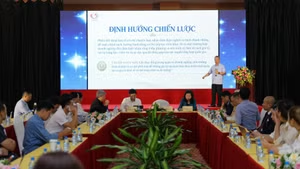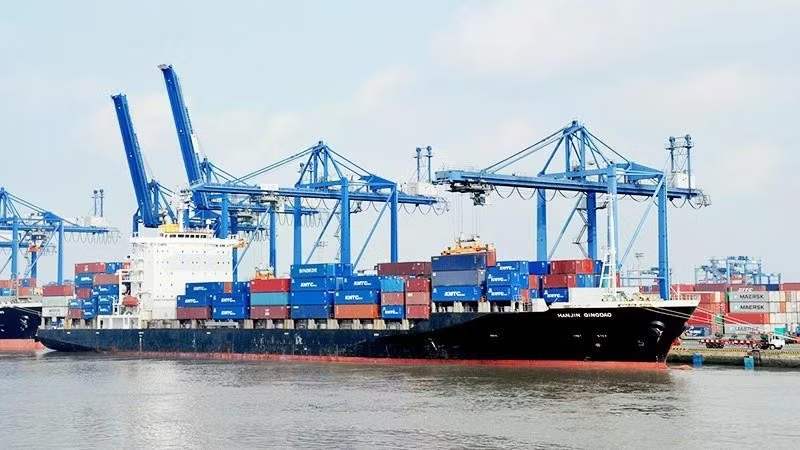
Speaking at a conference on trade promotion with overseas trade offices, organised by the Viet Nam Trade Promotion Agency under the Ministry of Industry and Trade, Deputy Secretary General of the Viet Nam Logistics Business Association Ngo Khac Le emphasised that in the context of political tensions, especially ongoing conflicts in the Middle East, each enterprise must proactively build long-term risk prevention strategies.
According to Ngo Khac Le, before delivering shipments, businesses should review transport contracts and bills of lading, particularly clauses related to war risks or those allowing vessels to deviate from planned routes. “At the same time, we recommend that enterprises include provisions addressing scenarios where vessels change routes or discharge cargo outside the original plan,” he added.
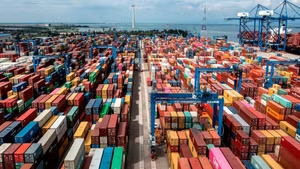
Representing the Viet Nam Trade Office in the United Arab Emirates (UAE) Truong Xuan Trung warned that conflicts in the region are having wide-ranging impacts on supply chains and trade activities. He noted that sectors such as aviation, tourism and logistics have been affected due to limited operations at airports and transport routes. Additionally, blockades of key maritime routes in the region have made cargo transportation more challenging.
Energy dynamics in the region are also undergoing significant fluctuations. Following the outbreak of conflict, the UAE reduced oil production, while several oil and gas extraction and processing facilities were forced to suspend operations. “These factors could drive up logistics and international shipping costs, thereby affecting production costs and the competitiveness of export goods,” the trade representative in the UAE noted.
As one of Viet Nam’s key export sectors, the seafood industry is heavily reliant on maritime transport. Deputy Secretary General of the Viet Nam Association of Seafood Exporters and Producers (VASEP), Le Hang, said: “We export primarily via sea freight and depend heavily on cold chain systems that are critical to product quality. When conflicts arise, rising shipping costs undermine the competitiveness of seafood products. In some cases, carriers may increase surcharges or reroute shipments via Africa, extending transit times by 5–7 days and increasing costs for businesses.”
Viet Nam Trade Counsellor in Indonesia Pham The Cuong noted that amid increasing external pressures on import-export activities, Vietnamese enterprises should proactively review product portfolios, technical standards and environmental requirements, while staying updated on new regulations to adjust export plans and minimise legal risks and trade disruptions.
He also highlighted that the Ministry of Trade of Indonesia recently issued Decision No.47/2025 on a list of banned imports, effective from January 1, 2026. The regulation prohibits the import of 12 categories of goods, including certain types of rice based on technical criteria, ozone-depleting substances, used packaging materials and second-hand clothing.
“This is not an entirely new regulation but rather a consolidation of previous decisions with some adjustments. For certain categories such as metal scrap, chemicals, electrical and electronic goods, and equipment using outdated technologies or refrigerants containing HCFC-123 and HCFC-22, businesses need to pay special attention, as management policies have shifted from licensing to outright bans,” Cuong stressed.
He added that Vietnamese enterprises should strengthen risk management measures and prepare for potential transport disruptions, delivery delays, risks of cargo damage, especially for perishable goods, as well as payment risks in volatile markets.