Cost pressure and room for growth
The Russia-Ukraine conflict has shown no sign of ending, while tensions in the Gulf region have continued to escalate, pushing oil prices higher and placing direct pressure on transport costs, which account for more than 50% of logistics costs. In reality, fuel costs currently make up around 30-35% of total logistics costs, and the fact that diesel prices at times approached 43,000 VND per litre has significantly increased costs across the entire chain.
Viet Nam’s logistics sector is now worth more than 60 billion USD, with around 45,000 enterprises in operation. According to the Viet Nam Logistics Business Association (VLA), logistics costs account for around 16% of GDP, a relatively high ratio compared with many developed countries, but one that also reflects considerable room for efficiency improvements.
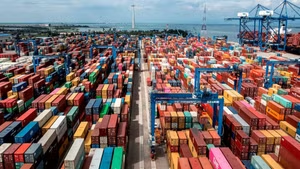
The sector’s two main pillars are domestic consumption and import-export activities. With a population of more than 100 million, the domestic consumer market continues to expand, driving steady growth in logistics demand. At the same time, import-export activities have maintained double-digit growth for many years. In 2025, total import-export turnover reached a record 930 billion USD, with a trade surplus of around 20 billion USD. Container throughput at the seaport system exceeded 27 million TEUs, far surpassing many countries in the region, while air cargo transport reached nearly 2 million tonnes.
Viet Nam’s logistics sector is now worth more than 60 billion USD, with around 45,000 enterprises in operation.
These figures show the increasingly important role of logistics in the economy, while also placing an urgent requirement on cost optimisation and improved competitiveness. However, amid sharp fluctuations in fuel prices, dependence on fossil fuels has become a major bottleneck, increasing risks for the entire sector.
Green transformation: A dual solution to costs and emissions
Under pressure from fuel costs and global emission reduction requirements, the shift towards green energy is emerging as an inevitable direction. The use of renewable energy not only helps enterprises reduce dependence on fossil fuels, but also contributes to the implementation of environmental commitments and enhances competitiveness in international supply chains.
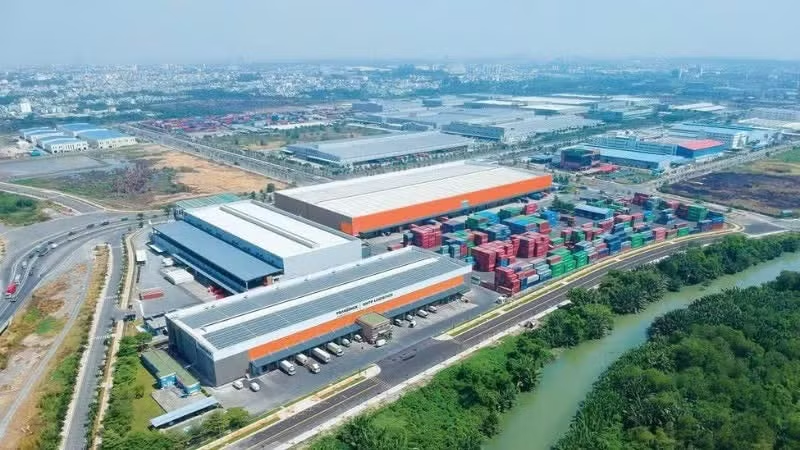
Practices at several major logistics enterprises have shown the clear effectiveness of this process. Transimex Corporation has installed rooftop solar power systems at its logistics centres, combined with energy efficiency solutions, helping save more than 5.4 million kWh of electricity each year and reduce around 3,500 tonnes of CO₂ emissions. This is a concrete example of the dual benefits of green transformation: reducing operating costs while lowering environmental impact.
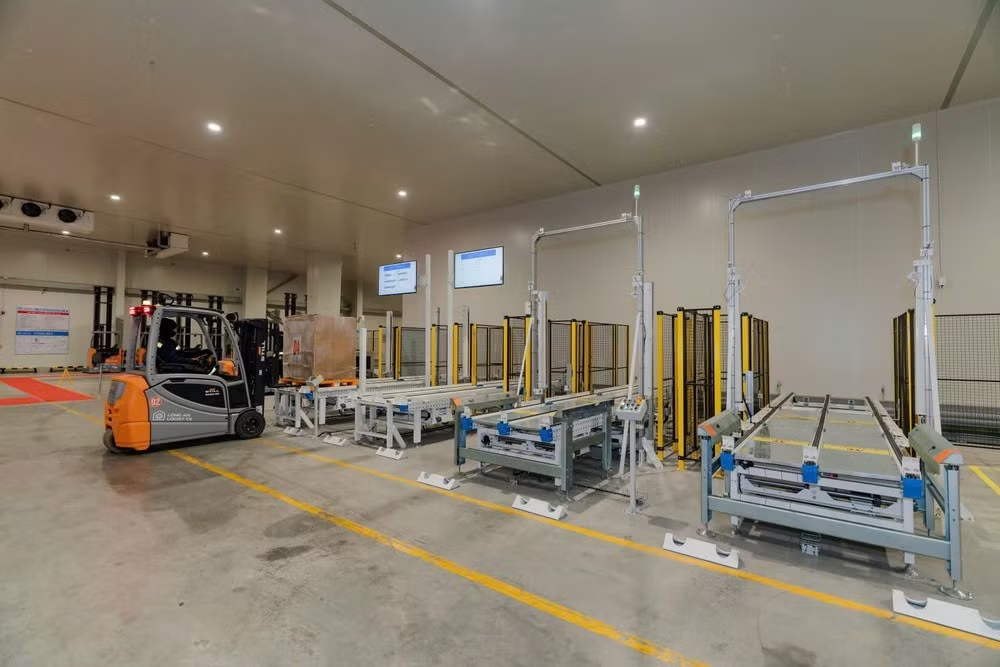
Beyond this, the company has also stepped up the application of information technology and digital transformation in its operations, from warehouse and port management to transport and distribution. Its investment in an automated cold storage facility in Long An, with a capacity of 56,000 pallets and fully robot-operated operations, demonstrates the trend of automation being closely linked with green transformation. Notably, 100% of lifting equipment in the warehouse has been switched to electricity instead of diesel engines, helping reduce emissions and noise.
According to Le Duy Hiep, former Chairman of the Viet Nam Logistics Business Association and General Director of Transimex Corporation, the transition to green energy is not only an environmental responsibility but also a clear competitive advantage amid high fuel prices and unstable supply. Enterprises that move early in this process will be better able to adapt to market volatility.
Synchronous solutions for the immediate and long term
In the short term, timely intervention by State management agencies is needed to ease cost pressures caused by oil price fluctuations. Adjusting import duties on petrol and oil during periods of crisis could help cool fuel prices, thereby reducing logistics costs. At the same time, it is necessary to increase both the capacity and duration of national petroleum reserves to strengthen resilience to external shocks.
In parallel, administrative procedure reform and trade facilitation remain important solutions for reducing compliance costs for enterprises. Every simplified step and every digitalised procedure will help cut both time and costs across the entire supply chain.
On the business side, stepping up the application of technology, artificial intelligence and automation is an approach that cannot be delayed. These solutions not only help optimise operations but also improve forecasting capacity, minimise risks and enhance service quality.
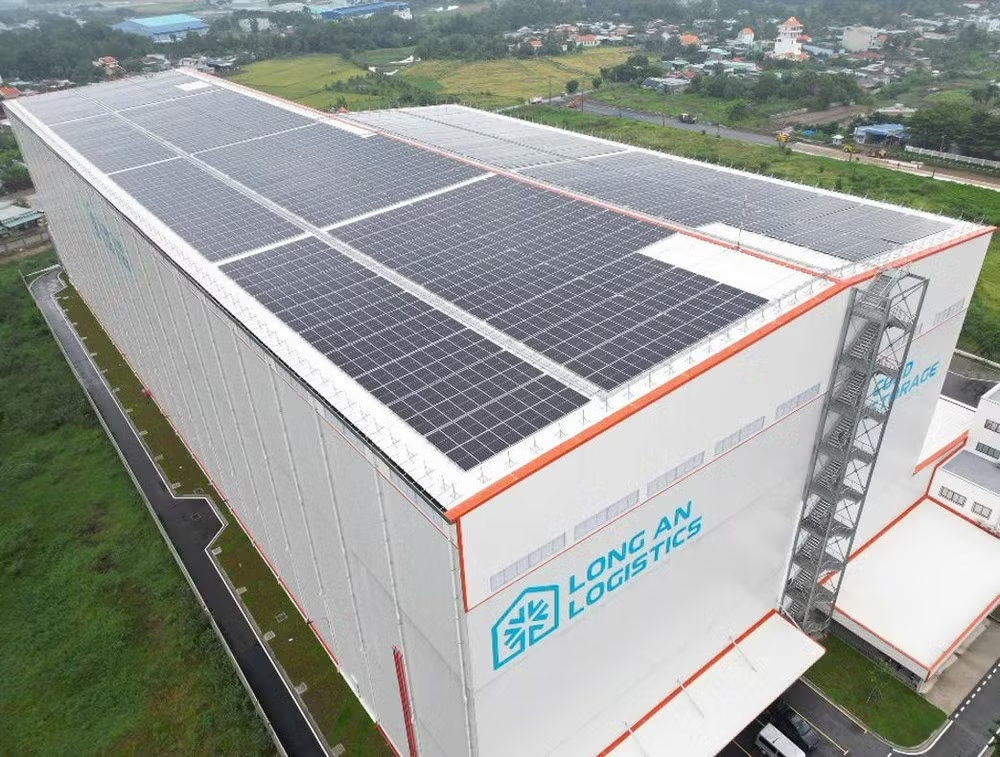
In the long term, the transition to renewable energy should be regarded as a strategic pillar. The use of solar and wind power in warehouse operations, vehicles and equipment will not only help reduce emissions but also lessen dependence on imported energy sources. At the same time, applying ESG standards in corporate governance will help Vietnamese logistics enterprises meet the increasingly stringent requirements of international markets.
At present, dependence on foreign shipping lines and airlines makes transport costs vulnerable to fluctuations in global freight rates. Investment in developing national shipping and aviation fleets would not only help reduce costs but also increase the economy’s autonomy.
Another important issue is improving the international transport capacity of domestic enterprises. At present, dependence on foreign shipping lines and airlines makes transport costs vulnerable to fluctuations in global freight rates. Investment in developing national shipping and aviation fleets would not only help reduce costs but also increase the economy’s autonomy.
It can be seen that, amid current volatility, Viet Nam’s logistics sector is facing both challenges and opportunities. Green transformation is not only an immediate response to fuel price fluctuations, but also a foundation for long-term sustainable development. The combination of timely state policy support and enterprises’ innovation efforts will be the key to helping the logistics sector overcome difficulties and continue making positive contributions to the country’s economic growth.