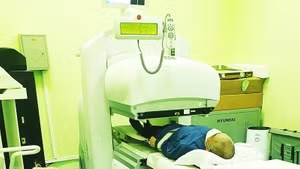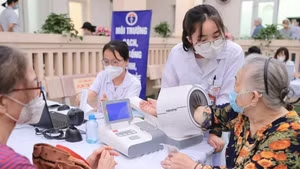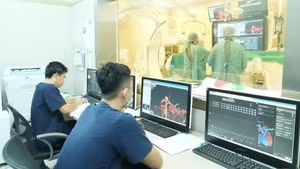
According to information presented at the workshop, Viet Nam has built approximately 30 million electronic health records, with 64% of hospitals having implemented electronic medical records, and 100% of healthcare facilities nationwide connected and interoperable with the social insurance system. These are key data pillars forming the foundation for managing the healthcare system in a digital, people-centred manner.
Associate Professor, Dr Tran Quy Tuong, President of the Viet Nam Association of Medical Informatics, said that “Viet Nam has a very distinctive advantage that not many countries possess, namely a unified political system and a single social insurance system. This facilitates the connection, sharing and exploitation of healthcare data if we organise it well and proceed in the right direction.”
However, behind these initial achievements lie a series of structural bottlenecks. For example, healthcare data remain fragmented, with a lack of substantive interoperability between different levels and localities; data standards are not yet synchronised, and the adoption of international standards has been slow; technological infrastructure, data centres and high-quality human resources have yet to meet requirements, particularly given the risks to information safety and security when data are connected on a large scale.

From a state management perspective, the Ministry of Health has begun addressing these bottlenecks through a legal framework and long-term infrastructure orientation by advising the Government to issue Decree No. 102 on healthcare data management, which stipulates 24 groups of healthcare data to be managed.
“Four data groups will be transferred to the national data centre managed by the Ministry of Public Security, while the remaining 20 groups will be managed by the Ministry of Health. We are building an overall architectural framework from the data centres of provincial Departments of Health and the Ministry of Health to the national data centre,” said Tuong.

At the workshop, experts from the United Kingdom shared extensive experience from the UK’s National Health Service, where healthcare data are regarded as the backbone of system governance, preventive medicine and personalised healthcare. Alexandra Smith, British Consul General in Ho Chi Minh City, emphasised “Healthcare digital transformation is not just about technology; it is about people, systems and long-term partnerships. If designed properly, digital health can help systems deliver better services, reach more people and operate more sustainably.”

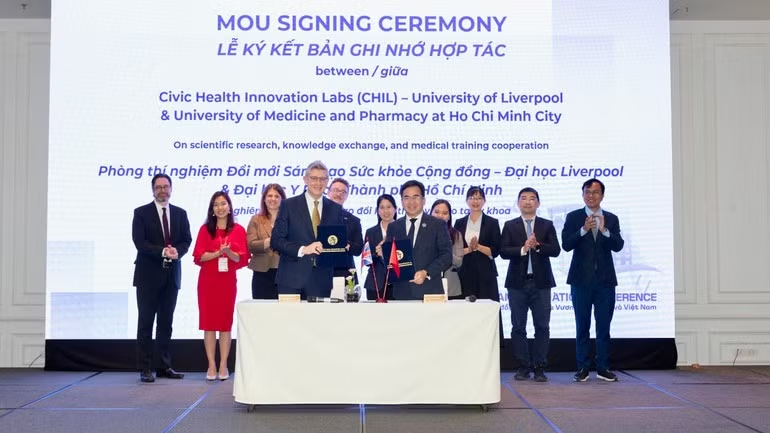
Within the framework of the workshop, two memoranda of understanding were signed: A memorandum between The Phoenix Partnership Group and the Viet Nam Association of Medical Informatics; A cooperation agreement between the Public Health Innovation Laboratory, University of Liverpool, and the University of Medicine and Pharmacy at Ho Chi Minh City on promoting scientific research cooperation, knowledge exchange and medical training.
The signing of these memoranda on electronic medical records and medical research and training between UK and Vietnamese organisations demonstrates that digital transformation is being approached as a long-term, accompanying process rather than as fragmented, stand-alone projects.
The United Kingdom’s experience in data connectivity, system standardisation and linking technological innovation with organisational reform is expected to help Viet Nam shorten trial periods and avoid costly mistakes.
The workshop highlighted the increasingly prominent role of international cooperation in the process of healthcare digital transformation. The next challenge lies in consistent implementation, ensuring data security and placing people at the centre, so that technology truly becomes a tool serving public health.