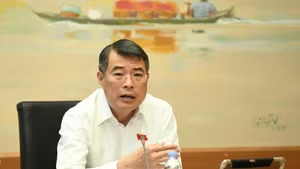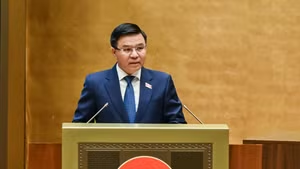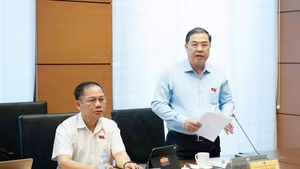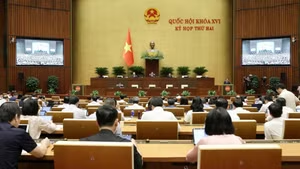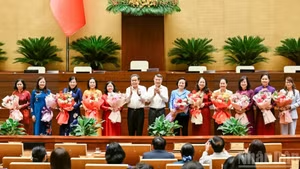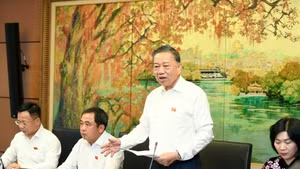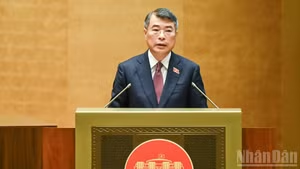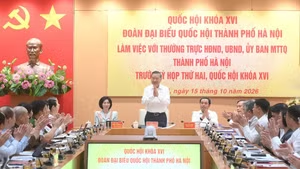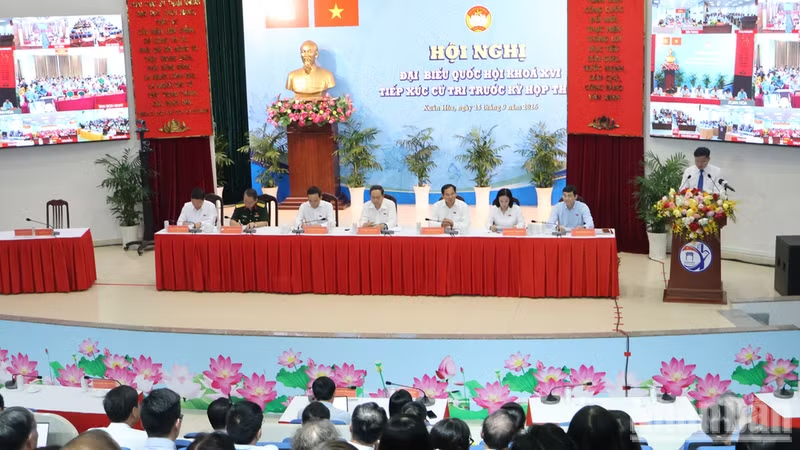
At the meeting, voters raised a range of issues concerning education and training, grassroots democracy, oversight, administrative reform and lawmaking.
Le Thi Yen Nhi, a voter from Ben Thanh ward, called on the NA delegation to pay greater attention to mechanisms enabling local residents to participate in the southern economic hub’s development process.
Pham Thi Hue, from Xuan Hoa ward, urged the Ministry of Education and Training to adjust school textbook programmes with the aim of educating students to integrate internationally while retaining core values.
Voters from Sai Gon ward proposed that the NA establish a regular, full-term oversight programme for the education and healthcare sectors.
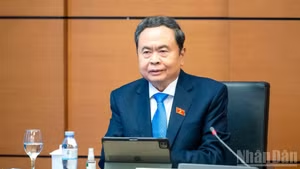
After listening to voters’ opinions and recommendations, NA President Man asked the city to classify them clearly. Issues falling under the authority of the wards should be proactively addressed by grassroots administrations immediately after the meeting. Matters under the city’s jurisdiction should be considered and handled by the municipal authorities. Recommendations under the authority of central-level agencies should be fully compiled for submission to the NA, Government, ministries and sectors at the upcoming second session.
The leader said the legislature has recently passed the Law on Oversight Activities of the NA and People’s Councils. The draft law on the implementation of democracy at grassroots level is being finalised for submission to the second session. The move aims to concretise the principle that people should be informed, consulted, empowered to oversee and inspect, and entitled to benefit from development, he affirmed.
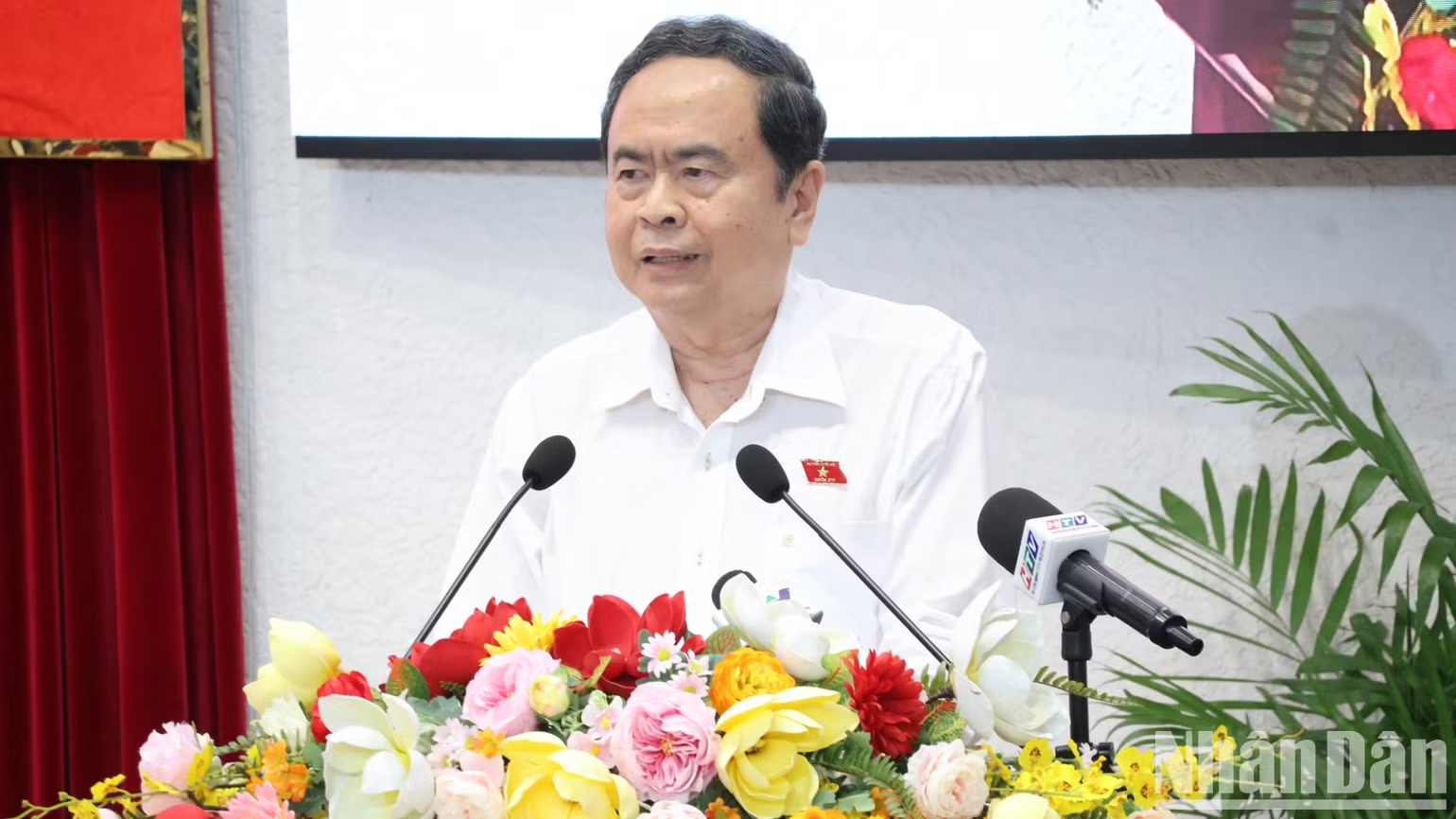
Emphasising the need to further put people at the centre of resolving all grassroots issues, NA President Man called for stronger roles for people’s inspection boards, community investment supervision boards and other grassroots oversight mechanisms.
Regarding Ho Chi Minh City, the top legislator spoke highly of the metropolis’s achievements in socio-economic development, defence and security, political system building, the fight against corruption, waste and other negative practices, as well as international integration.
He urged it to continue giving due attention to education and training, and science and technology, describing them as areas of decisive importance to growth quality and competitiveness in the new development period.
On urban infrastructure development, the leader noted that the NA has passed the Law on Urban Development, which will take effect on October 1, 2026. On that basis, the city should strongly promote decentralisation and delegation of powers, proactively make decisions, organise implementation and take responsibility for matters within its jurisdiction.
Alongside infrastructure development, NA President Man called on the city to focus on issues directly affecting residents’ lives, including flooding and traffic congestion.
On environmental protection, he stressed that this was not solely the responsibility of State management agencies, but required the mobilisation of the strength, awareness and responsibility of more than 10 million residents in Ho Chi Minh City.
The second session will be held in person at the NA House, opening on October 17, and is expected to conclude on November 20. It will be conducted in two phases.
During the session, the legislature is expected to consider and pass 43 laws and normative resolutions, and give initial opinions on two draft laws. It will also consider and decide on 10 groups of issues concerning socio-economic development, the State budget, oversight and other matters within its jurisdiction, as well as conduct question-and-answer sessions.