Viet Nam and the Russian Federation share a long-standing, loyal, and enduring traditional friendship and cooperation, proven over time. As Prime Minister Pham Minh Chinh noted during his meetings and talks with Russian leaders: although the world today is experiencing complex and unpredictable changes that adversely affect all nations, Viet Nam remains a steadfast and reliable friend of the Russian Federation.
Particularly in such times, the two countries must “unite to build strength, cooperate for mutual benefit, and engage in dialogue to reinforce trust,” as well as “listen with sincerity, share with heart, and act with concrete outcomes” in order to overcome all difficulties and challenges.
At the meetings, senior leaders of the Russian Federation, representatives of political parties in the Russian Parliament, leaders of major Russian corporations and enterprises, and especially long-standing friends, all strongly affirmed their support for advancing the Comprehensive Strategic Partnership, bringing benefits to the peoples of both countries and contributing to peace, cooperation, and development in the region and the world.
During talks between the two heads of government, Prime Minister Mikhail Mishustin expressed his high regard for the Comprehensive Strategic Partnership, considering Viet Nam one of Russia’s leading partners in the Asia-Pacific region and expressing a desire to further enhance the effectiveness of bilateral cooperation across all fields.
Prime Minister Pham Minh Chinh and Prime Minister Mikhail Mishustin emphasised that energy and oil and gas cooperation remains a traditional field, a pillar, and a symbol of effective collaboration between the two countries. They affirmed that this cooperation carries a centennial vision and holds strategic importance for both nations. The two sides agreed to soon study and expand cooperation in new energy, clean energy, and renewable energy, contributing to green transition and sustainable development.
Notably, the two leaders strongly affirmed that the signing of the agreement between Viet Nam and Russia on cooperation in building a nuclear power plant in Viet Nam marks an important step forward in bilateral cooperation in the peaceful use of nuclear energy, and expressed confidence that it will become a new symbolic project of Viet Nam–Russia friendship.
Under the decisive direction of the Prime Minister, during the visit, leaders of Vietnamese ministries, sectors, and localities actively engaged with partners, opening up many new areas of cooperation, including railway connectivity, metro development, agriculture, and scientific research.
Russia’s determination to strengthen cooperation with Viet Nam was further reaffirmed at the Viet Nam–Russia Business Forum attended by Prime Minister Pham Minh Chinh and Deputy Prime Minister Dmitry Chernychenko. Russian government leaders affirmed that Russia has strengths and stands ready to cooperate and invest in Viet Nam in areas such as energy (oil, gas, coal), agricultural products (meat, wheat, fertilisers), transport (aviation, maritime, rail), tourism, and human resource training, while effectively leveraging the Free Trade Agreement between Viet Nam and the Eurasian Economic Union, of which Russia is a member.
The Russian leader noted that the two countries should open new transport routes; in particular, Russia is ready to expand cooperation in new, clean, and renewable energy, contributing to green transition and sustainable development, as evidenced by the recently signed agreement on building a nuclear power plant in Viet Nam.
For his part, Prime Minister Pham Minh Chinh stated that Viet Nam is prioritising energy development, including nuclear energy as a clean energy source with a 100-year vision, and the development of a nuclear energy ecosystem. He expressed hope that Russia would invest in this ecosystem in Viet Nam.
In the oil and gas sector, the Prime Minister called for continued cooperation in exploration, exploitation, and processing, as well as the development of clean energy, including the seven layers of marine energy. To achieve double-digit economic growth, the energy sector must also grow at double-digit rates; therefore, the potential for Viet Nam–Russia cooperation in this field is immense.
The Prime Minister expressed his desire for enterprises of both countries to strengthen exchanges, seek investment cooperation opportunities, and improve connectivity between the two economies and business communities. He expressed confidence that, on the basis of the excellent political and diplomatic relations between Viet Nam and the Russian Federation, the business communities of both countries will soon implement more concrete investment projects, effectively tapping into each side’s “distinct potential, outstanding opportunities, and competitive advantages,” thereby elevating bilateral relations to a new, more practical and effective level.
At the forum, both sides agreed on the need to find effective payment mechanisms to address current challenges and further promote bilateral trade.
During the visit, Prime Minister Pham Minh Chinh placed particular emphasis on promoting cooperation in railway transport connecting Viet Nam with Russia, as well as the development of urban railway systems. He personally inspected the Moscow Metro Joint Operations Centre, gaining further insights to shape future cooperation directions in this field.
Observers witnessed his decisive working style when meeting with leaders of Russian Railways, urging close coordination with Viet Nam Railways Corporation to advance railway cooperation. He highlighted the need to address practical challenges such as transport connectivity and payment methods. The Vietnamese Prime Minister proposed the immediate establishment of a joint working group to promote strong and substantive cooperation.
Leaders of Russian Railways also strongly endorsed Prime Minister Pham Minh Chinh’s proposal to vigorously restore international intermodal rail transport to Russia, thereby diversifying transport modes. They affirmed that Russia possesses one of the largest railway systems in the world, along with nearly all necessary expertise, and stands ready and willing to share its knowledge with partners from Viet Nam.
Russian media also provided extensive coverage of the official visit by Prime Minister Pham Minh Chinh. News agencies such as TASS and RIA Novosti continuously reported on his activities, highlighting the special significance of the visit, particularly emphasising the strategic direction reflected in the signing of the nuclear power cooperation agreement.
In an interview with accompanying journalists, Deputy Prime Minister Dmitry Chernychenko noted that Russia was pleased to see that Viet Nam’s priority development areas outlined at the 14th National Congress of the Communist Party of Viet Nam align with key points of the cooperation plan recently signed by the two Prime Ministers. This demonstrates Russia’s ability to support Viet Nam, and that this mutually beneficial cooperation aims to achieve the economic goals of both countries.
He expressed confidence that with Russia’s support — particularly in energy and peaceful nuclear energy, as well as stable supplies of oil, gas, coal, raw materials, and agricultural products independent of international markets — Viet Nam will benefit significantly.
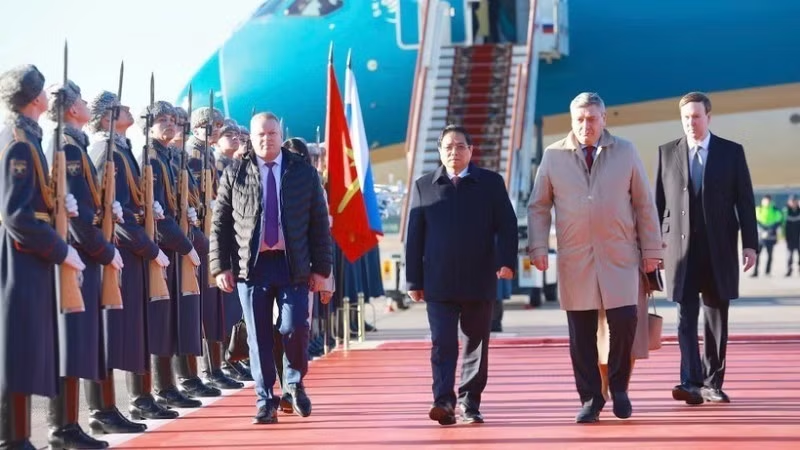
Although lasting only three days, with a packed schedule of around 30 activities, the official visit to the Russian Federation by Prime Minister Pham Minh Chinh and the high-level Vietnamese delegation was highly successful, substantive, and effective. It opened a new chapter with new strategic directions for cooperation, contributing to repositioning and elevating the Comprehensive Strategic Partnership between Viet Nam and the Russian Federation to a new level, built upon a long-standing and strong political foundation.
Viet Nam and the Russian Federation share a long-standing, loyal, and enduring traditional friendship and cooperation, proven over time. As Prime Minister Pham Minh Chinh noted during his meetings and talks with Russian leaders: although the world today is experiencing complex and unpredictable changes that adversely affect all nations, Viet Nam remains a steadfast and reliable friend of the Russian Federation.
Particularly in such times, the two countries must “unite to build strength, cooperate for mutual benefit, and engage in dialogue to reinforce trust,” as well as “listen with sincerity, share with heart, and act with concrete outcomes” in order to overcome all difficulties and challenges.
At the meetings, senior leaders of the Russian Federation, representatives of political parties in the Russian Parliament, leaders of major Russian corporations and enterprises, and especially long-standing friends, all strongly affirmed their support for advancing the Comprehensive Strategic Partnership, bringing benefits to the peoples of both countries and contributing to peace, cooperation, and development in the region and the world.
During talks between the two heads of government, Prime Minister Mikhail Mishustin expressed his high regard for the Comprehensive Strategic Partnership, considering Viet Nam one of Russia’s leading partners in the Asia-Pacific region and expressing a desire to further enhance the effectiveness of bilateral cooperation across all fields.
Prime Minister Pham Minh Chinh and Prime Minister Mikhail Mishustin emphasised that energy and oil and gas cooperation remains a traditional field, a pillar, and a symbol of effective collaboration between the two countries. They affirmed that this cooperation carries a centennial vision and holds strategic importance for both nations. The two sides agreed to soon study and expand cooperation in new energy, clean energy, and renewable energy, contributing to green transition and sustainable development.
Notably, the two leaders strongly affirmed that the signing of the agreement between Viet Nam and Russia on cooperation in building a nuclear power plant in Viet Nam marks an important step forward in bilateral cooperation in the peaceful use of nuclear energy, and expressed confidence that it will become a new symbolic project of Viet Nam–Russia friendship.
Under the decisive direction of the Prime Minister, during the visit, leaders of Vietnamese ministries, sectors, and localities actively engaged with partners, opening up many new areas of cooperation, including railway connectivity, metro development, agriculture, and scientific research.
Russia’s determination to strengthen cooperation with Viet Nam was further reaffirmed at the Viet Nam–Russia Business Forum attended by Prime Minister Pham Minh Chinh and Deputy Prime Minister Dmitry Chernychenko. Russian government leaders affirmed that Russia has strengths and stands ready to cooperate and invest in Viet Nam in areas such as energy (oil, gas, coal), agricultural products (meat, wheat, fertilisers), transport (aviation, maritime, rail), tourism, and human resource training, while effectively leveraging the Free Trade Agreement between Viet Nam and the Eurasian Economic Union, of which Russia is a member.
The Russian leader noted that the two countries should open new transport routes; in particular, Russia is ready to expand cooperation in new, clean, and renewable energy, contributing to green transition and sustainable development, as evidenced by the recently signed agreement on building a nuclear power plant in Viet Nam.
For his part, Prime Minister Pham Minh Chinh stated that Viet Nam is prioritising energy development, including nuclear energy as a clean energy source with a 100-year vision, and the development of a nuclear energy ecosystem. He expressed hope that Russia would invest in this ecosystem in Viet Nam.
In the oil and gas sector, the Prime Minister called for continued cooperation in exploration, exploitation, and processing, as well as the development of clean energy, including the seven layers of marine energy. To achieve double-digit economic growth, the energy sector must also grow at double-digit rates; therefore, the potential for Viet Nam–Russia cooperation in this field is immense.
The Prime Minister expressed his desire for enterprises of both countries to strengthen exchanges, seek investment cooperation opportunities, and improve connectivity between the two economies and business communities. He expressed confidence that, on the basis of the excellent political and diplomatic relations between Viet Nam and the Russian Federation, the business communities of both countries will soon implement more concrete investment projects, effectively tapping into each side’s “distinct potential, outstanding opportunities, and competitive advantages,” thereby elevating bilateral relations to a new, more practical and effective level.
At the forum, both sides agreed on the need to find effective payment mechanisms to address current challenges and further promote bilateral trade.
During the visit, Prime Minister Pham Minh Chinh placed particular emphasis on promoting cooperation in railway transport connecting Viet Nam with Russia, as well as the development of urban railway systems. He personally inspected the Moscow Metro Joint Operations Centre, gaining further insights to shape future cooperation directions in this field.
Observers witnessed his decisive working style when meeting with leaders of Russian Railways, urging close coordination with Viet Nam Railways Corporation to advance railway cooperation. He highlighted the need to address practical challenges such as transport connectivity and payment methods. The Vietnamese Prime Minister proposed the immediate establishment of a joint working group to promote strong and substantive cooperation.
Leaders of Russian Railways also strongly endorsed Prime Minister Pham Minh Chinh’s proposal to vigorously restore international intermodal rail transport to Russia, thereby diversifying transport modes. They affirmed that Russia possesses one of the largest railway systems in the world, along with nearly all necessary expertise, and stands ready and willing to share its knowledge with partners from Viet Nam.
Russian media also provided extensive coverage of the official visit by Prime Minister Pham Minh Chinh. News agencies such as TASS and RIA Novosti continuously reported on his activities, highlighting the special significance of the visit, particularly emphasising the strategic direction reflected in the signing of the nuclear power cooperation agreement.
In an interview with accompanying journalists, Deputy Prime Minister Dmitry Chernychenko noted that Russia was pleased to see that Viet Nam’s priority development areas outlined at the 14th National Congress of the Communist Party of Viet Nam align with key points of the cooperation plan recently signed by the two Prime Ministers. This demonstrates Russia’s ability to support Viet Nam, and that this mutually beneficial cooperation aims to achieve the economic goals of both countries.
He expressed confidence that with Russia’s support — particularly in energy and peaceful nuclear energy, as well as stable supplies of oil, gas, coal, raw materials, and agricultural products independent of international markets — Viet Nam will benefit significantly.
Although lasting only three days, with a packed schedule of around 30 activities, the official visit to the Russian Federation by Prime Minister Pham Minh Chinh and the high-level Vietnamese delegation was highly successful, substantive, and effective. It opened a new chapter with new strategic directions for cooperation, contributing to repositioning and elevating the Comprehensive Strategic Partnership between Viet Nam and the Russian Federation to a new level, built upon a long-standing and strong political foundation.