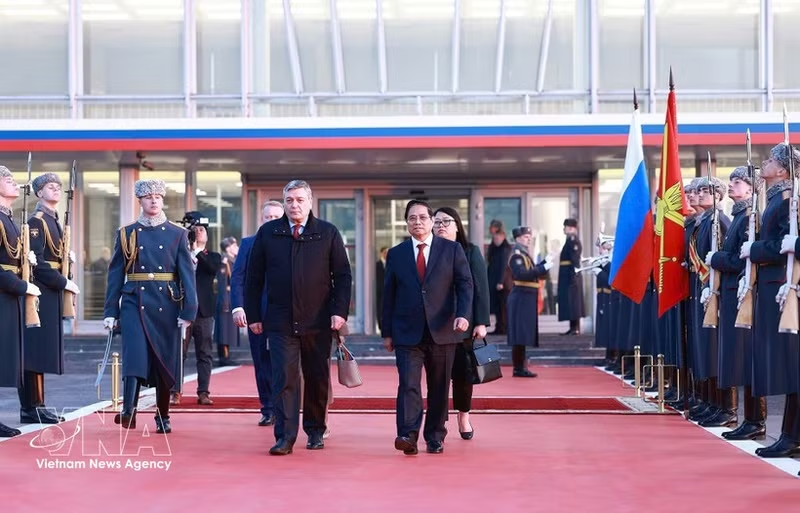
Vietnamese Prime Minister Pham Minh Chinh’s official visit to Russia from March 22 to 25 has drawn positive assessments from Russian enterprises, organisations, and experts who expressed optimism about the future of bilateral cooperation.
At the Viet Nam–Russia Business Forum on March 24, Ava Trading, a food trading company, signed a memorandum of understanding with Viet Nam Railways. Its general director Irina Ivanova noted that the agreement is expected to boost cargo transportation by rail and expand cooperation, particularly as trade flows increasingly shift from maritime to rail transport. She highlighted Viet Nam’s significant untapped potential in railway logistics, suggesting ample room for growth in this sector.
Anastasia Sayanok, Chairwoman of the Viet Nam Affairs Committee of the Association of Exporters and Importers, emphasised the forum’s importance as a platform for businesses from both countries to connect, exchange experience, and establish long-term partnerships. She described the Prime Minister’s visit as a catalyst for developing new and effective cooperation mechanisms to realise the comprehensive strategic partnership between Viet Nam and Russia. The business and investment communities, she added, are expecting improvements in licensing procedures, financial and credit systems, product standards, and information transparency, toward long-term projects.
Artem Zasursky, Vice President for International Development at AFK Sistema, underscored the need for a secure framework for international payments in cooperation with Viet Nam. Reflecting on his meetings with the Vietnamese Prime Minister in 2025 and again in Moscow, he pointed to highly promising prospects, particularly in pharmaceuticals, health care, and advanced technologies such as artificial intelligence and e-wallets. According to him, the visit further demonstrates the special nature of Viet Nam–Russia relations and the consistent attention from both countries’ leaders, which is vital for business confidence.
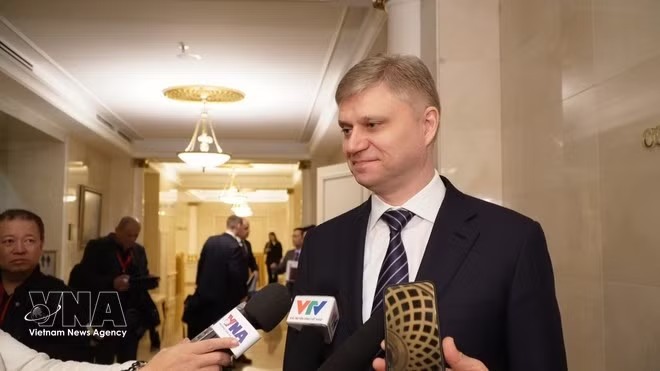
Following his meeting with the Prime Minister on March 25, Oleg Belozerov, CEO and Chairman of Russian Railways, shared that both sides discussed experience exchange, cooperation opportunities, and the potential to increase trade turnover via rail transport. A key focus was skills transfer, including training opportunities for Vietnamese personnel in Russia and the development of programmes in Viet Nam across multiple fields. He affirmed that Russian Railways, one of the world’s largest railway companies, possesses extensive expertise and stands ready to share its knowledge with Vietnamese partners.
Aleksey Likhachev, Director General of Rosatom, described the signing of the intergovernmental agreement on the construction of the Ninh Thuan 1 nuclear power plant as a major milestone. The project, featuring two Generation III+ VVER-1200 reactor units, is expected to strengthen Viet Nam’s energy security, technological sovereignty, and sustainable economic growth. It will also foster scientific development, modern infrastructure, and advanced technology applications.
On the people-to-people diplomacy front, leaders of the Russia – Viet Nam Friendship Association welcomed the visit as a significant step in deepening bilateral ties. They highlighted the nuclear power project as both a practical solution to Viet Nam’s energy needs and a new symbol of bilateral cooperation.
Experts also noted growing interest in Vietnamese studies in Russia, with increasing numbers of students learning the Vietnamese language each year. The visit is expected to further invigorate educational cooperation and human resources training, contributing to a stronger and more dynamic partnership between the two countries.