Unlike previous elections, this year’s vote takes place following the completion of the reorganisation of administrative units at all levels, resulting in changes in boundaries, population distribution, and organisational structures.
According to the National Election Council, the country has more than 73.4 million voters across 72,195 polling stations. Communication efforts must therefore achieve broad outreach, covering communities from urban to rural areas and across different professional and social groups.
Traditional communication methods such as loudspeakers, banners, posters, and conferences continue to play an important role but have revealed limitations in terms of speed of dissemination and their ability to reach specific target groups, particularly young people.
In recent months, Can Tho City, along with many other provinces and centrally run cities, has implemented communication activities in a proactive, creative, and systematic manner. A notable highlight is the establishment of a dedicated election information page on the “Can Tho Smart” application. This official digital platform has received strong public support, being regarded as both convenient and user-friendly.
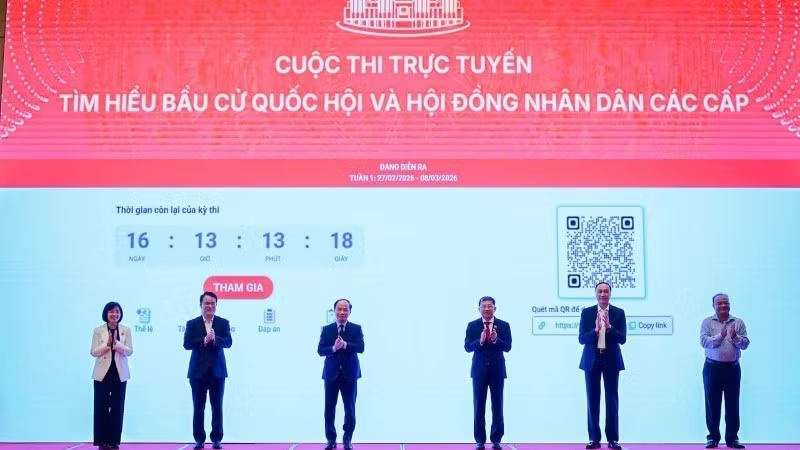
According to reported data, the city’s online contest on the Law on Election attracted nearly 65,000 participants with hundreds of thousands of entries, reflecting significant public interest. Instead of receiving information passively, voters were able to engage directly, experience the process and reinforce their understanding of legal knowledge through interactive questions and answers.
Many localities have also produced short news items, infographics, and video clips that are easy to understand and remember, publishing them on social media platforms. These visual materials have become effective tools for conveying information about election procedures, candidates’ biographies, and voters’ rights and obligations.
At grassroots level, the establishment of social media groups for steering committees and election committees, linked with mass organisations and residential communities, has created a “communication from the roots” system, enabling swift information updates and timely coordination in handling emerging situations.
Visual communication products (infographics and instructional videos) in Hai Phong, Vinh Long, and Dong Thap have become effective “handbooks”, making training and professional guidance more accessible and efficient.
The initiatives in Can Tho and many other localities not only provide timely solutions but also open a new direction for socio-political communication in the digital era: a shift from one-way dissemination to interactive two-way communication.
From now until election day, information and communication work remains a key task. This places significant demands in the digital age: for socio-political communication to be effective, it must continuously adapt and innovate in order to get closer to the people and serve them better. All levels and sectors are therefore required to act with urgency and heightened determination during the forthcoming peak period.