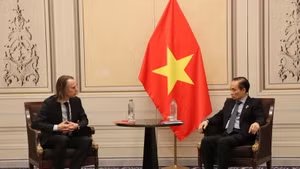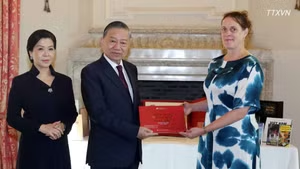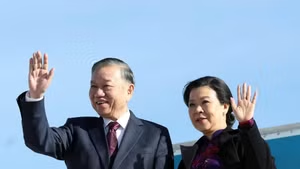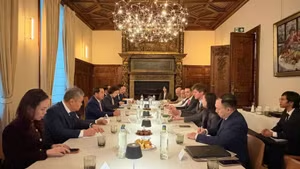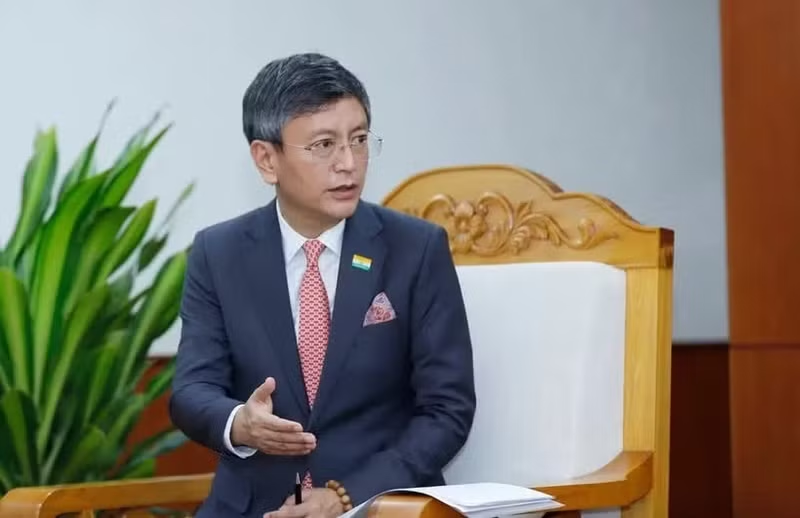
Indian Ambassador to Viet Nam Tshering W. Sherpa has underscored the significance of the upcoming state visit to India by General Secretary of the Communist Party of Viet Nam Central Committee and State President To Lam, describing it as a key opportunity to deepen the Comprehensive Strategic Partnership between the two countries.
The visit, scheduled from May 5 to 7 at the invitation of Indian Prime Minister Narendra Modi, takes place as Viet Nam and India mark the 10th anniversary of the elevation of bilateral ties to the Comprehensive Strategic Partnership. Sherpa said that the Indian Government attached great importance to the visit, expressing confidence that high-level engagements in New Delhi will inject fresh momentum into an already robust and forward-looking relationship.
He noted that bilateral ties, established in 1972 and elevated in 2016, have been built on shared values, mutual trust, and respect. Characterising the relationship as dynamic and future-oriented, the ambassador emphasised that both sides should translate shared principles into tangible outcomes.
Reflecting on more than five decades of diplomatic relations, Sherpa highlighted a range of achievements across multiple sectors. He said the two countries share deep civilisational links dating back thousands of years, with Buddhism serving as a spiritual bridge connecting their peoples.
In political terms, he pointed out that leaders of the two countries have met more than 25 times since 2016, reflecting strong strategic alignment and goodwill. Bilateral trade has doubled over the past decade, while connectivity has improved markedly, with nearly 90 direct flights per week compared with none a decade earlier, helping drive tourism, people-to-people exchanges, and commercial ties. Nearly 900,000 travellers moved between the two countries last year, he added.
On defence and security, the ambassador noted that cooperation spans all levels, including joint activities such as the Viet Nam–India Bilateral Army Exercise (VINBAX) on United Nations peacekeeping.
He also cited the enshrinement of the Buddha’s sacred relics in Viet Nam last year as a notable milestone in cultural and people-to-people exchanges.
The ambassador stressed that while bilateral trade has reached approximately 16 billion USD, there remains considerable room for expansion. He suggested that both countries, benefiting from favourable demographics and entrepreneurial capacity, should prioritise translating mutual trust into concrete economic gains.
He identified emerging areas for cooperation, including information and communications technology, innovation, science and technology, cybersecurity, artificial intelligence, quantum technology, pharmaceuticals, and transport and connectivity. India, he noted, stands ready to work closely with Viet Nam to explore and realise these opportunities for the mutual benefit of both societies.
On regional and global issues, Sherpa reaffirmed that Viet Nam is a key partner in India’s Act East Policy and its Indo-Pacific vision. Both countries share a commitment to peace, stability, and prosperity in the region, while Viet Nam also plays a central role in India’s engagement with ASEAN.
Citing PM Modi as saying that "the 21st century is our century, the century of India and ASEAN," the diplomat said 2026 has been designated as the ASEAN-India Year of Maritime Cooperation.
Against this backdrop, he reiterated India’s commitment to strengthening its dynamic Comprehensive Strategic Partnership with Viet Nam and to working closely with the Southeast Asian nation in a progressive, future-oriented partnership.