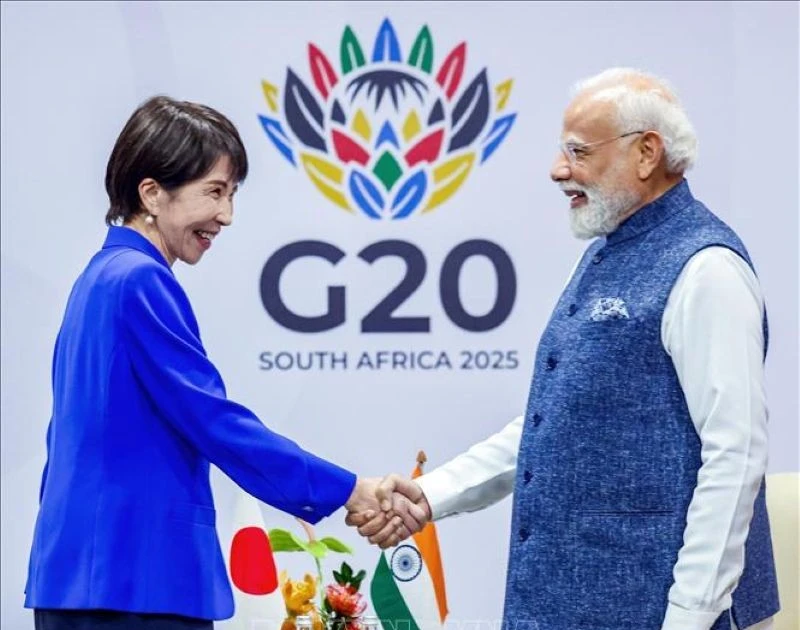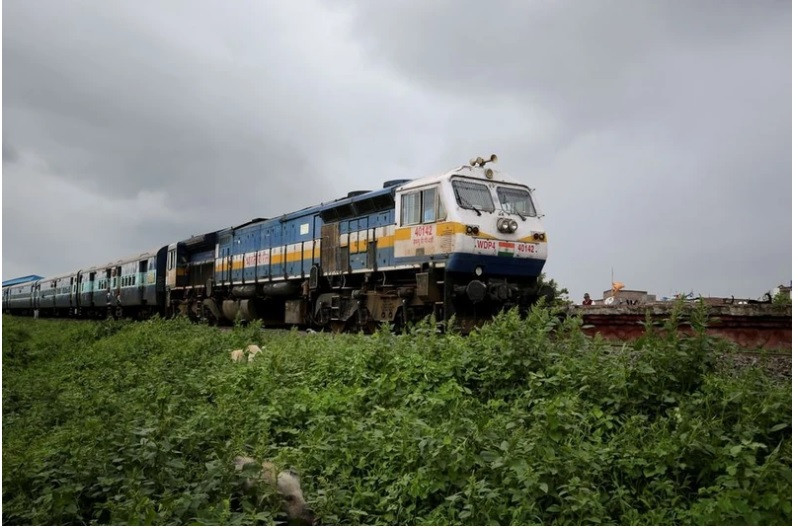
The plan was launched on the sidelines of the G20 Summit which took place in New Delhi, India last week.
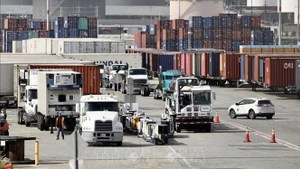
Accordingly, the US, Saudi Arabia, the European Union (EU), the United Arab Emirates (UAE) and other countries, launched an initiative to connect railway and seaport infrastructure across the Middle East (including UAE, Saudi Arabia, Jordan and Israel) to help accelerate trade between India and Europe by up to 40%.
The signatories hope this plan will help integrate India’s large market of 1.4 billion people with western countries while boosting the Middle East economy and the normalisation of relations between Israel and Arab countries in the Gulf.
The Spice Route economic corridor will develop infrastructure to enable the production and transportation of green hydrogen. The plan will also enhance telecommunications and data transmission through a new submarine cable connecting the region. Through this plan, Middle Eastern countries can also reduce their dependence on fossil fuels.
The initiative is expected to diversify trade connection locations, in the context that 10% of global goods transshipped through Egypt’s Suez Canal, is often interrupted.
The giant container ship Ever Given got stuck in the Suez Canal in March 2021, causing traffic congestion there for nearly a week. Pramit Pal Chaudhuri, South Asia practice head at the Eurasia Group, said a shipping container that today travels from Mumbai through the Suez Canal to Europe, could in the future go by rail from Dubai to Haifa in Israel and on to Europe, saving both time and money.
The initiative to connect infrastructure from India through the Middle East to Europe opens up many opportunities to promote trade for India with two important regions.
The EU is India’s second-largest trading partner and the second-largest destination for Indian exports. India’s exports of goods to EU member countries reached about 65 billion USD in the 2021-2022 period, while imports totalled 51.4 billion USD. India and the EU launched negotiations on a comprehensive free trade agreement (FTA), to further strengthen economic ties between the two sides.
Meanwhile, India also reinforces the promotion of trade and investment cooperation with countries in the Middle East.
India and Egypt agreed to foster bilateral trade to raise two-way trade turnover to 12 billion USD, within the next 5 years. India is currently one of Egypt’s top five importers, with commodities such as crude oil and liquefied natural gas, salt, cotton, inorganic chemicals and oilseeds. India’s main exports to Egypt include cotton yarn, coffee, herbs, tobacco, lentils, vehicle parts, ships, and electronic machinery. According to the Indian Ministry of Foreign Affairs, more than 50 Indian companies have invested about 3.15 billion USD in different sectors in Egypt.
Through the regional connectivity initiative, India also wants to utilise the potential for trade cooperation with Saudi Arabia. India ranks second in terms of trade volume with Saudi Arabia in 2022, reaching 52.4 billion USD. In addition, India also has more than 3,000 companies that own investment licenses in Saudi Arabia.
Speaking at the launch of Spice Route, US President Joe Biden said that this is a historic agreement. Meanwhile, President of the European Commission (EC) Ursula von der Leyen assessed that the India-Middle East-Europe economic corridor is not just a railway or a cable, but a “green and digital bridge” across continents and civilisations. With a potential market of human resources, natural resources and infrastructure, the Spice Route is expected to witness vibrant trade from Asia to West Asia and Europe.