The “key” to winning people’s hearts
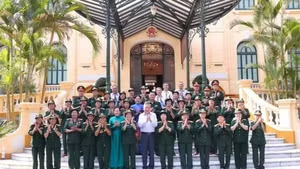
Having been closely associated with the people in the border region for nearly 70 years, the Border Guard of Lang Son Province has always recognised that to maintain the border, they must rely on the people. With the motto “The outpost is our home, the border is our homeland, and the ethnic minorities are our brothers and sisters”, the Party Committee and the Command of the Border Guard of Lang Son Province regularly direct border guard posts to actively advise and coordinate with the Party committees and authorities of border communes and towns to build and implement programs and plans for economic and social development, poverty reduction, and strengthening the management and protection of the national border.
The working groups deployed to the area, persistently and diligently implementing the “3 clings, 4 together” principle (clinging to the unit, clinging to the area, clinging to policies and guidelines; eating together, living together, working together, and speaking the language of the ethnic minorities together), have become the “key” to winning the hearts of the people.
A series of effective and innovative models of mass mobilisation have emerged and spread, yielding a double benefit: helping people develop their economy while simultaneously strengthening national defence and security. Border communes have transformed from impoverished areas into well-equipped rural regions with electricity, roads, schools, and health stations, with a significant reduction in poverty along the Viet Nam-China border.
Vi Van Nhu, Party Secretary and head of Chi Ma Village, Mau Son Commune, shared: “When the soldiers were struggling, the people supported and protected them. In 1975, during the Tet holiday, the villagers slaughtered pigs and brought rice to the border post to make banh chung (traditional Vietnamese rice cakes) to celebrate Tet with the soldiers. Young people in the villages participated in sports exchanges and performed cultural shows for the villagers to enjoy. Now, the border guards are returning the support, helping the people raise children in difficult circumstances, providing education, repairing and building new houses; giving livestock, and guiding them in farming and livestock breeding techniques to help them develop their economy and escape poverty."
The movements “All citizens participate in protecting national territorial sovereignty and border security” and “All citizens join forces to combat crime” have been enthusiastically supported by the people. The “All citizens join forces to combat crime” model is another highlight in the effective implementation of mass mobilisation work by the Lang Son Province Border Guard.
Currently, the entire province is effectively promoting the role and activities of 182 self-governing security and order groups; 176 “crime reporting mailboxes” in villages and hamlets; and 21 information and communication teams of border guard posts and border communes and towns. From these, the people act as active “eyes and ears”, providing thousands of valuable pieces of information, helping functional forces to promptly resolve border incidents and combat crime.
Strengthening trust, building people’s support
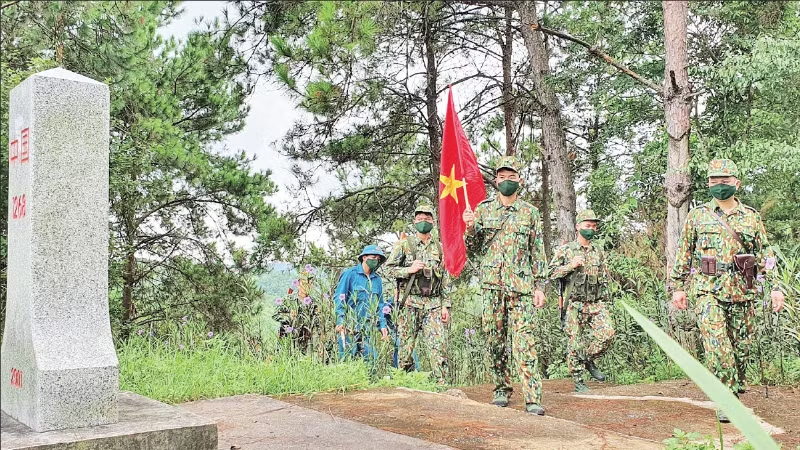
Lang Son has a border with 474 national border markers, most of which are located at high altitudes, making border patrol and inspection difficult and posing potential safety risks.
Implemented since 2022, the “Building Border Marker Inspection Roads, Protecting the Border” model stemmed from an essential need and became a breakthrough movement, demonstrating the strength of national unity. To date, over 40,200 man-days have been mobilised to build 332 border marker inspection roads, totalling 76km in length, at a total cost of over 51 billion VND.
These roads leading to the border markers not only facilitate safe and convenient patrols for officers and soldiers but also become “roads to prosperity,” helping people in border areas travel easily and conveniently, transporting agricultural products, and stabilising their lives.
Late in the afternoon, leading us on a visit to border marker 1291, Lieutenant Colonel Hoang Ngoc Huan, Political Officer of the Bac Xa Border Guard Post, shared: “Previously, before the concrete road was built, officers, soldiers, and local militia had to patrol using footpaths. In 2022, implementing the model of building patrol roads around border markers and illuminating border patrol routes, more than 30 km of border road with 40 border markers under the post's management and protection were paved with concrete, around 7 km of which are illuminated at night by a solar-powered lighting system.”
Implementing the “Illuminating Border Patrol Roads” and “Illuminating Inter-village Roads” models, the Provincial Border Guard coordinated with local authorities, businesses, and philanthropists to install more than 1,500 solar-powered streetlights along border patrol roads and 310 streetlights in villages. The model not only serves the work of patrolling, managing, and protecting the border; maintaining security and order; preventing illegal entry and exit; and combating various types of crime, but also creates favourable conditions for people in their daily lives, work, and production in the locality.
According to Lieutenant Colonel Nguyen Duc Thang, Political Officer of Chi Lang Border Guard Station, in 2024, from social mobilisation, the unit installed 360 solar-powered streetlights along the approximately-18-km-long border patrol road, worth more than 600 million VND and requiring 200 days of labour from officers and soldiers.
In particular, the border guard station mobilised over 5,000 man-days of labour from officers, soldiers, and civilians, totalling 4.5 billion VND, to construct 24 border marker inspection roads, with a total length of 5.5 km. This contributed to completing the access roads to 33 out of 33 border markers, making it the first unit in the province to complete the construction of border marker inspection roads.
In addition, recognising that socio-economic development is the foundation for building a strong people’s defence posture, the officers and soldiers of Lang Son Province have become the “extended arm” of the Party and state in the border region, “breathing life” into civilian projects, becoming symbols of the close relationship between the military and the people, and contributing to building a solid “people’s defence posture.”
Examples include: the “Vietnamese Border Bamboo Fortress” model, creating a “green wall” to protect the border and providing a stable income from bamboo; the construction and repair of public works, paving schoolyards and village cultural centres with concrete; and the renovation of school buildings, houses, and roads, contributing to the completion of new rural development criteria.