To effectively implement international agreements and facilitate trade, the Ministry of Construction has promulgated Consolidated Document No.22/VBHN-BXD,detailing the management of cross-border road transport. This document consolidates provisions from Circular No.37/2023/TT-BGTVT and the latest amendments and supplements under Circular No.26/2025/TT-BXD.
The issuance of this consolidated document is an important step in implementing Viet Nam’s commitments under the ASEAN Framework Agreement on the Facilitation of Goods in Transit and Cross-Border Passenger Transport. The new provisions are also aligned with the Greater Mekong Subregion (GMS) Agreement and bilateral agreements between Viet Nam and neighbouring countries such as China, Laos, and Cambodia.
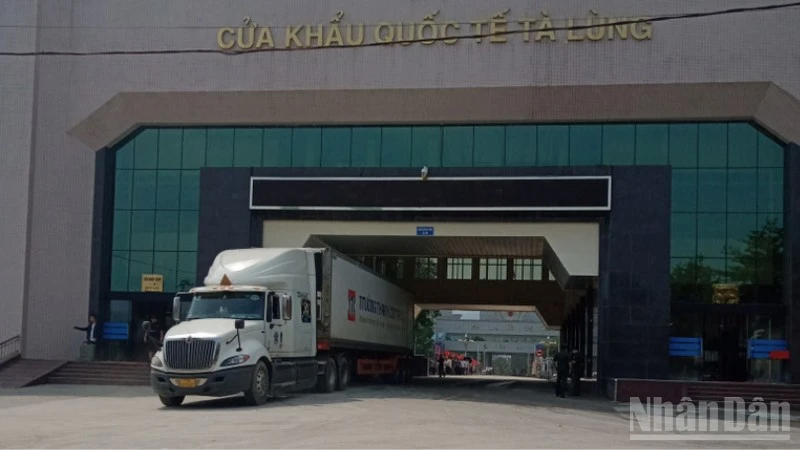
Accordingly, the scope of regulation covers requirements for transport vehicles, drivers, service personnel, as well as the list of border gates and transport routes used for cross-border transport activities between Viet Nam and countries in the region.
The document clearly stipulates that vehicles operating across borders must be granted a Cross-Border Transport Permit and display distinguishing national symbols. Specifically, Vietnamese motor vehicles engaged in international transport must affix the “VN” country code on the rear of the vehicle and display the ASEAN emblem on the windshield.
From a technical perspective, the contracting parties mutually recognise certificates of technical safety inspection and environmental protection. However, vehicles must carry all valid documents, including vehicle registration certificates, third-party liability insurance certificates, and temporary import–re-export declarations as required.
Regarding personnel, drivers must carry their passport or other internationally recognised travel documents, along with an appropriate driving license recognised by the contracting parties. All such documents must be issued in the national language and English, or accompanied by a certified English translation, to facilitate inspection and control at border checkpoints.
One notable new feature of the consolidated document is the clearer decentralisation and assignment of responsibilities among management agencies. The Viet Nam Road Administration is responsible for organising and managing vehicle operations, issuing permits, and conducting inspections and handling violations nationwide.
At the local level, Departments of Construction (replacing the term Departments of Transport in certain updated provisions) will serve as focal points for receiving semi-annual reports from transport enterprises and cooperatives operating in their localities. Reporting may be conducted flexibly in either paper or electronic form, contributing to the modernisation of management procedures.