The “Today’s Talent” short film competition was organised by the Viet Nam Association for the Promotion and Development of Cinema in coordination with the Centre for Cultural and Scientific Activities at the Temple of Literature in Ha Noi. Thirteen works received awards, with the first prize going to author Le Hoang Ha for the documentary film “Aspiration to reach further”.
The competition attracted contestants from various professions and age groups, ranging from non-professional filmmakers and students to professional filmmakers, each bringing different experiences, perspectives, and storytelling approaches. Most of them were very young filmmakers, with many still studying at university, however, they offered fresh perspectives on familiar topics that can be challenging to portray.
Of the 23 short films selected for the final round, 17 were documentaries, four were fiction films and two were animated films. Documentaries accounted for the largest proportion, showing that many authors chose to start from real characters, events, and stories; fiction and animation offered different storytelling approaches in terms of structure, character development, and visual language, with humane and original ideas.
Diversity of themes
Heritage, talented people and the tradition of learning have not traditionally been easy themes for many young filmmakers. However, the entries demonstrated the young filmmakers’ diverse efforts to explore, discover, approach, and portray these themes.
The entries covered a wide range of themes: education, images of teachers and students; portraits of intellectuals, along with history, science, creativity, culture, heritage, and traditional arts; and professions, young people, personal responsibility, and issues in contemporary life.
The most common thread running through the entries was the perspective of today’s generation on the cultural and spiritual heritage of their forefathers: the tradition of learning, respect for education, and the spirit of preserving and passing on the nation’s cultural values to future generations.
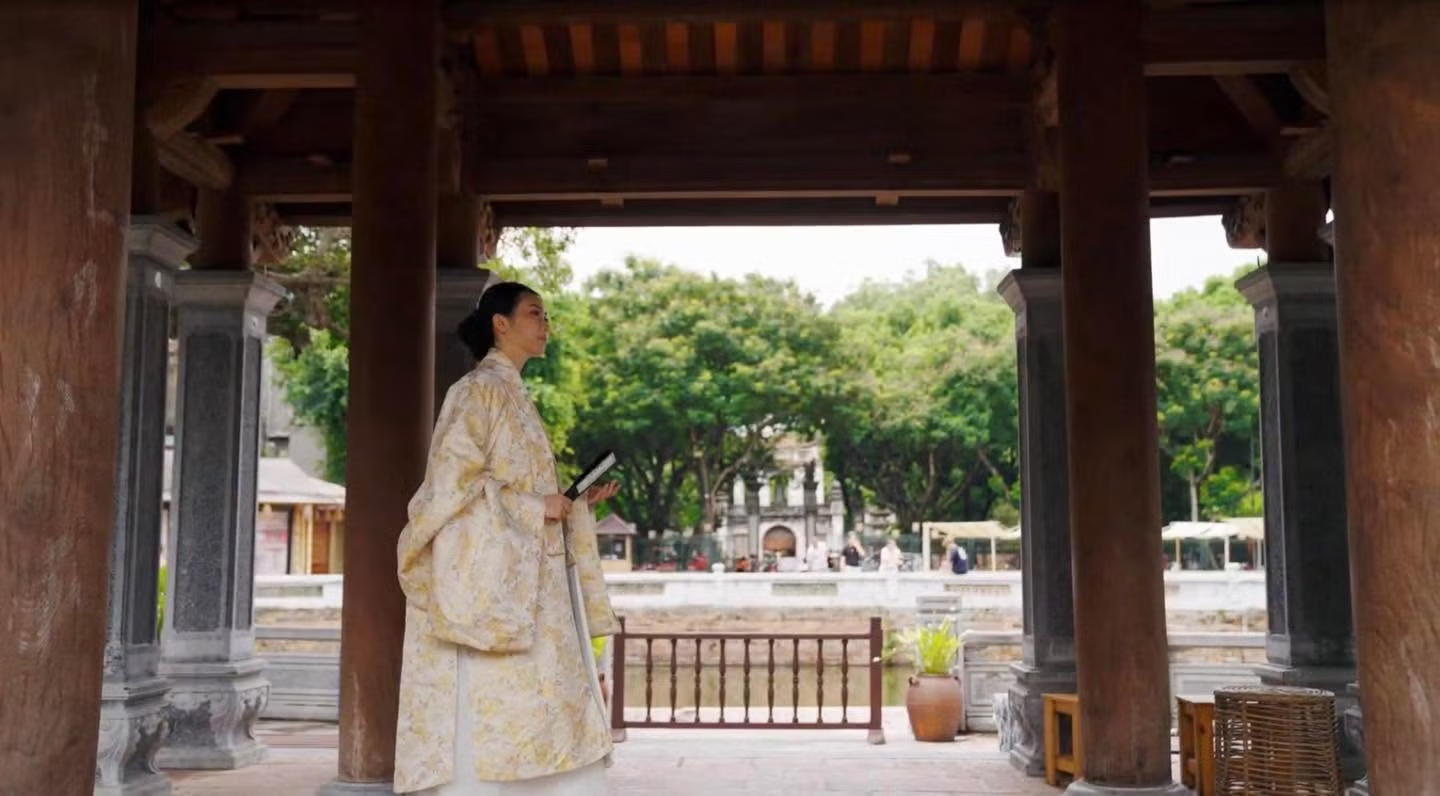
Works focusing on education, knowledge, and teachers included “Aspiration to Reach Further”, “Touching Knowledge”, “The Image of the Teacher in Modern Society”, “The Eternal Way of Learning”, “Teachers Facing Deadly Viruses”, and “Learning” exploring different aspects of learning and the transmission of knowledge. Some films followed people directly involved in teaching; others focused on research and science; while some explored access to education, the passing of knowledge between generations, or changes in the role of teachers in response to the demands of modern society. Through these works, education was not merely a theme but became a recurring theme running through many of the entries.
Alongside stories from the present, some authors chose portraits of intellectuals and historical figures to recount their contributions at different stages. “The Story of a Ha Noi Intellectual” explores the life and career journey of an intellectual figure, while “To Hien Thanh – A Shining Example in the Hearts of the Nation” revisits a historical figure. These works place their characters within specific contexts, thereby revealing stories about knowledge, responsibility, and contributions to society, rather than merely recounting biographies.
Culture, heritage, and traditional arts also constitute a theme that draws significant interest from filmmakers. Works such as “Ha Hoi Show: When Gen Z Revives Traditional Art”, “Stage Light”, and “Peach Blossom Shadow Amidst the Blue Season” approach culture through diverse settings and formats. Some films focus on community life and local identity, while others follow practitioners of traditional arts; there are also stories that place young people at the heart of the process — embracing and revitalising familiar cultural values to bring them closer to contemporary audiences. In this category of films, heritage is not merely a theme to be documented but serves as raw material for authors seeking new approaches to storytelling.
The lives of ethnic minority groups and highland communities are also featured in the contest entries. "Adei’s Coming-of-Age Ceremony" — a short fiction film explores the story of a Cham teenager upholding family and community traditions. Another short fiction film, "Tomorrow’s Village Chief", tells the story of a boy in the northern mountainous region facing choices, dreams, and responsibilities in village life. Through these works, the scope of the contest’s themes expands to encompass familiar stories from different communities and living environments.
Another theme clearly reflects the perspectives of young people regarding the choices of contemporary life. Works such as “Colour of Freedom” (short fiction film), “The Solution of the Future”, “The Virtue of Gentleness”, “The Quality of Talent”, and “Career” (documentary) confront their characters with questions concerning careers, responsibilities, personal choices, relationships with the community, and the potential to create changes through their own work and capabilities.
While works about history and education often relied heavily on real characters and stories, this group tended to use fictional situations and characters or more expressive storytelling approaches to convey their themes.
The animated entries also offered a different approach to the competition’s theme. The two works “Poocbaga” and “Colours of the Mountains” used character design, colours and, visual spaces to tell their stories, allowing the authors to expand their expressive possibilities by mainly relying on real characters and documentary material.
The presence of animation in the final round further enriched the competition’s range of visual languages.
Director and People's Artist Nguyen Khai Hung, the chairman of the final round jury, said all the films demonstrated respect for tradition, the spirit of respecting teachers and education, and teacher-student relationships, while also presenting fresh approaches through cinematic language.
According to him, although the films were made by people with different levels of experience, many works still succeed in evoking emotions in the audience.
He also stressed that for a work to stand out, the film must first adhere closely to the competition’s criteria while also having its own creative approach. “Each film has its own form of creativity, creating a very beautiful and vibrant palette for the whole collection of short films in ‘Today’s Talent’,” he said.
Diverse perspectives and modes of expression
Through the selection rounds, the works showed clear differences in professional experience, production conditions, and levels of completion.
Alongside films made by experienced organisations or production teams, many works by students, young filmmaking groups, and independent filmmakers demonstrated initiative in choosing themes, seeking characters, and experimenting with storytelling approaches.
Outstanding works were not based solely on a meaningful character or theme, but also demonstrated investment in story structure, visuals, sound, editing, rhythm, and the ability to guide the audience’s emotions. Some other works remained more documentary-like in form, relying heavily on narration and interviews or not fully exploiting the cinematic potential of their material.

Dr Ngo Phuong Lan, Chairwoman of the Viet Nam Association for the Promotion and Development of Cinema, said the more than 200 entries submitted not only demonstrated interest in the competition’s theme, but also reflected a love of cinema, enthusiasm for participation, and a rich source of creative energy from many different groups of authors. From professional filmmakers to students and young people passionate about cinema, each work contributed its own story and perspective, creating a diverse profile for the competition.
People's Teacher, Prof, Dr Nguyen Quang Ngoc, a member of the final round jury, also said that the shortlisted works demonstrated a variety of approaches, ranging from traditional storytelling to forms of expression infused with the language of modern cinema. According to him, one notable feature was that the films explored stories about people and traditions from authentic, accessible perspectives, with many works focusing more clearly on issues and characters from contemporary life.
Director Phan Dang Di, a member of the final round jury, said that despite a relatively conventional theme, the films submitted to the competition, many of them reportage and documentary films by non-professional filmmakers, had avoided monotony and clichés by choosing compelling characters. They could be well-known educators or scientists, or simply ordinary people striving to share knowledge with their communities, but their journeys were genuinely inspiring. “The films that documented those journeys, although technically still rough, conveyed very well the true spirit of talented people: a willingness to contribute, sacrifice and devote themselves,” Director Phan Dang Di said.