The CPTPP comprises Australia, Brunei, Canada, Chile, Japan, Malaysia, Mexico, New Zealand, Peru, Singapore, the UK and Viet Nam. In the first 10 months of 2025, total trade turnover between Viet Nam and CPTPP members (including the UK, whose agreement entered into force on December 15, 2024) reached 102.8 billion USD, up 20.6% year on year. Of this, Viet Nam’s exports amounted to 58.3 billion USD, an increase of 26%.
According to Cao Xuan Thang, Commercial Counsellor at the Viet Nam Trade Office in Singapore, Singapore’s total rice imports reached about 347.5 million SGD in the first nine months of 2025, up 3.4% compared with the same period in 2024. Viet Nam holds a strong market share in white rice and fragrant milled or husked rice, and remains Singapore’s third-largest rice supplier, after India and Thailand.
Leveraging CPTPP advantages, Viet Nam and Singapore signed a rice trade agreement on October 30, 2025, marking a new step in economic cooperation under their Comprehensive Strategic Partnership and boosting confidence among businesses to expand trade and investment ties.
In Australia, representatives of the Viet Nam Trade Office noted the growing presence of Vietnamese goods, particularly agricultural and seafood products. Cashew nuts account for around 90% of Australia’s total cashew imports, while pepper holds nearly 30% market share. Key seafood products such as shrimp, tra fish and processed seafood have also gained leading positions.
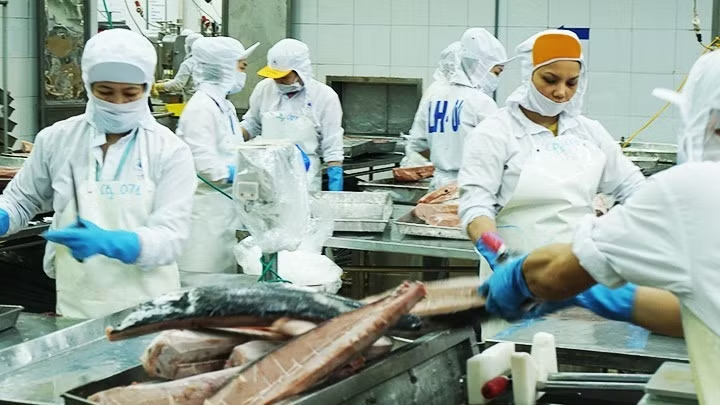
Across the CPTPP bloc, Viet Nam’s tra fish exports in the first 10 months of 2025 reached 305 million USD, up 36% year on year, accounting for 17% of total tra fish export value. Exports to Mexico reached 63 million USD, up 1%; to Japan, 39 million USD, up 14%; and to Malaysia, up sharply by 37%, reflecting expanding demand in the region.
Singapore’s total rice imports reached about 347.5 million SGD in the first nine months of 2025, up 3.4% compared with the same period in 2024. Viet Nam holds a strong market share in white rice and fragrant milled or husked rice, and remains Singapore’s third-largest rice supplier, after India and Thailand.
Cao Xuan Thang, Commercial Counsellor at the Viet Nam Trade Office in Singapore
According to the Viet Nam Association of Seafood Exporters and Producers (VASEP), the strong growth in tra fish exports to CPTPP markets stems from preferential tariffs under the agreement. Although quality and traceability requirements are stringent, many Vietnamese firms have met these standards, raising average order values. In 2026, with effective use of CPTPP incentives, the tra fish sector is expected to recover and grow strongly.
For Canada, Tran Thu Quynh, Commercial Counsellor at the Viet Nam Trade Office in Canada, said exports of agricultural products such as fruit, pepper and coffee continued to grow well. Notably, cashew exports rebounded from September 2025 after months of decline. Canada has shown the strongest growth in imports from Viet Nam among ASEAN countries, presenting significant opportunities.
As one of the enterprises stepping up fruit exports to Canada, Nguyen Dinh Tung, General Director of Vina T&T Group, said that Canada imposes stringent requirements on food safety and sanitary and phytosanitary controls. Vietnamese exporters therefore need to develop product lines certified to recognised standards such as GlobalGAP and HACCP, while also complying with SMETA requirements on corporate social responsibility. Canada is also considered a highly promising market, with diverse consumer demand, strong purchasing power and an important role as a gateway for Vietnamese businesses seeking deeper integration into the North American supply chain.
Viet Nam’s agricultural exports to CPTPP markets are showing increasingly positive signs, driven by stronger product competitiveness, greater dynamism and an improved ability among agricultural enterprises to meet international standards.
Viet Nam’s agricultural exports to CPTPP markets are showing increasingly positive signs, driven by stronger product competitiveness, greater dynamism and an improved capacity among agricultural enterprises to meet international standards. The CPTPP not only opens up market access, but also sets higher requirements that are prompting Viet Nam’s agriculture sector to undergo substantial transformation, particularly in areas such as traceability, quality assurance, deeper processing and brand development. While these demands create considerable pressure for businesses, they also offer significant growth potential, provided enterprises can enhance their processing capabilities and strengthen supply chain linkages.