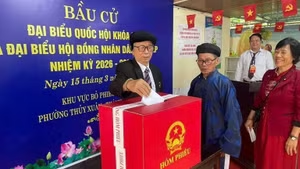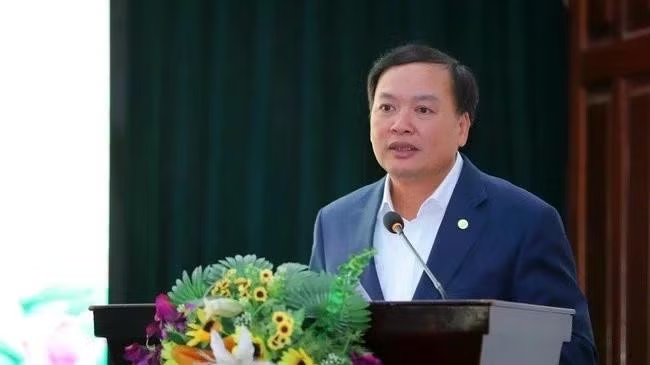
Sharing about the preparations for the election, Trinh Ngoc Chung, Director General of the Department of Culture of Ethnic Minorities of Viet Nam under Ministry of Culture, Sports and Tourism, said that these days, at the Viet Nam National Village for Ethnic Culture and Tourism, the atmosphere of preparation for the election day is joyful and lively. Ethnic people living and working at the Village are all looking toward the country’s major national event with a high sense of responsibility.
Q: Sir, how is the atmosphere among ethnic communities living and working at the Viet Nam National Village for Ethnic Culture and Tourism before the election of deputies to the 16th National Assembly and People’s Councils at all levels for the 2026–2031 term?
A: These days, at the Viet Nam National Village for Ethnic Culture and Tourism, the atmosphere of preparation for the election day is joyful and lively. Ethnic communities living and working at the Village are all looking toward the country’s major national event with a high sense of responsibility. People actively learn about information on the election, prepare traditional costumes to participate in voting, showing respect for their rights and duties as citizens.
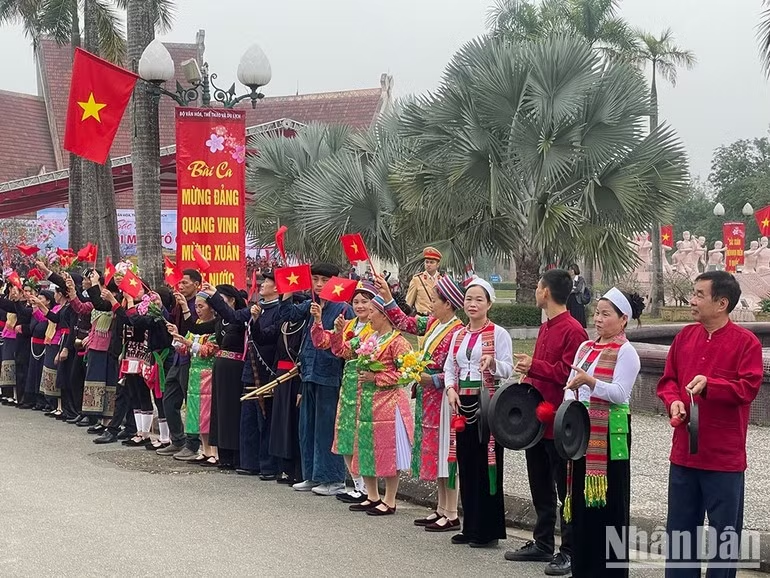
Q: Could you provide figures on the number of ethnic minority voters at the Village participating in voting at the polling station of Doai Phuong commune? With many artisans regularly living and working at the Viet Nam National Village for Ethnic Culture and Tourism, how has communication and dissemination of election information been carried out? What specific preparations has the Department of Culture of Ethnic Minorities of Viet Nam coordinated with the local authorities to implement?
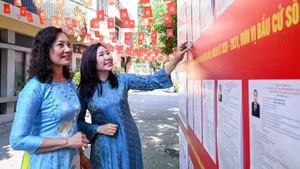
A: At present, there are 104 voters who are ethnic minorities living at the Village participating in voting at Polling Station No. 19 of Doai Phuong commune. From early on, the Department of Culture of Ethnic Minorities of Viet Nam closely coordinated with local authorities to carry out necessary preparations such as reviewing the voter list, publicly posting election information, conducting direct communication at community houses and ensuring conditions for people to exercise their voting rights conveniently.
Q: During the preparation for election day, how has the work of communication and dissemination about citizens’ rights and duties for ethnic people living at the Village been carried out in forms suitable to their cultural characteristics and daily life?
A: Communication work has been implemented in many forms suitable to the living practices of the ethnic communities. Officials and functional forces go directly to community houses to disseminate information about the election, the rights and duties of voters; at the same time, voter lists and necessary information are publicly posted so that people can easily access and understand.
Q: What conditions regarding facilities, means and organisation have been prepared to ensure that voters at the Village can exercise their voting rights conveniently, safely and in accordance with regulations?
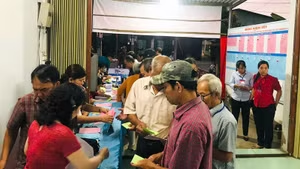
A: We have coordinated with local authorities to fully prepare facilities, timing and transport for voters. Voter cards are delivered directly to the people, and voter lists are carefully reviewed. Plans to ensure security, order and transportation have also been thoroughly prepared to ensure that voters can participate in voting conveniently, safely and in accordance with regulations.
Q: In your opinion, what is the significance of ethnic minorities living in the “common home” being able to directly participate in the election in the capital for strengthening great national unity and promoting the people’s mastery?
A: The fact that ethnic communities living at the Village can directly participate in the election in the Capital is very meaningful. This is not only the exercise of citizens’ rights but also contributes to strengthening the great national unity bloc and affirming the people’s role as masters in the political life of the country.
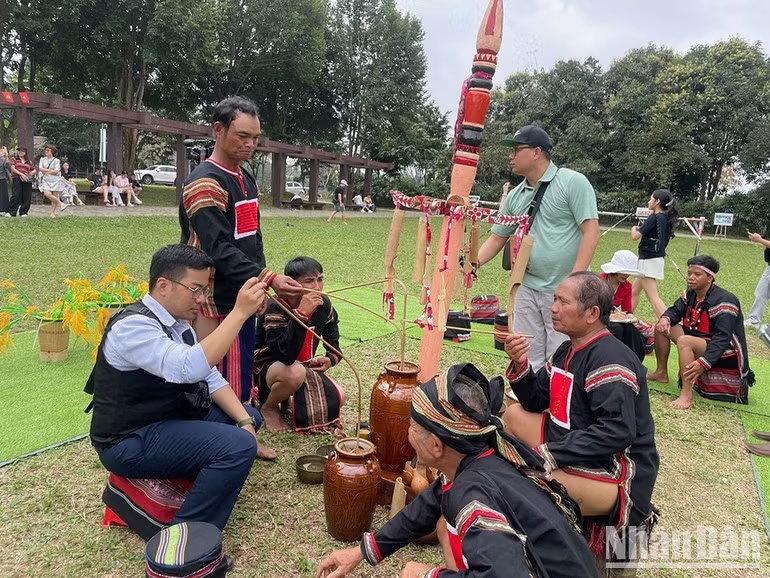
Q: During the implementation of preparations for election day, how do you assess the spirit, attention and responsibility of ethnic communities living and preserving cultural heritage at the Village? What difficulties and advantages have there been in the preparation process?
A: Through the preparation process, it can be seen that ethnic communities at the Village show great interest and active response. People proactively learn information and are ready to participate in election day with a high sense of responsibility. The greatest advantage is the consensus and civic awareness of the people; however, because the community includes many different ethnic groups, communication work must be implemented flexibly and suitably for each group.
Q: In addition to exercising citizens’ rights, how has the organisation of voting for ethnic people at the Viet Nam National Village for Ethnic Culture and Tourism been combined with communication about the Party’s and State’s policies on cultural development and ethnic minority areas?
A: The organisation of the election at the Village is also combined with communication about the Party’s and State’s policies on cultural development and ethnic minority areas. Through this, people better understand policies related to preserving and promoting traditional cultural values and socio-economic development.
Q: In your opinion, through this important political event, how can the Viet Nam National Village for Ethnic Culture and Tourism promote its role in raising political awareness, legal understanding and civic responsibility among ethnic communities?
A: Through this important political event, the Viet Nam National Village for Ethnic Culture and Tourism continues to promote its role as the “common home” of the community of 54 ethnic groups of Viet Nam, contributing to raising political awareness, legal understanding and civic responsibility among ethnic communities.
Q: From the practical experience of preparation at the Village, could you share more experiences in organising socio-political activities associated with the characteristics of ethnic minority communities?
A: Practical experience in organising activities at the Village shows that implementing socio-political activities in ethnic minority communities must be associated with the cultural characteristics and daily life of the people. At the same time, close coordination between management agencies, local authorities and the community of artisans is an important factor to ensure that activities are organised effectively and receive high consensus.
Q: Thank you very much, Director General!