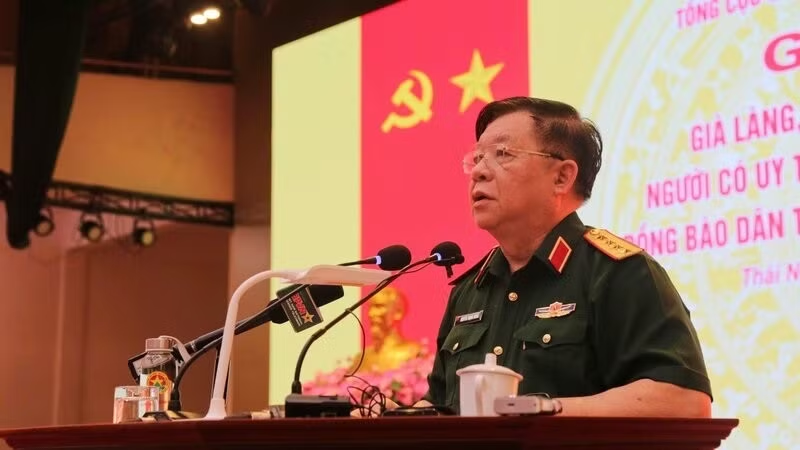
Addressing the meeting, General Nguyen Trong Nghia affirmed that village patriarchs, village heads, reputable figures and religious dignitaries in ethnic minority communities play a particularly important role not only in mobilising the masses but also in maintaining social stability and helping consolidate the strong “people’s security posture” from the grassroots level. They serve as “community connectors,” preserving customs and traditions while acting as a steadfast bridge between the Party’s will and the people’s aspirations.
He noted that the material and spiritual lives of the people have gradually improved, while the cultural identities of ethnic groups have been preserved and promoted. Grassroots political systems have been continuously strengthened, and national defence and security firmly maintained, with significant contributions from village elders, village heads, reputable figures, and religious dignitaries in the region.
General Nguyen Trong Nghia stressed that the country is entering a new era, requiring stronger efforts to inspire patriotism, harness the cultural strength of the Vietnamese people, and reinforce the great national unity bloc. Ethnic and religious communities, he said, are an inseparable part of that unity bloc, making it essential to further promote the role of village elders, village heads, reputable figures, and religious dignitaries in a practical, proactive manner closely linked to grassroots realities.
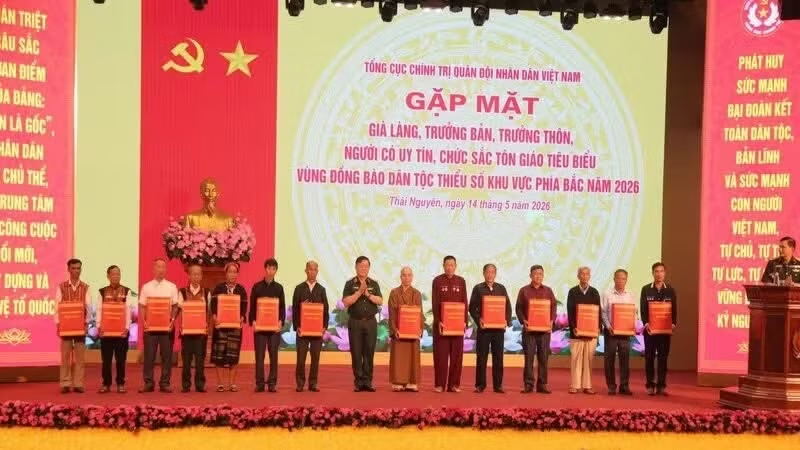
General Nguyen Trong Nghia called for the continued effective implementation of the Party’s and State’s guidelines and policies on promoting the strength of great national unity and building a strong “people’s security posture,” thereby laying a solid foundation for maintaining socio-political stability and enabling rapid and sustainable national development.
He also urged authorities to proactively grasp local situations, promptly guide public opinion, foster social consensus, and strengthen public trust in the Party and the State; while preserving solidarity, mutual respect, and support among ethnic and religious groups, preventing the emergence of complicated incidents or “hotspots” at the grassroots level.
He highlighted the need to further promote the core role, prestige, and sense of responsibility of village patriarchs, village heads, reputable figures, and religious dignitaries as “pillars of unity” and “anchors of public trust,” serving as centres for gathering and spreading the spirit of solidarity, aspirations for peace, and the will for self-reliance and resilience.
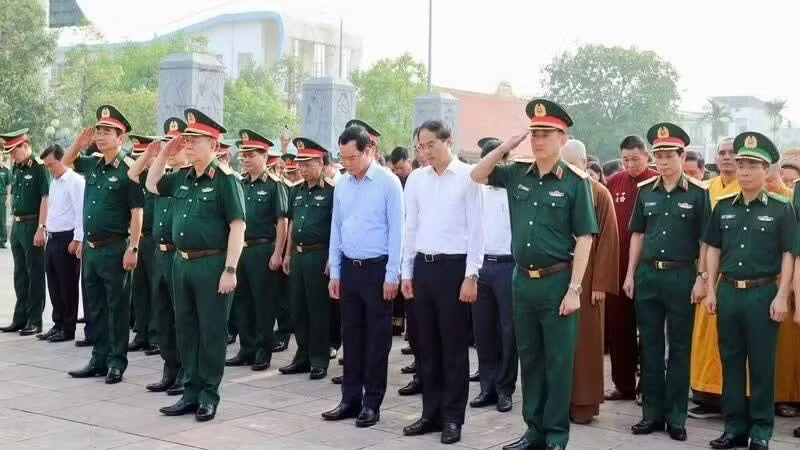
Military units stationed in localities were requested to effectively implement the directives of the Central Military Commission on strengthening mass mobilisation work, consolidating the close bond between the army and the people, and coordinating efforts to build strong grassroots political systems. These efforts contribute to improving people’s living standards, promoting sustainable poverty reduction, strengthening national defence and security, building resilient localities, responding to natural disasters and epidemics, and combating the strategy of “peaceful evolution” to maintain political security, social order, and safety in the area.
General Nghia also called on all sectors and levels to actively and responsibly participate in building clean and strong grassroots political systems, particularly in the context of implementing the two-tier local government model, where the role of trusted bridges between Party committees, authorities, and the people becomes even more important.
He stressed the need to promptly and truthfully reflect the legitimate aspirations and concerns of the people, while paying attention to identifying, fostering, and introducing outstanding individuals to create a source for Party membership development, thereby contributing to improving the quality of grassroots Party organisations.
On this occasion, General Nguyen Trong Nghia also visited and presented gifts to teachers and students at the Thai Nguyen Provincial Centre for Educational Development Support.
![[In Pictures] Top leader chairs working session on building an orderly, disciplined, safe, healthy, civilised, harmonious and developed society](https://en-cdn.nhandan.vn/images/9f233ae74386156ace55673ec5a8ea373e7bb5df2274800bfd51bda6ec86d946275f7b8bd8dcbaa66540c304bf03ab3f08c7c44bbc31b89a257a3124a66b76b39bebc97b3a8ee39ebfba85ee8dd5670905dd5954a14be79e83a571c124a16bfa52b8bd1fd127c97eb281b003e50122e4b0e8bbb7c3a4292635d2ec78730465b5557e95e3706aa5527d3e247a11f48385c59d9cc9d400c43c4116e389320b3bad4293aa1a667e2b921586e52a1cecfbc3445aa5dd6be20a829b994adf23f7e4ef23f5d29a414eb657f2cc97d2261b0d4c/vna-potal-tong-bi-thu-chu-tich-nuoc-to-lam-chu-tri-cuoc-lam-viec-ve-de-an-xay-dung-xa-hoi-trat-tu-ky-cuong-an-toan-lanh-manh-van-minh-hai-hoa-phat-tr-8802147-1jpg.jpg.avif)