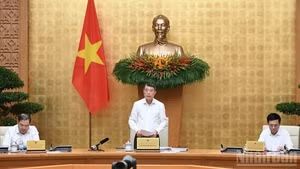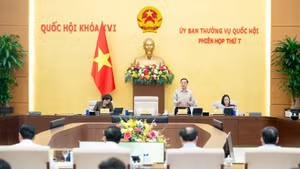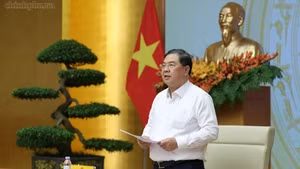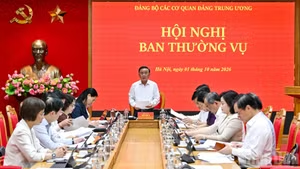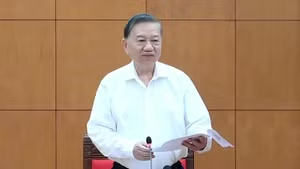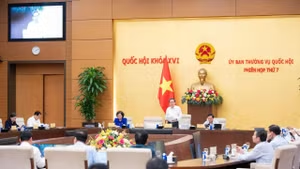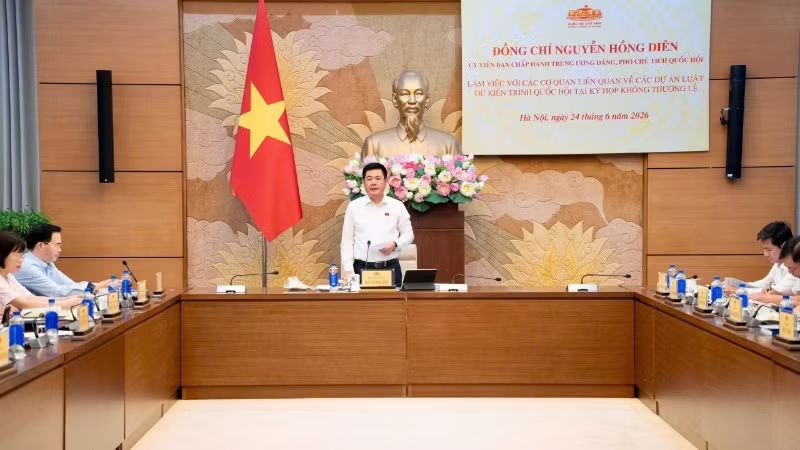
The draft laws discussed at the meeting included: a law amending and supplementing a number of provisions in ten laws related to administrative procedures and investment and business conditions in the agriculture and environment sectors; a law amending and supplementing a number of provisions of the Law on Architecture; and a law amending and supplementing provisions of the Law on Radio Frequencies, the Law on Telecommunications, the Law on Electronic Transactions, and the Law on Technology Transfer.
Vice Chairman Nguyen Hong Dien noted that these were highly important legislative projects, serving not only immediate objectives — including achieving double-digit economic growth and ensuring the smooth and effective operation of the three-tier government system, particularly the two-tier local administration model — but also long-term goals.
These include establishing a coherent, transparent, and practical institutional framework to realise the milestones of the 100th anniversary of the Communist Party of Viet Nam and the 100th anniversary of the nation.
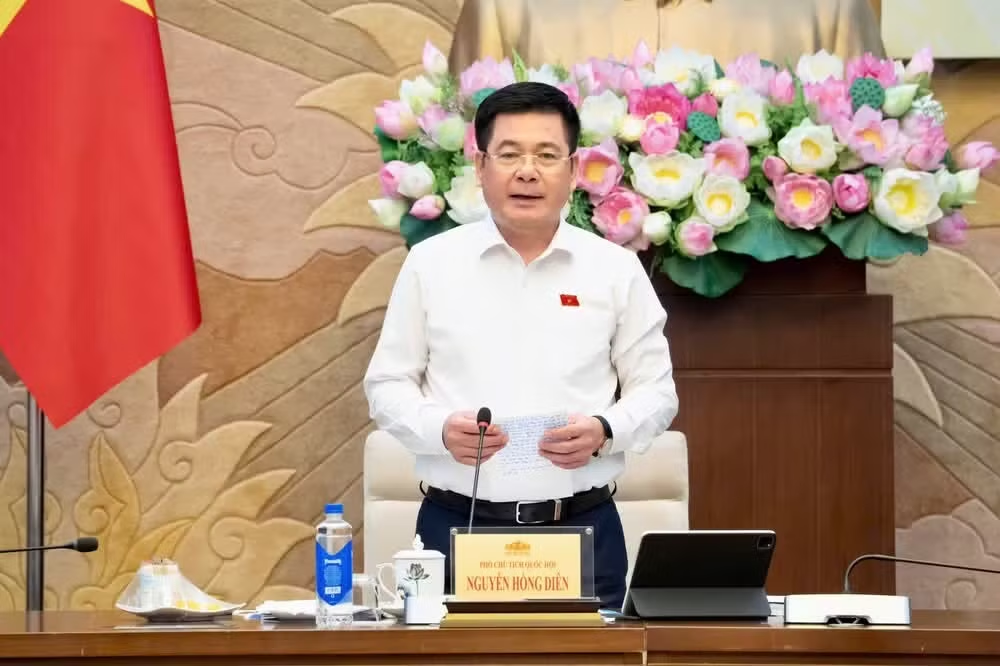
The Vice Chairman requested the Standing Committee of the NA Committee on Science, Technology and Environment to urgently coordinate with the drafting agencies to review the projects and ensure they are submitted on schedule to the NA Standing Committee for consideration and comments before being presented to the National Assembly at the extraordinary session. He stressed that there should be no proposals to postpone, withdraw, or adjust the timetable.
He also called for continued efforts to thoroughly implement the requirement to renew legislative thinking and law-making methods in line with Politburo Resolution No. 66, under the principle that “institutions should lead the way, pave the path, and create momentum for development.”
The overarching requirement, he emphasised, is to ensure progress without compromising quality. Draft laws must not be prepared hastily, resulting in incomplete dossiers, immature or unclear provisions, limited feasibility, or shortcomings that emerge immediately after enactment.
Regarding the draft laws, he urged both the drafting and reviewing agencies to continue carefully examining their constitutionality, legality, and consistency within the legal system. Particular attention should be paid to issues overlapping with related legislation in order to avoid contradictions, duplication, or legal gaps.
The draft law amending and supplementing provisions of ten laws in the agriculture and environment sectors covers the Law on Plant Protection and Quarantine, the Law on Crop Production, the Law on Animal Husbandry, the Law on Veterinary Medicine, the Law on Fisheries, the Law on Irrigation, the Law on Dykes, the Law on Water Resources, the Law on Hydrometeorology, and the Law on Geology and Minerals.
The draft legislation proposes cutting 31 administrative procedures, abolishing 14 unnecessary business conditions, and further simplifying numerous procedures across eight areas of management. In addition, 24 powers in the fields of crop production, animal husbandry, veterinary services, and geology and minerals would be decentralised to chairpersons of provincial People’s Committees, thereby enhancing the autonomy and initiative of local authorities.