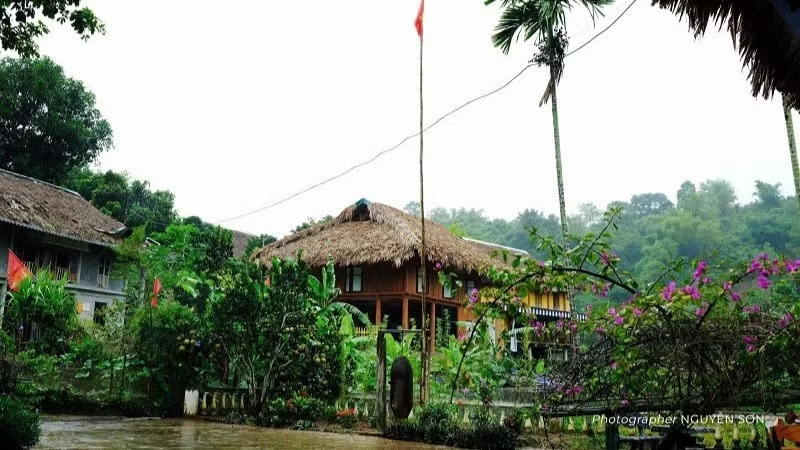
Situated in a valley at the foot of Mo Mountain, surrounded by limestone slopes, bamboo forests and rice fields, Giang Mo Village (Mo Hamlet), Thung Nai Commune, Phu Tho Province (formerly Binh Thanh Commune, Cao Phong District, Hoa Binh Province) is home to the Muong ethnic minority people, whose cultural space, scenery and way of life retain many distinctive features.
The hamlet currently has around 140 households. A notable highlight is the preservation of traditional stilt houses of the Muong people, winding paths, fruit gardens, and a peaceful setting in harmony with nature.
Community ownership
The task “Building the model of bright, green, clean, beautiful, and safe hamlets for the Muong community of Mo Hamlet associated with community tourism development” falls under the National Target Programme for New Rural Development 2021–2025, led by the Viet Nam Academy for Water Resources in coordination with local authorities.
Master Pham Chi Trung, of the Viet Nam Academy for Water Resources and head of the project, stated: “The model goes beyond landscape enhancement, aiming to create a sustainable cultural and environmental foundation, which in turn generates new livelihoods and increases local incomes through community tourism. Therefore, the project’s measures are implemented in a practical way, with the community as the main actor. Activities include environmental protection education linked to cultural practices for both locals and tourists; reducing waste pressure through guidance on collection, classification, and the application of scientific methods to process organic household waste for families operating homestays; establishing green behaviour rules in landscape renovation, preserving living and production spaces; organising regular clean-ups, tree planting and forest protection with participation from locals and visitors; and encouraging local initiatives to develop tourism based on cultural experiences that place minimal pressure on natural resources…”
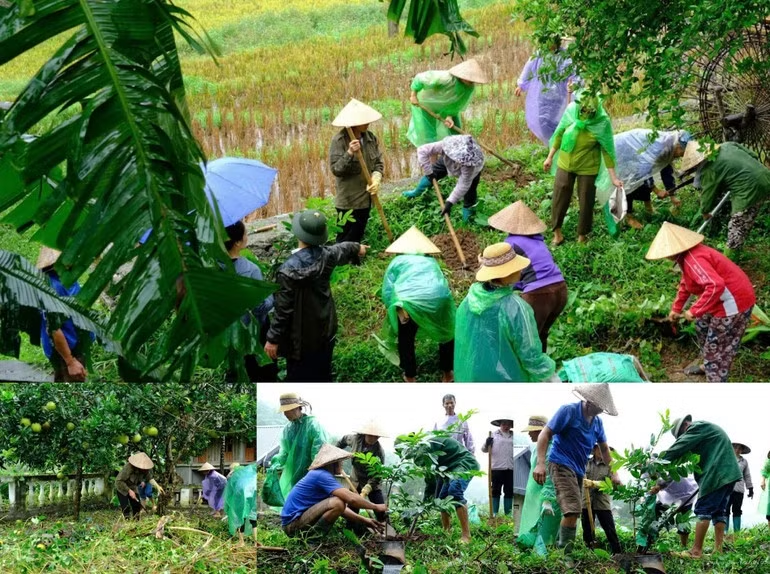
“Participating in the model has brought many benefits. We have received training on environmental protection, how to manage community tourism sites effectively, and guidance on making IMO microbial inoculants from molasses, bananas, and rice bran to process organic household waste. We were also provided with compost bins…” shared Bui Thi Chieu, owner of Bao Chieu Homestay, Mo Hamlet.
Spreading environmental awareness
As part of the project’s activities, environmental awareness and understanding of cultural identity have been promoted through communication programmes connecting the community with visitors, especially young people. Recently, students, teachers, and parents from the High School of Educational Sciences, Viet Nam National University, Ha Noi, participated with locals in Mo Hamlet in cleaning the landscape, planting flowers and trees, experiencing communal labour in the Muong cultural space, and learning about traditional life through cultural exchanges, bamboo-pole dancing, visiting Muong kitchens, and interacting with local residents. At the end of the programme, students were awarded certificates for “Joining hands with the community to protect the environment and landscape”.
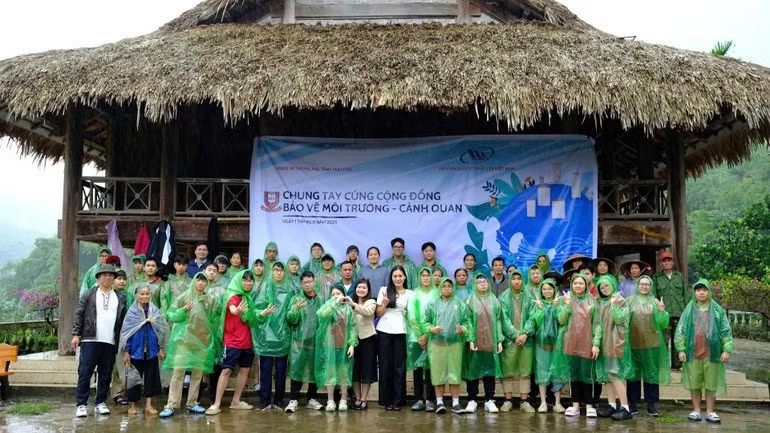
Tran Thi Dung, a homeroom teacher for Class 10A4, shared: “When students actively clean the landscape, plant trees, participate in daily life and listen to locals’ stories, it is a two-way process: students learn more about local culture, while the community witnesses the respect and support of the younger generation for their homeland’s way of life. Therefore, the trip is not only an educational experience for students but also helps instil pride and communal responsibility in preserving the landscape and cultural identity.”
Dr. Pham Van Ban, Deputy Head of Planning, Viet Nam Academy for Water Resources, noted: “The pilot models implemented under the New-Style Rural Development Programme 2021–2025 have provided many practical lessons in rural management and development, from preserving traditional landscapes to collecting and treating wastewater and waste through green and circular economy approaches. The academy has issued a technical handbook to facilitate local implementation.”
Thanks to proactive community participation and the support of project partners, Mo Hamlet has achieved remarkable results. Bui Yen Minh, Deputy Head of Culture and Social Affairs, Thung Nai Commune, Phu Tho Province, said: “Communication efforts have helped locals understand that community tourism contributes to local economic development while preserving ethnic cultural identity. Especially, preserving the landscape and ecological environment is key, as these pristine and harmonious values attract visitors to experience and appreciate the village’s beauty.”
Currently, Mo Hamlet has more than 30 households capable of welcoming visitors, including 14 homestays. The community has established a Community Tourism Development Cooperative, with operational regulations and specific conservation guidelines.
Households participating in tourism development commit to maintaining the landscape and traditional architecture, avoiding solid constructions that disrupt communal space, and prioritising the preservation of traditional stilt houses. Furthermore, local authorities integrate landscape and cultural preservation into annual assessments of “Cultural Families” and “Cultural Residential Groups”, creating consensus for collective participation.
Under Decision No. 1419/QD-UBND dated July 30, 2024, Mo Hamlet was recognised by the Phu Tho Provincial People’s Committee as a provincial-level community tourism site. By the end of 2025, Thung Nai Commune is expected to welcome approximately 380,000 visitors, generating revenue of around 93 billion VND (3.53 million USD), with Mo Hamlet alone estimated at 110,000 visitors, including about 300 international tourists.
Despite these achievements, sustaining the model long-term remains challenging due to uneven awareness, limited resources, and lack of infrastructure investment. Bui Yen Minh added: “The community hopes to continue receiving support from the Phu Tho Provincial People’s Committee and relevant agencies in improving tourism planning; organising training and professional development for service and tour guides; providing additional infrastructure resources; promoting local publicity; and strengthening cooperation with enterprises to address gaps in human, financial, and material resources.”
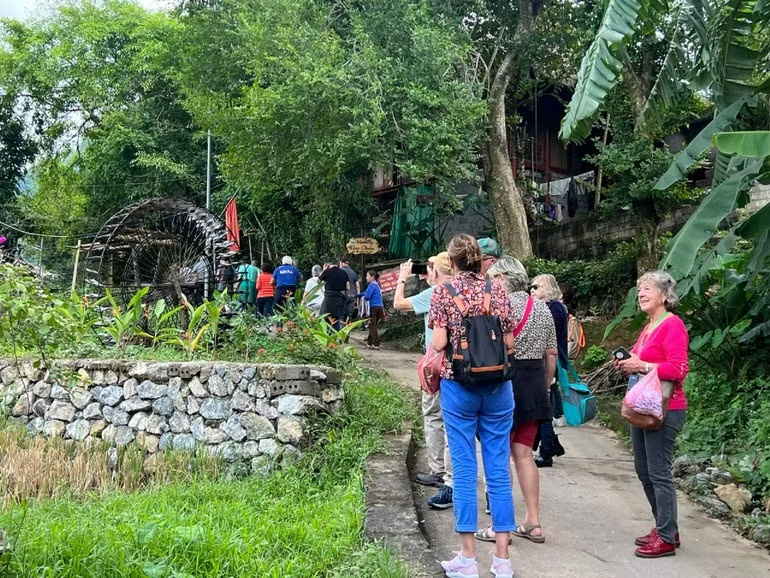
It is evident that the model “Bright, green, clean, beautiful, and safe villages and hamlets” in Mo Hamlet, Thung Nai Commune, demonstrates that when the community takes ownership and is accompanied by scientists, creating a high-quality living environment can form a foundation for new livelihoods, increase income, and contribute to the preservation of cultural identity. This represents a path towards sustainable tourism development, harmonising people, culture, and nature.