Disasters in 2025 inflict unprecedented losses
Since the beginning of 2025, natural disasters occurred across Viet Nam with high frequency, great intensity, wide-ranging impact, and many unusual features, exceeding historical levels.
Notably, typhoons and tropical depressions in the East Sea/South China Sea displayed irregular, complex, and difficult-to-predict developments.
This year witnessed as many as 21 typhoons and tropical depressions in the East Sea, including 15 typhoons and six tropical depressions, surpassing the previous record of 20 in 2017.
This year witnessed as many as 21 typhoons and tropical depressions in the East Sea, including 15 typhoons and six tropical depressions, surpassing the previous record of 20 in 2017.
Many typhoons were extremely powerful, moved rapidly along unusual paths; some early-season typhoons made landfall in the central region, while late-year typhoons still directly affected the northern region.
Three particularly strong typhoons made landfall in the central region, prompting the Prime Minister to establish a forward steering committee to directly oversee response and recovery efforts.
In addition to typhoons, extreme rainfall and historic flooding occurred across more than 18 river systems in the northern and central regions, accompanied by record-high tides at the lower reaches of the Tien and Hau rivers.
Prolonged flooding in many urban and low-lying areas severely disrupted lives and socio-economic activities.
The disasters caused particularly severe damage to people, property, infrastructure, and disaster prevention works.
As of December 24, 2025, nationwide there were 468 people dead or missing, and 741 injured. A total of 4,179 houses collapsed, were destroyed, or swept away, while 348,834 houses were damaged or lost their roofs.
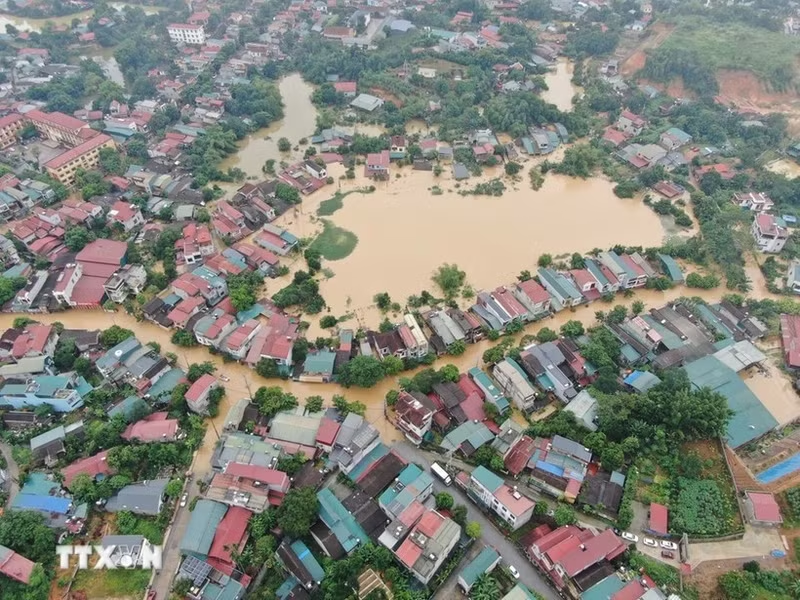
Over 545,000 hectares of rice and crops were damaged; tens of thousands of livestock and millions of poultry perished or were swept away; hundreds of thousands of aquaculture cages were destroyed. Transport infrastructure, dykes, riverbanks, and coastlines suffered heavy losses, with total estimated economic damage exceeding 98.677 trillion VND – the highest ever recorded.
International assistance mobilised swiftly and effectively
In the post-disaster recovery effort, the Party, State, and Government introduced decisive and coordinated measures. Government resolutions, together with the launch of the Quang Trung Campaign to rapidly build and repair houses for heavily affected communities, demonstrated a proactive, responsible, and determined spirit in support of the people.
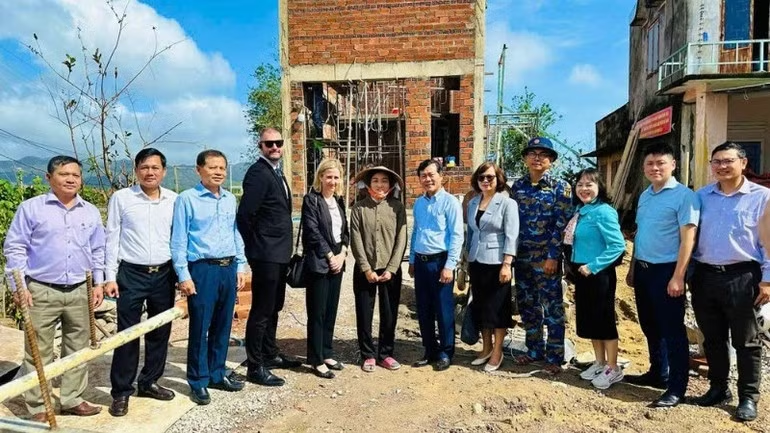
Alongside domestic efforts, mobilising international resources became an urgent requirement to provide timely support for disaster-affected people. The Viet Nam Disaster and Dyke Management Authority (VDDMA) closely coordinated with embassies and international organisations to implement emergency support activities.
As of December 25, 2025, embassies and international organisations had provided and committed more than 23.8 million USD for 20 provinces and cities, supporting over 240,000 households.
In early October 2025, after Typhoons Bualoi and Matmo and their remnants caused severe damage in northern mountainous provinces, the VDDMA convened an emergency meeting to share information on rain and flood conditions. The meeting was attended by more than 100 delegates from embassies and international organisations in Viet Nam.
As a result, numerous aid commitments were quickly announced, and three rapid damage assessment teams were deployed to six northern mountainous provinces to propose appropriate relief plans.
The information exchange and coordination mechanism between the VDDMA and international partners was maintained during subsequent major disasters such as Typhoons Fengshen and Kalmaegi, and historic flooding in the central region. Foreign countries and international organisations were ready to commit and implement support in various forms, through unified and timely coordination.
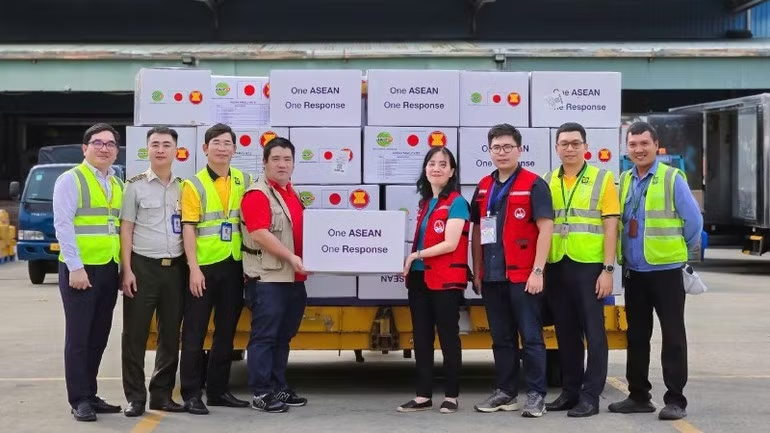
The 2025 Joint Response Plan (JRP) Addendum, launched by the United Nations and the Government of Viet Nam, urgently appealed for 96.2 million USD to provide life-saving and recovery assistance for approximately 1.4 million people in severely affected northern and central provinces.
As of December 25, 2025, through coordination by the Ministry of Agriculture and Environment, embassies and international organisations had provided and committed more than 23.8 million USD for 20 provinces and cities, supporting over 240,000 households.
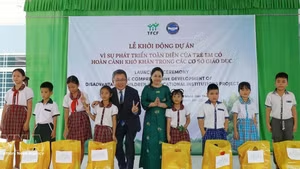
International aid was delivered in diverse, flexible, and practical forms: relief goods worth over 7.07 million USD; direct cash support of nearly 5.83 million USD for about 42,000 households; cash assistance for house repair and reconstruction totalling 3.85 million USD for nearly 4,200 households, contributing to the Quang Trung Campaign goals; and nearly 250,000 USD for capacity-building and community training activities. In addition, about 6.84 million USD is being planned for implementation by partners.
The transparent, targeted, and timely mobilisation and allocation of aid not only helped people overcome immediate difficulties but also strengthened the humanitarian spirit of mutual support.
A notable highlight of international resource mobilisation in 2025 was multi-purpose cash assistance. This innovative and effective method shortened implementation time, reduced logistics costs, and enabled people to proactively choose essential needs suited to their circumstances, thereby stimulating local economic recovery.
From these specific results in 2025, the Dike Management and Disaster Prevention Department affirmed its role as a key coordinator in effectively linking international resources with urgent local needs.
The transparent, targeted, and timely mobilisation and allocation of aid not only helped people overcome immediate difficulties but also strengthened the humanitarian spirit of mutual support, affirming Viet Nam’s image as a proactive, responsible, and reliable partner in international disaster prevention and response cooperation.





![[Video] Ha Noi opens new development space, aiming for breakthrough growth](https://en-cdn.nhandan.vn/images/8f440db7b9bfe62cb5397a6750a8b01b641b8033382e7cd9efdd770542fabfef7f0c79d855aad148335cf6df114dc7c6e9025c2d7944d75148de8ee1664be9e4/hanoiideo.jpg.avif)