Bringing international knowledge and experience home
After years of studying, conducting research and working abroad, a number of Vietnamese scientists have chosen to return home to continue their research and teaching careers at domestic universities. They bring with them international knowledge and experience, helping establish research teams, train younger generations and strengthen the country's scientific and technological capabilities.
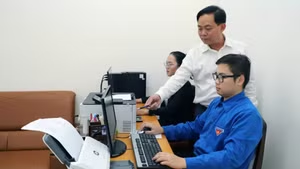
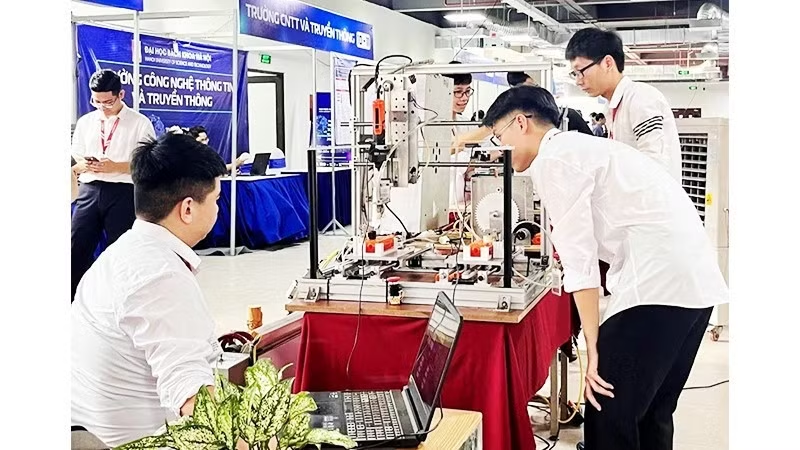
At Ha Noi University of Science and Technology (HUST), Dr Nguyen Duc Viet returned to his alma mater in September 2025 after nearly a decade of studying and working overseas. His work extends beyond teaching. He has brought together talented postgraduate and undergraduate students to establish a research team focusing on membrane technology for water treatment, green energy, resource recovery and the application of artificial intelligence in environmental treatment.
By early 2026, Dr Nguyen Duc Viet had published nearly 40 scientific papers in international journals, achieved an H-index of 16 — a metric measuring the research output and impact of a scientist, research group or scientific journal — and received nearly 800 citations.
During his first months at HUST, his research team secured funding from the National Foundation for Science and Technology Development (NAFOSTED) for a basic research project in natural sciences and engineering.
These initial achievements demonstrate how a young scientist can put his expertise to effective use when given the opportunity to establish a research team and mentor students. Knowledge developed in the laboratory is passed on through teaching and training, while also being directed towards addressing practical challenges in the environment, natural resources and energy.
Also returning to HUST, Doctor of Science Luong Thi Hong Lien brought more than 30 years of experience in research and technology development in France, including a period working for the L'Oréal Group. The holder of 60 patents, she was recruited in February 2026 under the HUST-Talent programme to lead a research team.
Her experience in an international corporate environment enables her to connect scientific research with product development requirements and technological applications.
Her desire to contribute to her homeland, be closer to her family and participate in developing a biomedical engineering training programme at her alma mater were among the factors behind her decision to return.
Alongside scientists working at universities and research institutes, experts with experience in corporate technology development can also bring valuable expertise in applied research, inventions and product commercialisation.
At Phenikaa University, Dr Phan Quang Sang has been involved in establishing the Applied Mathematics and Informatics programme after more than a decade of studying and conducting research in France and Poland. His work encompasses teaching, student supervision and the development of new academic programmes. Mathematics and computer science provide essential foundations for fields such as data science and artificial intelligence. The involvement of internationally experienced scientists in developing academic programmes therefore helps strengthen their disciplinary foundations and enables students to engage with modern scientific and technological challenges.
From strategic orientations to concrete policies
As science, technology, innovation and digital transformation play an increasingly important role in economic growth, the quality of human resources has become a decisive factor in national competitiveness. For Viet Nam, developing a workforce of experts, engineers and scientists capable of mastering technology is an urgent requirement to improve labour productivity, promote economic development and gradually gain mastery of strategic sectors.
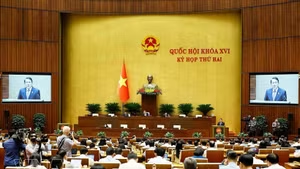
The Resolution of the 14th National Party Congress emphasises the development of high-quality human resources and the attraction and effective utilisation of talent. This orientation places education and training, particularly higher education, in a pivotal position in developing a workforce capable of conducting independent research, advancing technology and addressing major challenges facing the economy.
Previously, Politburo’s Resolution No. 71-NQ/TW, dated August 22, 2025, on breakthroughs in education and training development, identified the role of higher education in developing highly skilled human resources and talent, while promoting science, technology and innovation.
The orientation towards developing basic sciences, engineering and technology, alongside research-oriented postgraduate education, also calls for reforms in teaching and research activities at higher education institutions.
To translate the Party's policies into concrete action, the Government has launched a programme to attract foreign experts and scientists, as well as overseas Vietnamese professionals, to teach and conduct research at higher education and vocational education institutions. Prime Minister’s Decision No. 530/QD-TTg, dated March 31, 2026, on the programme to attract experts and scientists, provides an additional policy framework enabling universities to proactively establish connections with international academic networks.
Notably, Conclusion No. 105-KL/TW, issued by the Party Central Committee on October 15, 2026, on attracting and effectively utilising talent in key sectors and fields, further emphasises the need to renew approaches to talent management and governance. The selection of talented individuals should be based on their actual capabilities, achievements and contributions, rather than solely on academic qualifications, academic titles or years of professional experience.
Competitive remuneration and supportive working environment
To attract scientists with a wide range of career opportunities, several universities have introduced recruitment policies offering competitive remuneration while prioritising the development of research teams and the expansion of international cooperation.
At Ha Noi University of Science and Technology (HUST), the HUST-Talent programme for 2025–2030 aims to attract at least 300 talented young lecturers, experts and scientists from Viet Nam and abroad. Preferential salaries offered by the university during the first three years can range from 60 million to 200 million VND per month, depending on the position, field of expertise, capabilities and work commitments.
This approach reflects efforts to move away from recruitment based primarily on salary grades and seniority towards greater recognition of capabilities, achievements and contributions. Recruitment is not limited to lecturers but also targets individuals capable of leading laboratories, establishing research teams and developing partnerships with businesses.
At Phenikaa University, recruitment policies for highly qualified lecturers and experts in information technology and artificial intelligence seek to combine position-based salaries with research remuneration, recruitment incentives and performance-based rewards for scientific achievements.
Associate Professor Dr Nguyen Phu Khanh, Vice President of Phenikaa University, said that attractive remuneration is important but insufficient on its own to retain talent. For scientists, the research environment, professional autonomy, access to laboratories, funding opportunities and mechanisms for recruiting research collaborators are equally important. Without stable resources, or when lengthy administrative procedures hinder the implementation of research ideas, initial incentives are unlikely to achieve their full potential.
According to Professor Dr Nguyen Tien Thao, Director General of the Higher Education Department under the Ministry of Education and Training, talent attraction policies must be closely linked to reforms in university governance. Universities need to clearly define the responsibilities of each position, grant authority commensurate with those responsibilities and establish transparent evaluation criteria.
Performance assessments should take into account the quality of research, technological development capabilities, teaching effectiveness, knowledge transfer and contributions to the community, rather than relying solely on the number of published papers, academic qualifications or titles.
Alongside recruiting full-time experts, universities can expand cooperation through project-based arrangements, joint supervision of doctoral candidates, specialised teaching programmes and research team mentoring. Such approaches help connect universities with intellectual resources overseas, including experts who are not yet in a position to return to Viet Nam permanently.
Highly skilled human resources in strategic technology sectors contribute to improving labour productivity, strengthening business competitiveness and enhancing the country's capacity to master technology. When universities develop strong research teams, they can advance technological development, train skilled personnel, establish partnerships with businesses and translate scientific research into practical applications.
Bringing the Resolution of the 14th National Party Congress to life requires coordinated changes in recruitment and remuneration mechanisms, university governance and investment in research.
When talented individuals are entrusted with appropriate responsibilities, provided with the conditions to pursue valuable ideas and given opportunities to nurture the next generation, knowledge can become a driving force for innovation, technological self-reliance and the country's sustainable development.