Cadre evaluation must be based on performance
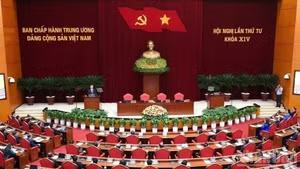
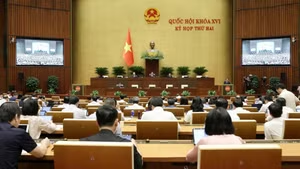
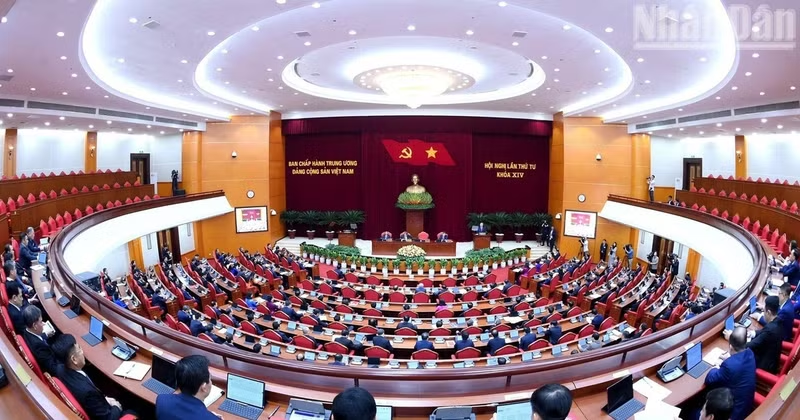
At the recent fourth meeting of the 14th Party Central Committee, the committee adopted several important documents, including a resolution on continuing to develop cadres at all levels and fundamentally and comprehensively reforming personnel work to meet the country's development requirements in the new era, and a conclusion on attracting and making the best use of talent in key sectors and fields to support rapid and sustainable national development.
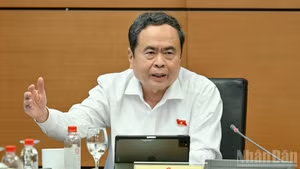
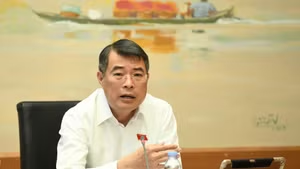
Speaking to Nhan Dan Newspaper, Lieutenant General Nguyen Thanh Tuan, former Director of the Department of Political Education and Information under the General Department of Politics of the Viet Nam People's Army, affirmed that the Party and State's contingent of cadres has made important contributions to national development.
However, practical experience has also revealed shortcomings and limitations in personnel work that require comprehensive assessment and lessons to be drawn. Recognising these challenges, the Party Central Committee held thorough discussions and identified three breakthrough areas in the new resolution.
"President Ho Chi Minh once said that 'cadres are the root of all work'. Without breakthroughs in personnel work, without addressing this fundamental issue, revolutionary achievements will be constrained and public confidence in the Party may decline," Lieutenant General Nguyen Thanh Tuan stressed.
Beyond these internal requirements, he noted that the country's development needs also demand changes in personnel work.
Viet Nam is entering a new era with the aspiration of becoming a developed, high-income country by 2045. To realise this goal, alongside making the most of emerging opportunities, it is essential to achieve breakthroughs in personnel work, from cadre evaluation, selection and screening to attracting, deploying and making effective use of talented individuals.
The new resolution on personnel work clearly states that cadre recruitment, training and placement must be based on the requirements of specific tasks. Evaluation results must serve as the basis for selection and screening, while ensuring continuity across successive terms.
Cadres' qualities, political resolve, genuine competence and credibility must be demonstrated through their work performance. Evaluations must also take into account the difficulty of assigned tasks, implementation conditions and the long-term value of the results achieved.
According to Lieutenant General Nguyen Thanh Tuan, the resolution's emphasis on using task performance as the measure of cadres' qualities, ethics and capabilities is both appropriate and particularly significant in the current context. He argued that cadre evaluation cannot rely solely on general assessments, records of achievements or interpersonal skills in the workplace.
Some individuals are adept at cultivating a favourable image and pleasing their superiors, enabling them to secure rapid promotions. However, once appointed to important positions, they may prove unable to meet the required standards, potentially even damaging the organisation's reputation.
Conversely, some cadres demonstrate genuine dynamism and creativity, successfully translating the Party's guidelines and policies, as well as State laws, into practical initiatives within their localities or organisations, producing tangible development outcomes.
Yet their achievements and innovations are sometimes inadequately recognised or replicated, while capable individuals are not always appointed to positions commensurate with their abilities.
"Cadre evaluation must be based on the results of assigned tasks, demonstrated through concrete actions and the confidence that people place in them. A cadre who produces innovative initiatives with an impact at the local level is clearly talented. If those innovations have national significance, that individual is an outstanding talent of the country and should be given opportunities to contribute,” Lieutenant General Nguyen Thanh Tuan said.
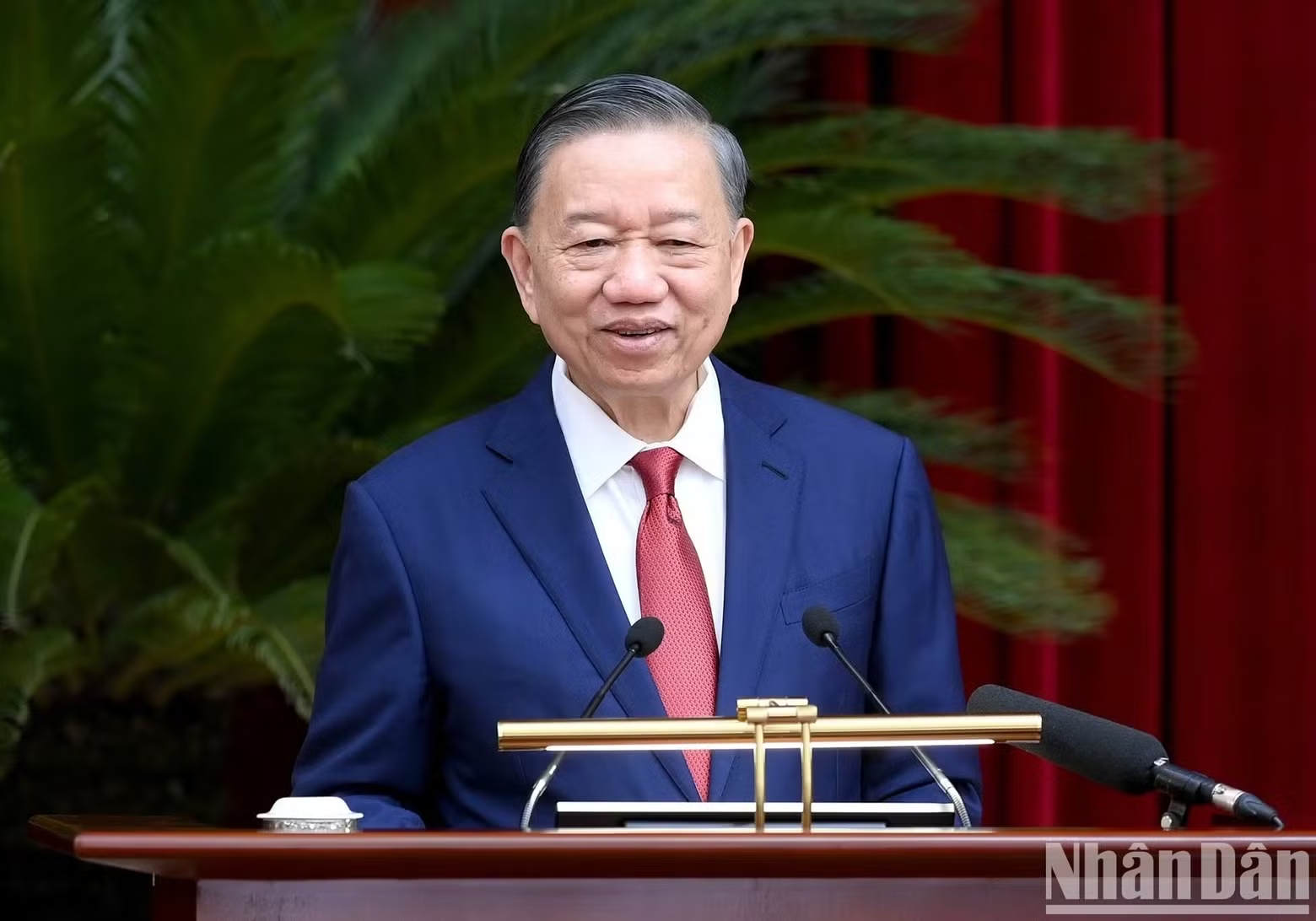
He also added: "That is why I strongly support the Party Central Committee's policy direction and the conclusions delivered by Party General Secretary and State President To Lam at the recent fourth meeting of the Party Central Committee.”
Alongside reforms in cadre evaluation, another notable feature of the Party Central Committee's new resolution is the requirement that those responsible for evaluating, recommending and appointing cadres must be held accountable for their decisions. Lieutenant General Nguyen Thanh Tuan described this as a particularly important requirement. The selection and recommendation of individuals for specific positions have always entailed responsibility on the part of those making such decisions. However, mechanisms for determining and enforcing accountability among those involved in recommending, selecting and appointing cadres have not always been sufficiently clear or comprehensive.
"When someone is entrusted with recommending or selecting a cadre for a leadership or management position, they must take responsibility for their decision. If the selected individual subsequently demonstrates serious shortcomings in qualities or competence, or violates Party discipline or the law, the recruitment, evaluation and appointment process must be reviewed to determine the responsibilities of those involved," the former Director of the Department of Political Education and Information stressed.
According to Lieutenant General Nguyen Thanh Tuan, substantive reforms are also needed in cadre evaluation and confidence voting. Evaluations should go beyond formalistic assessments and clearly distinguish between those with outstanding capabilities, those whose performance is merely average and those who fail to meet the required standards.
Dynamic and innovative cadres who deliver strong results should receive high confidence ratings and be given opportunities for further development. Meanwhile, those who consistently perform at an average level without showing improvement, or who receive low confidence ratings, should be considered for reassignment, creating opportunities for more responsible, ethical and capable individuals to take their place.
Making the best use of talent must go hand in hand with appropriate remuneration
At the fourth meeting of the 14th Party Central Committee, the committee also agreed that talent constitutes a particularly important strategic national resource, playing a vital role in driving scientific and technological development, innovation, the development of new productive forces, improvements in labour productivity and national competitiveness, strategic autonomy and the country's overall strength.
On that basis, the Party Central Committee approved the project entitled "National strategy for attracting, utilising and developing talent in key sectors to support rapid and sustainable national development".
The strategy places the effective utilisation of talent at its core, linking talent attraction with training, development and opportunities for contribution. It calls for identifying suitable individuals based on strategic tasks, assigning responsibilities, granting authority and ensuring adequate resources. Retaining talented individuals must be achieved through a supportive working environment, opportunities for creativity and appropriate recognition.
According to Lieutenant General Nguyen Thanh Tuan, three major bottlenecks currently hinder the identification, attraction and effective utilisation of talent. The first bottleneck, concerning the Party's policy direction, has now been addressed. Although attracting and making effective use of talent has been discussed extensively in recent years, sufficiently decisive policies had yet to be introduced. The Party Central Committee's adoption of the new strategy will provide a foundation for advancing these efforts in a more coordinated and consistent manner.
The second bottleneck concerns how talented individuals are treated. Lieutenant General Nguyen Thanh Tuan considers this a major obstacle, potentially even the decisive factor in determining the effectiveness of talent utilisation. Genuinely capable individuals often hold independent views, possess the ability to identify problems and propose innovative approaches. They need to be respected, trusted and provided with favourable conditions to realise their potential. Therefore, leaders must demonstrate vision, the ability to recognise talent and a willingness to entrust capable individuals with responsibilities commensurate with their abilities.

If leaders fail to recognise talent, do not create favourable conditions for talented individuals to work, or even feel threatened by those more capable than themselves, even the best policies will struggle to achieve their intended results. When talented individuals are neither respected nor given opportunities to contribute, they may leave the public sector, seek employment elsewhere or move abroad. The country would not only lose highly qualified human resources but also miss out on development opportunities generated by the very talent it has trained and attracted.
The third bottleneck identified by Lieutenant General Nguyen Thanh Tuan is the lack of remuneration policies commensurate with individuals' abilities and contributions. He stressed that making the best use of talent must go hand in hand with appropriate remuneration, supported by a separate system of incentives rather than one tied to the administrative hierarchy currently applied within Viet Nam's political system.
A highly qualified expert should not necessarily have to be appointed to a leadership position to receive better remuneration. If the aim is to enable experts to concentrate on research, innovation and the creation of works of significant value to the country, specific mechanisms are needed to recognise their capabilities and provide suitable working conditions.
"Remuneration policies must undergo fundamental changes. Unless this bottleneck is removed, it will be impossible to make genuinely effective use of talent under current conditions or attract talented overseas Vietnamese back to contribute to the country," Lieutenant General Nguyen Thanh Tuan emphasised.
He believed that addressing these three bottlenecks effectively at all leadership levels would enable more talented individuals to be identified. With appropriate recognition and opportunities, the country's talented people would be able to make greater contributions, helping Viet Nam enter a new era of national advancement and realise its two centenary goals: the 100th anniversary of the founding of the Communist Party of Viet Nam and the 100th anniversary of the country's founding.
Discussing mechanisms for rewarding talented individuals, the former Director of the Department of Political Education and Information stressed that their contributions can be immense, potentially transforming entire industries or sectors and opening up new directions for national development. Making effective use of talent, therefore, is not simply about recognising an individual's abilities but also about creating the conditions for those abilities to generate tangible value.
In particular, talent should not be equated with academic qualifications or official positions. An engineer with outstanding innovative capabilities who directly researches and develops products of substantial value should be recognised as a chief engineer who is capable of designing and developing projects of major significance to national development. Such recognition would help identify talented individuals and, once they are recognised and given appropriate opportunities, enable them to fully realise their potential in contributing to the country.
To ensure that talent utilisation delivers substantive results, Lieutenant General Nguyen Thanh Tuan proposed that the State consider establishing a new system of professional titles and a separate salary mechanism for experts, scientists and individuals with exceptional abilities in key fields. These could include titles such as "project engineer", "chief architect" and "chief project engineer" in the natural sciences, along with equivalent positions in the social sciences, supported by clearly defined criteria concerning professional competence, scope of responsibility and the value of contributions.
At present, remuneration in many cases remains closely linked to official rank within the administrative apparatus of the political system. Highly qualified professionals sometimes have to assume management positions to receive higher salaries and benefits. However, once they move into management, they may no longer have sufficient time or favourable conditions to focus on research, innovation and the development of their professional expertise.
Lieutenant General Nguyen Thanh Tuan therefore argued for the establishment of appropriately designed professional titles for scientists in different fields, accompanied by corresponding salaries, bonuses, allowances, working conditions and mechanisms for recognising achievements. These arrangements should be separate from the existing salary hierarchy within the political system.
Establishing a distinct salary structure for scientists would also help institutionalise the Party's policy of making effective use of talent, creating favourable conditions for talented individuals to contribute to national construction and development.
According to Lieutenant General Nguyen Thanh Tuan, making effective use of talent is a decisive factor in harnessing the intellectual potential of the Vietnamese people. Viet Nam does not lack talented individuals, he said, but the real challenge lies in nurturing them into hien tai — people who combine exceptional ability with virtue and a commitment to serving the nation.
"Hien tai are individuals who devote their talents to serving society and the country, contributing to national development. Making effective use of talent means transforming talented individuals into those who are both capable and dedicated to the nation. A country with many such individuals will develop more rapidly, narrow its development gap and ultimately stand alongside the world's leading powers," Lieutenant General Tuan added.