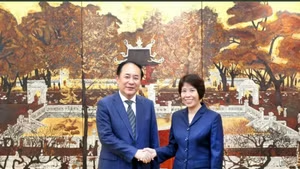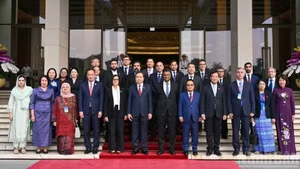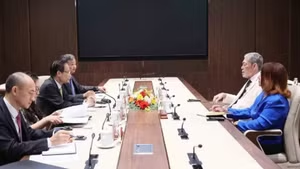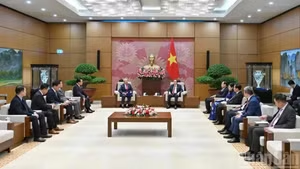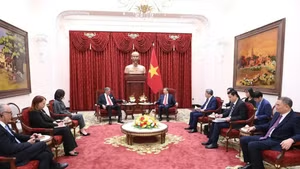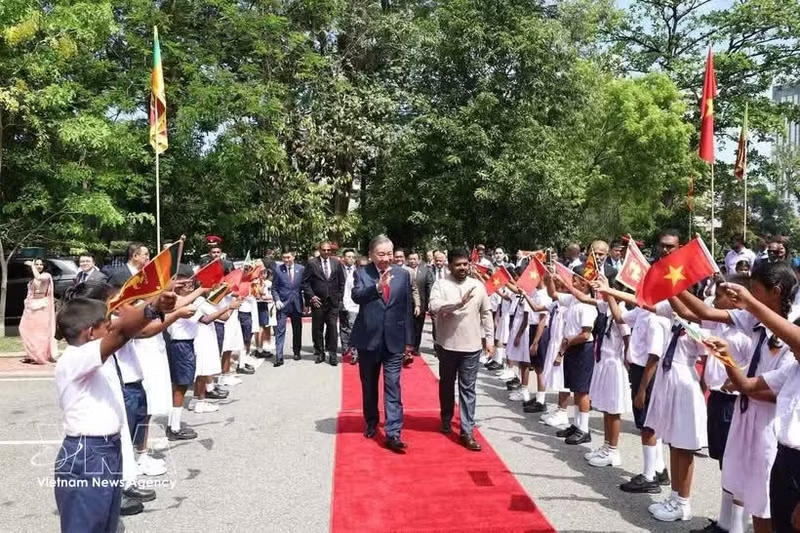
In an interview granted to the Viet Nam News Agency, Abeysena described the visit as a major milestone in bilateral relations, noting that it not only carried diplomatic significance but also generated fresh momentum for practical and innovation-driven cooperation.
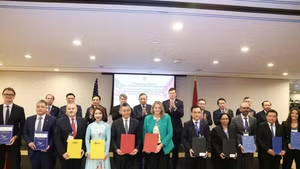
A concrete outcome of the visit was the signing of a memorandum of understanding (MoU) on science and technology cooperation, reflecting a shared vision and strong political commitment to building a future based on knowledge, innovation and mutual prosperity. The document establishes an official and systematic framework for joint research, expert exchanges and the co-development of technological solutions tailored to each country's development needs.
The official said the visit elevated bilateral cooperation to a new level, opening up opportunities in key fields such as biotechnology, agriculture and food technology, climate change adaptation, electronics, automation and information technology—areas central to the sustainable development strategies of both Sri Lanka and Viet Nam.
Abeysena stressed that Sri Lanka is committed to the swift and effective implementation of the MoU, emphasising that it is not merely symbolic but intended to deliver concrete benefits for both economies and their peoples. The two ministries of science and technology will jointly develop a detailed roadmap and implementation timeline.
On priority areas, Sri Lanka proposed Vietnamese support in freeze-drying technology for fruits and vegetables and MATCHA-related beverage processing technologies, which are considered highly promising for Sri Lanka’s agro-processing and export sectors. It also expressed interest in cooperation in satellite technology, electronics and electrical engineering through the Arthur C Clarke Institute for Modern Technologies (ACCIMT), as well as lightning protection systems and climate resilience planning.
The two sides agreed to organise joint technical workshops, promote collaborative research projects and strengthen long-term partnerships between universities and research institutes. They also plan to establish co-funding mechanisms to support joint research and development initiatives, according to the minister.
He expressed confidence that science, technology and digital transformation will become a key driver in shifting bilateral ties from traditional friendship to a partnership grounded in innovation and inclusive economic growth.
He noted that both countries are now at a critical stage of development, where sharing experience and expertise in digitalisation could accelerate progress in agriculture, health care, education and public services. Viet Nam’s advances in digital infrastructure, he said, offer valuable lessons for Sri Lanka, whose strengths in IT services and the knowledge-based economy could also benefit Viet Nam.
On research cooperation, Abeysena said the MoU provides a formal platform for scientists and institutions from both countries to jointly address shared challenges, particularly in biotechnology, climate adaptation and food technology. This will strengthen research capacity and build sustainable links between the two scientific communities.
Regarding human resources, he highlighted that exchanges of scientists, engineers and technical experts will help both sides access advanced ideas, methodologies and practical models.
The minister reaffirmed that innovation-driven economic growth is a common objective, expressing confidence that linking science and technology partnership with national development priorities will help generate new industries, create high-quality jobs and improve living standards in both countries.