
Northern region to experience cold spell
Viet Nam's northern and north-central regions will experience a cold spell from the evening and night of October 4, according to the National Centre for Hydro-Meteorological Forecasting.
#National Centre for Hydro-Meteorological Forecasting
Viet Nam's northern and north-central regions will experience a cold spell from the evening and night of October 4, according to the National Centre for Hydro-Meteorological Forecasting.
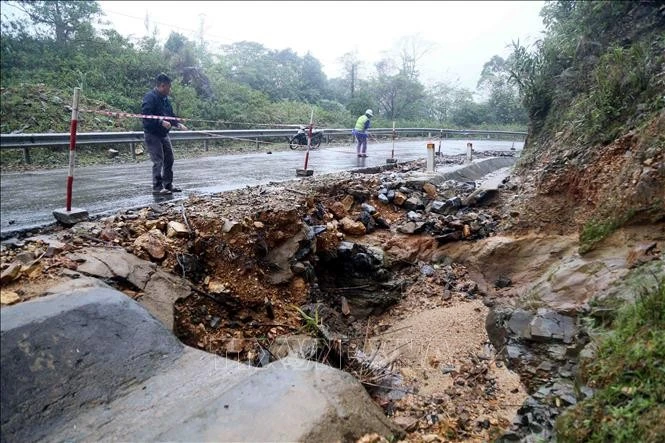
Between the night of November 17 and 19, the North will also experience rain. The combination of rain and strong cold air will cause a sharp drop in temperatures across the northern region and the provinces of Thanh Hoa, Nghe An and Ha Tinh.
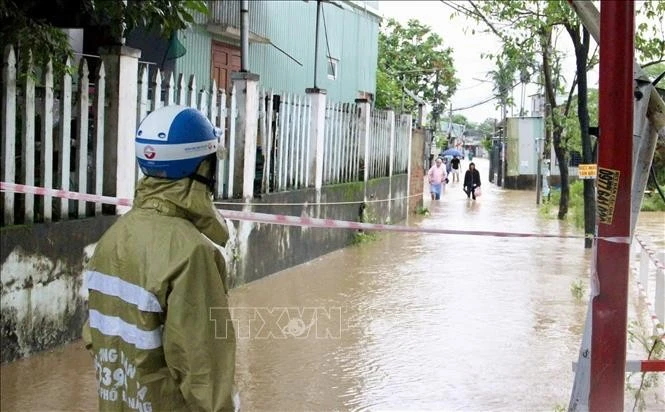
Under the influence of Typhoon Kalmaegi – the 13th storm in the East Sea/ South China Sea this year, extremely heavy rain is forecast for areas from Da Nang city to Dak Lak province in the central region on November 6 and 7, with rainfall expected to reach 200 – 400mm, and in some places over 600mm.
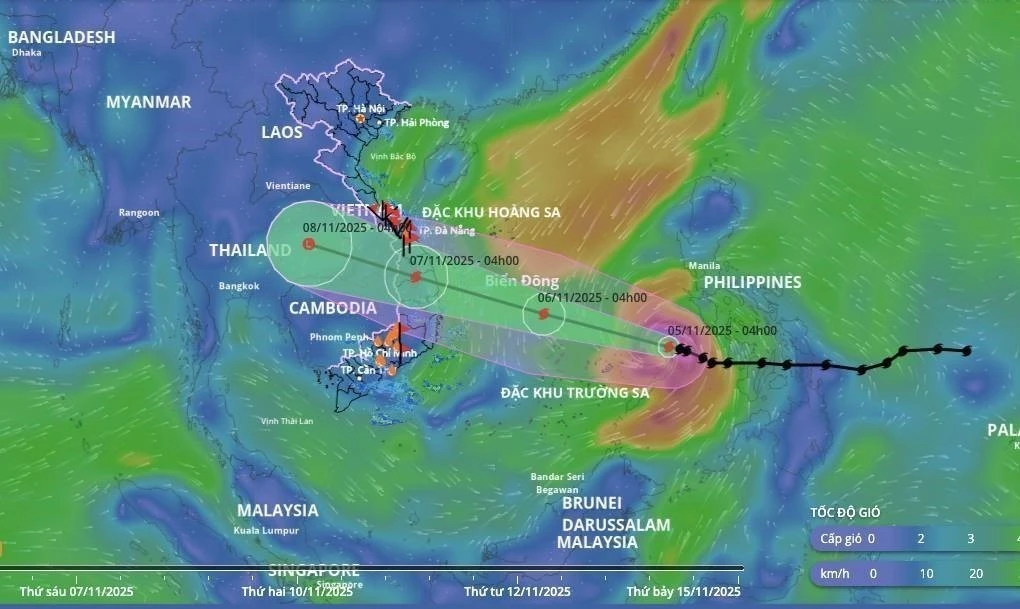
Typhoon Kalmaegi is sustaining strong winds and heading towards the central region of Viet Nam, the National Centre for Hydro-Meteorological Forecasting (NCHMF) said, warning water levels rise by 0.3 to 0.6 metres for coastal areas from Hue city to Dak Lak province.
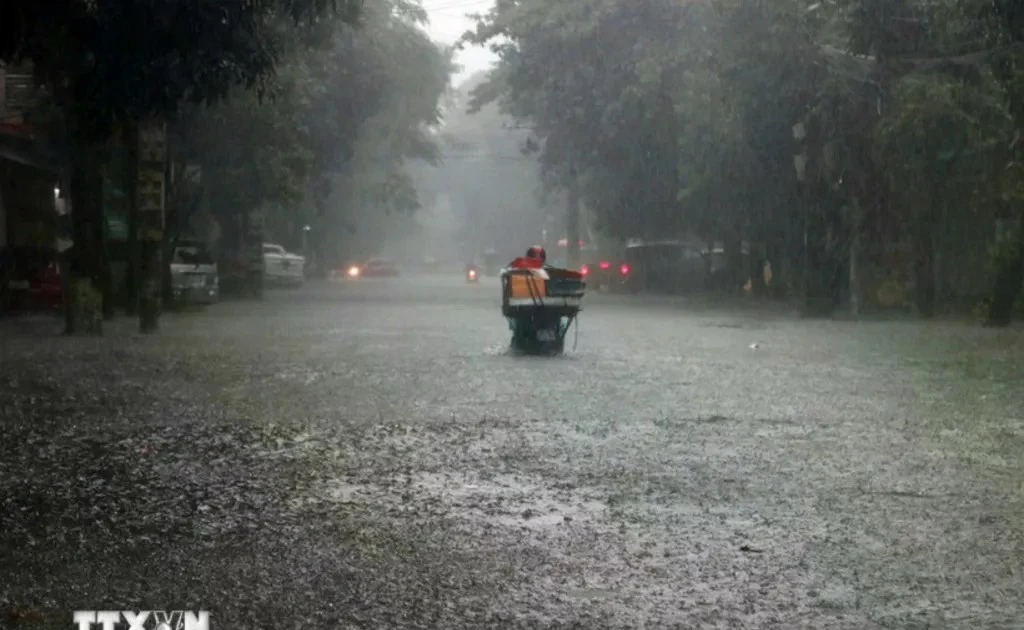
Storm Kalmaegi has intensified and is moving towards the central East Sea, according to the National Centre for Hydro-Meteorological Forecasting.
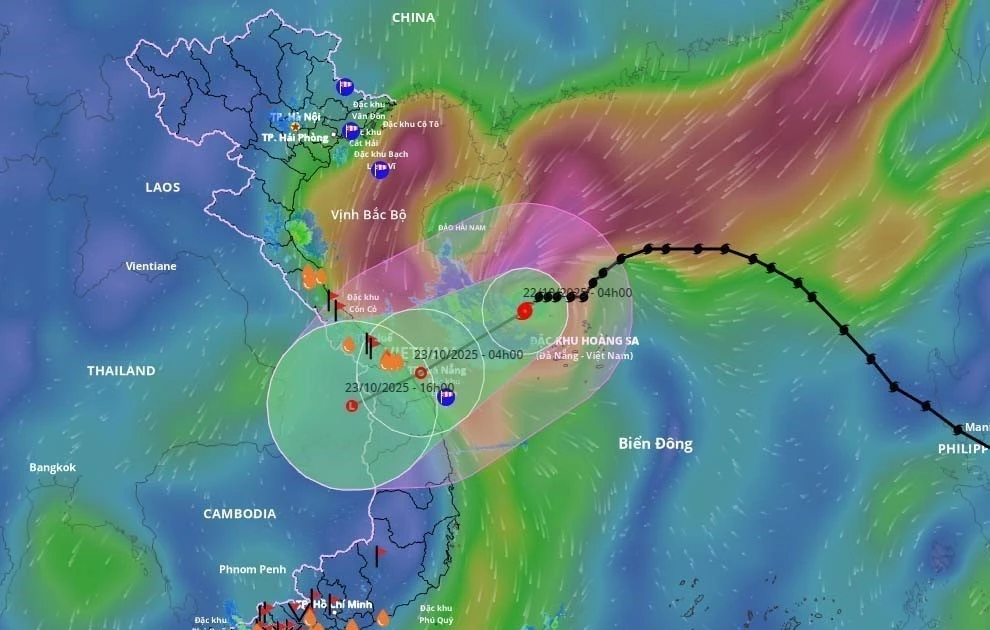
Storm Fengshen, the 12th in the East Sea/South China Sea this year, has maintained its intensity and path, and is forecast to trigger torrential rains of 200–400mm and even 500mm from Ha Tinh to Quang Ngai in central Viet Nam, according to National Centre for Hydro-Meteorological Forecasting.

Heavy rain may occur in certain places in the northeastern and north-central regions on October 13 afternoon and night, posing risks of flash floods, landslides, and inundation, said the National Centre for Hydro-meteorological Forecasting (NCHF).
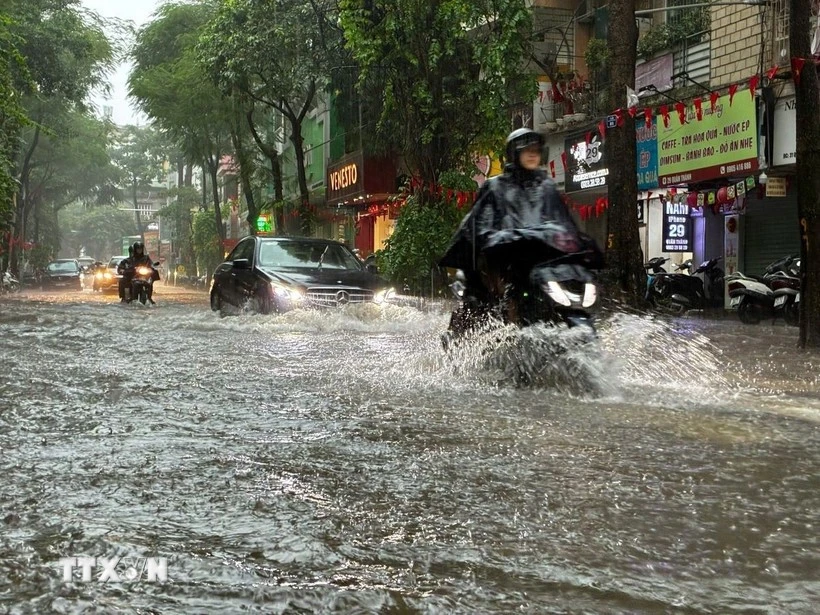
Typhoon Matmo, the 11th storm to enter the East Sea/South China Sea so far this year, weakened into a tropical depression on the morning of October 6 and its circulation are forecast to bring heavy rainfall to Ha Noi from midday to the evening of the same day, according to Dr. Hoang Phuc Lam, Vice Director of the National Centre for Hydro-Meteorological Forecasting.
Typhoon Matmo, the 11th storm to affect the East Sea/ South China Sea this year, weakened significantly after making landfall in China’s Guangxi province on early October 6, according to the National Centre for Hydro-Meteorological Forecasting.

Prime Minister Pham Minh Chinh has signed an official dispatch, calling for the highest level of readiness to confront Typhoon Bualoi, which entered the East Sea/South China Sea on September 26 night and became the 10th storm of 2025.

Typhoon No. 10, internationally named Bualoi, is forecast to unleash a combination of strong winds, torrential rains, flooding, and landslides, prompting the Ministry of Agriculture and Environment (MAE) to call for evacuation plans for residents in high-risk areas.

Typhoon Ragasa is likely to weaken into a tropical depression when it lands the northeastern part of North Viet Nam on September 25 afternoon.
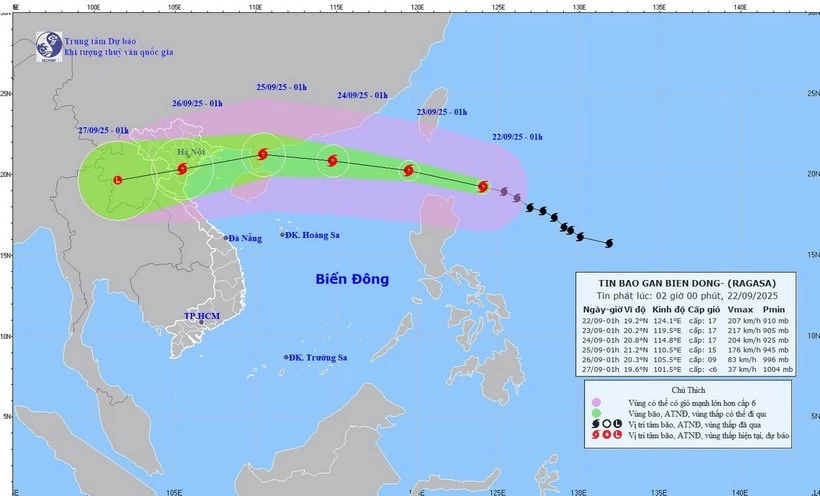
Super Typhoon Ragasa continues to intensify as it approaches the East Sea/South China Sea, bringing powerful winds, towering waves, and warnings of flash floods and landslides in northern mountainous provinces of Viet Nam.
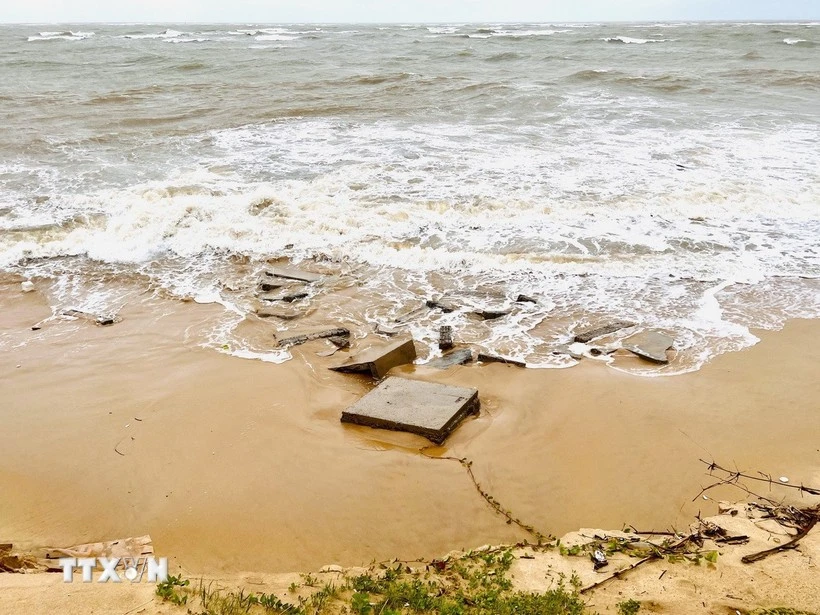
Storm Nongfa weakened into a tropical depression and rolled into the mainland between central Ha Tinh and Quang Tri provinces on August 30 afternoon, said Director of the National Centre for Hydro-Meteorological Forecasting Mai Van Khiem.
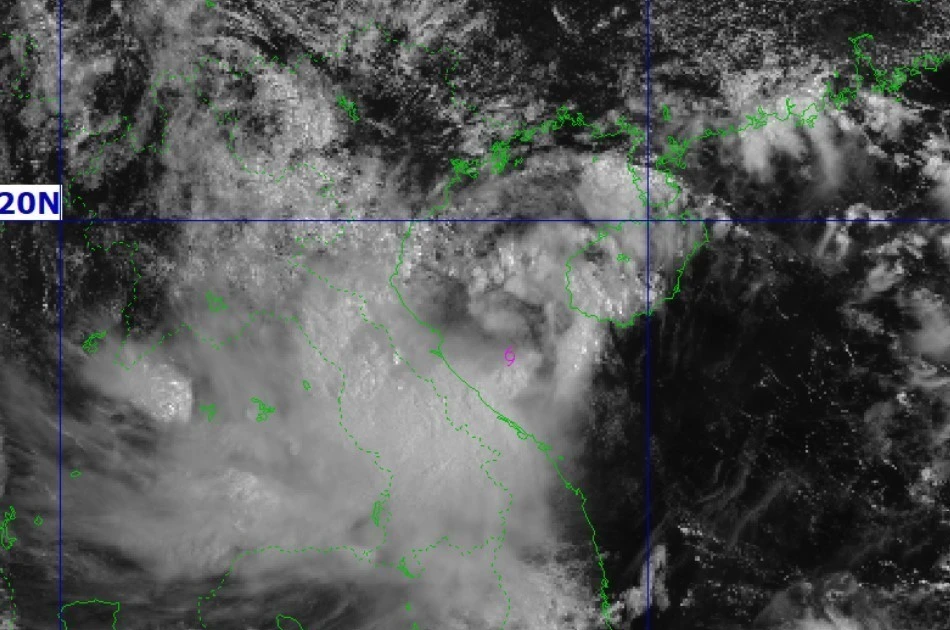
A tropical depression in the northwestern part of the East Sea has intensified into a storm – Nongfa, the sixth in the sea this year, according to the National Centre for Hydro-Meteorological Forecasting.
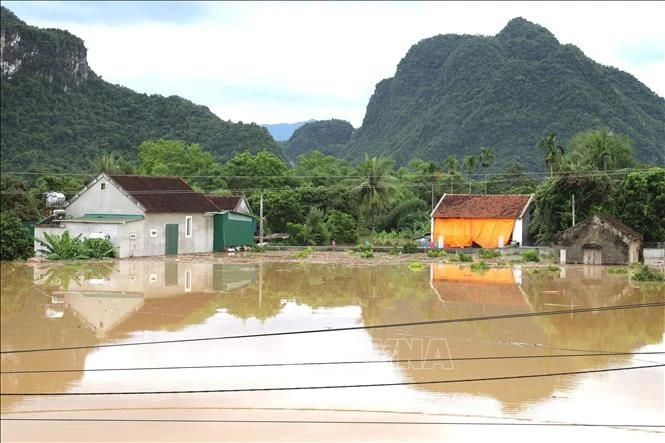
The National Centre for Hydro-Meteorological Forecasting has warned of a series of hazardous weather events from July 25 to 27.
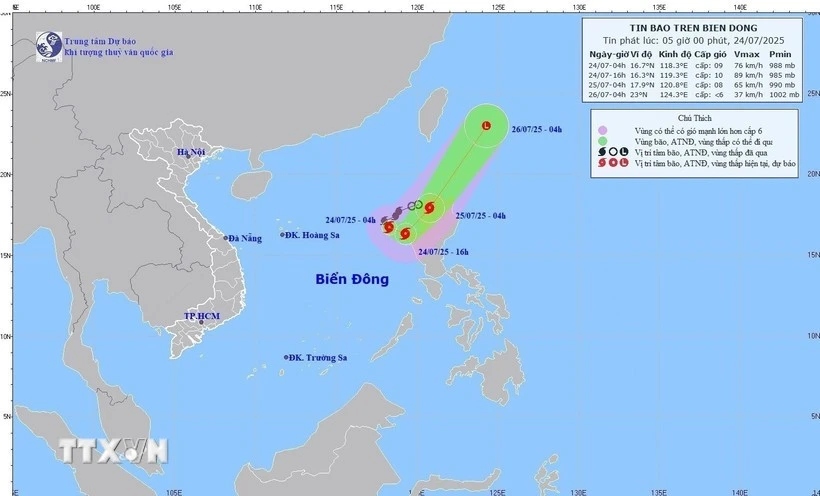
A tropical storm churning in the East Sea sustained winds of 62–88km per hour on early July 24, moving south-southeast at 15km per hour, the National Centre for Hydro-Meteorological Forecasting reported.
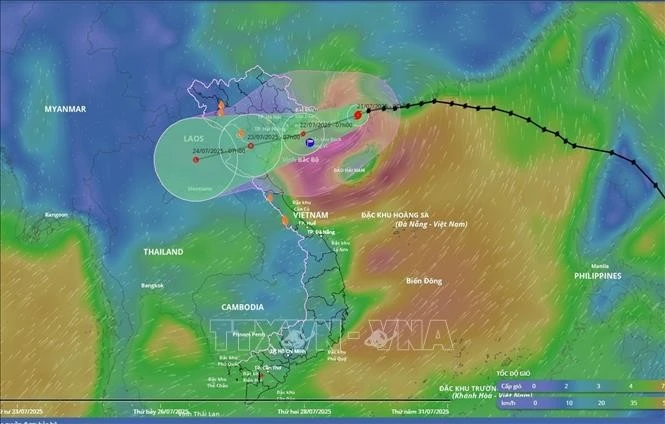
Storm No. 3, internationally known as Typhoon Wipha, passed north of China’s Leizhou Peninsula on the morning of July 21 and entered the northern Gulf of Tonkin, posing a growing threat to Viet Nam’s northern and north-central coastal regions, according to the National Centre for Hydro-Meteorological Forecasting.
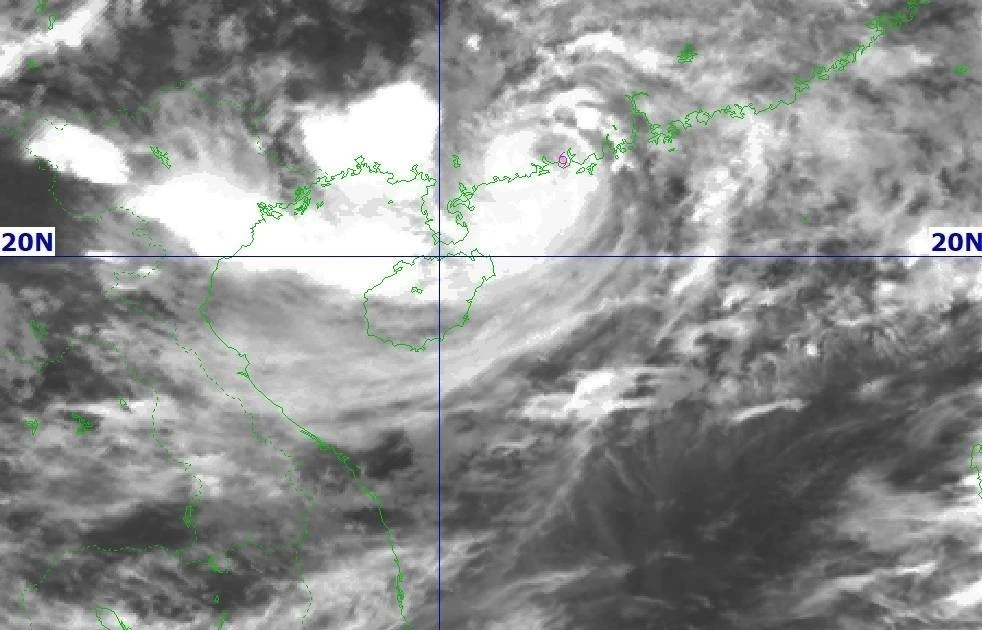
Typhoon Wipha is approaching northern Viet Nam as it hit China’s Leizhou Peninsula and was about 275km to the east of the Quang Ninh – Hai Phong coast at 4am on July 21.