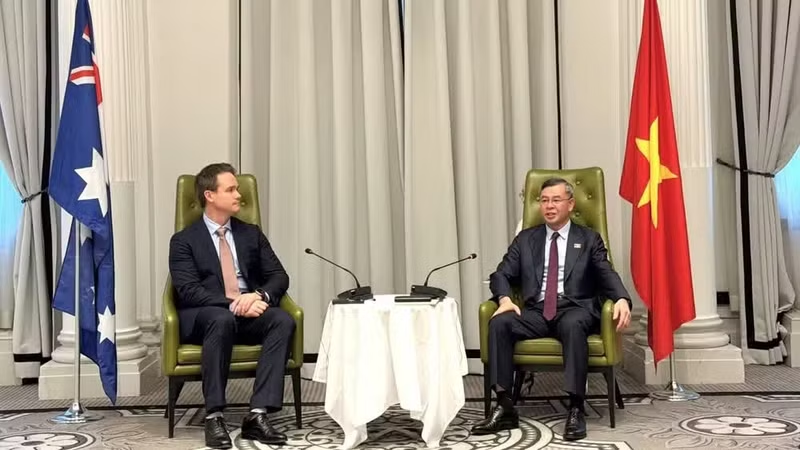
Viet Nam and Australia are looking to expand investment and cooperation in developing a sustainable rice value chain in the Mekong Delta, while promoting collaboration in education, science and technology, and human resources development.
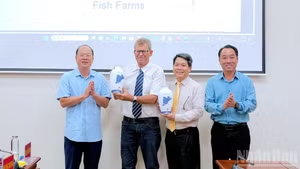
During General Secretary of the Communist Party of Viet Nam Central Committee and President To Lam’s state visit to Australia from August 9-12, Vietnamese Minister of Finance Ngo Van Tuan, authorised by the General Secretary and President, held working sessions with SunRice Group CEO Paul Serra and RMIT University’s Vice-Chancellor and President Professor Alec Cameron in Sydney on August 10.
At the meeting with SunRice, the two sides discussed the group’s operations in Viet Nam, orientations for expanding investment, and cooperation opportunities to develop a sustainable rice value chain in the Mekong Delta.
Tuan acknowledged SunRice’s operations and long-term commitment to Viet Nam, and welcomed the group’s plans to explore further investment, strengthen linkages with Vietnamese farmers, cooperatives and enterprises, and expand processing, storage and traceability activities to increase the value of Vietnamese rice products.
He stressed that Viet Nam is promoting modern, green, circular and low-emission agriculture, with the Mekong Delta playing a particularly important role. Viet Nam encourages SunRice to deepen cooperation in high-quality, low-emission rice production, science and technology application, digital transformation, deep processing, research and technology transfer, as well as the utilisation of agricultural by-products in line with circular economy principles.
The two sides agreed to advance substantive, long-term and scalable collaboration programmes, contributing to improving the value and competitiveness of Viet Nam’s rice sector and strengthening partnerships in agriculture, science and technology, green development and food security.
According to the Ministry of Finance, SunRice is a leading Australian rice company with expertise in value-chain organisation, quality management, traceability, branding and international market connectivity. It began sourcing rice from Viet Nam in 2012 and now operates a processing facility in the Mekong Delta province of Dong Thap.
Later the same day, Tuan and the RMIT University leader discussed the university’s operations in Viet Nam, future cooperation and plans to expand its presence, including a new campus in Hanoi and expanded activities in Ho Chi Minh City.
The minister recognised RMIT’s contributions during more than 25 years in Viet Nam, particularly in human resources training and promoting international education. RMIT Viet Nam currently has around 12,000 students and more than 1,000 staff and faculty members, with over 25,000 graduates.
Viet Nam welcomes RMIT’s continued expansion and greater collaboration with Vietnamese universities, research institutions, businesses and innovation centres, particularly in emerging technologies and fields requiring highly skilled workers.
The two sides agreed to develop increasingly substantive cooperation programmes linking education with labour market needs, and applied research and innovation, thereby contributing to Viet Nam’s human resources development and further strengthening bilateral ties and people-to-people exchanges.