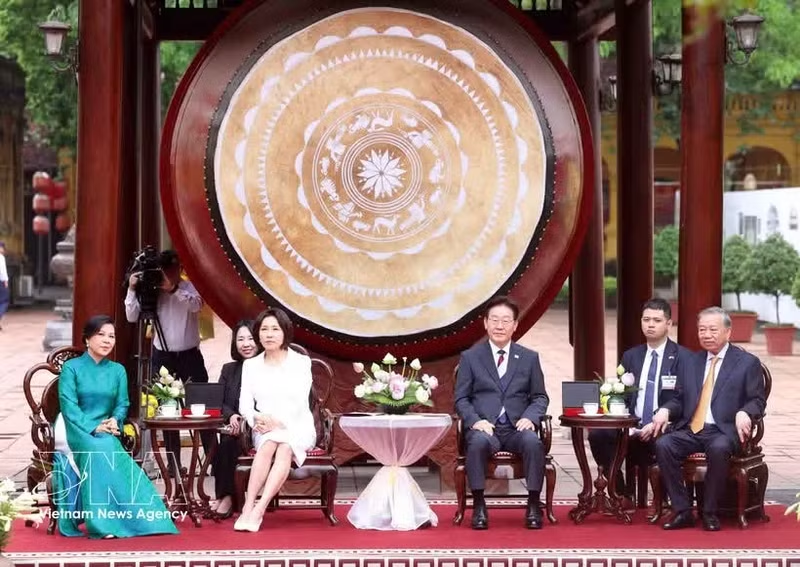
Held under the theme “Thang Long: A millennium of sacred vitality and cultural depth”, the programme honoured the historical legacy and cultural identity of Thang Long–Ha Noi, while conveying a message of continuity of tradition and harmony between past and present, as well as Viet Nam’s spirit of friendship and cooperation with countries around the world.
The welcome ceremony began with resounding festival drums and a traditional lion dance symbolising prosperity and peace.
In a warm and cordial atmosphere, the two leaders and their spouses proceeded to Doan Mon Gate, one of the main entrances to the ancient royal citadel, historically reserved for emperors and the royal court under the reign of 52 kings over an unbroken span of 800 years.
They also visited exhibitions titled “A thousand years of Thang Long - Ha Noi history from the underground” and “Royal treasures of Thang Long”, showcasing artefacts recognised as national treasures.
At the Kinh Thien Palace area, the hosts introduced the site as the historic venue where emperors held court, discussed state affairs and received foreign envoys over centuries.
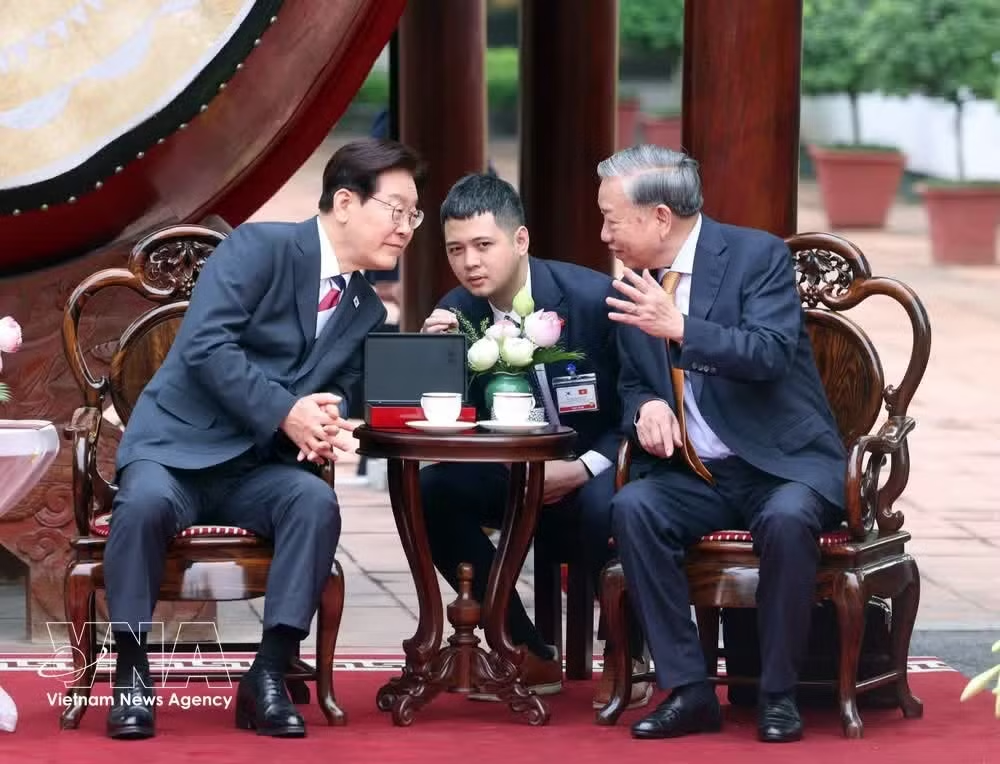
The programme featured a refined tea ceremony, followed by traditional performances highlighting Viet Nam’s rich cultural heritage. It opened with Xoan singing, a traditional art form from Phu Tho linked to the worship of the Hung Kings, Viet Nam’s founding rulers, which was recognised by UNESCO in 2011 as an intangible cultural heritage of humanity.
This was followed by Nha nhac, royal court music developed through Viet Nam’s feudal dynasties and inscribed by UNESCO in 2003. Traditionally performed at coronations, rituals and diplomatic ceremonies, Nha nhac embodies elegance and national prestige, offering insight into the country’s refined court culture.
Hue-style Chau van singing added a spiritual dimension, blending music and performance to honour ancestors and express hopes for peace and prosperity. Its varied rhythms created a rich emotional atmosphere.
The finale, the classical “Luc cung hoa dang” dance, featured graceful, ritualised movements with lotus lanterns symbolising wisdom and harmony, delivering a message of peace, friendship and sustainable development while highlighting the sophistication of Viet Nam’s traditional arts.
The Thang Long Imperial Citadel, a UNESCO World Heritage Site since 2010, was excavated in December 2002 across an area of 19,000sq.m. It preserves layers of the ancient royal citadel, once the centre of Viet Nam’s political power for over a millennium, developed across 13 centuries under successive dynasties, from Dai La, Dinh - Early Le, Ly, Tran and Early Le to Mac, Later Le and Nguyen. Today, it stands as one of the country’s most significant historical sites.
The special friendship programme held at the citadel underscored Viet Nam’s deep respect for its historical heritage, while offering an opportunity to showcase the nation’s cultural depth through a recreation of traditional court diplomacy, highlighting its long-standing spirit of hospitality and peaceful engagement.