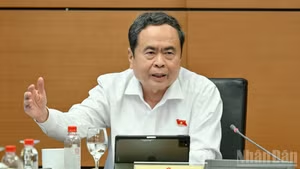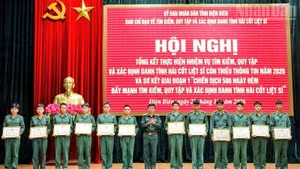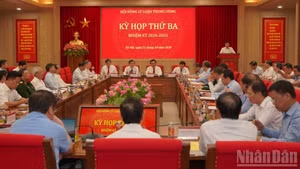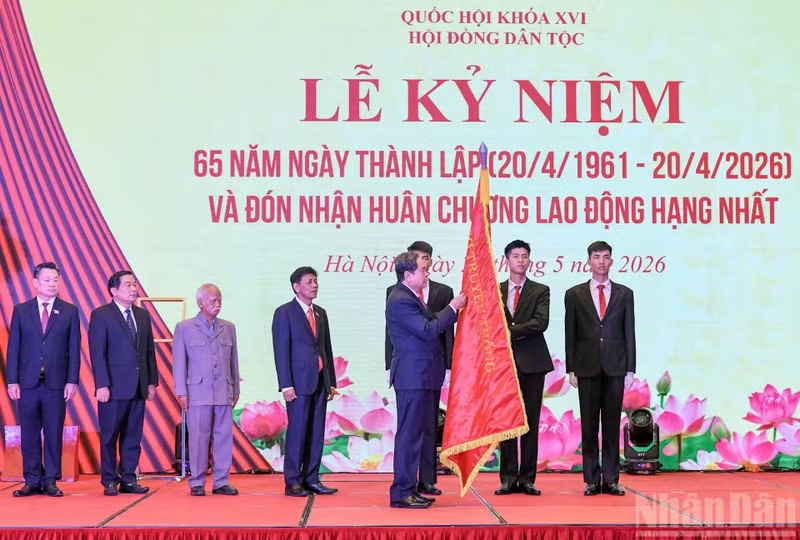
On behalf of Party and State leaders, NA Chairman Tran Thanh Man presented the order to the council in recognition of its outstanding achievements in advising on the formulation, issuance and supervision of ethnic policies.
In his address, the NA Chairman acknowledged and highly commended the council's significant contributions and dedication over the past 65 years.
Noting that Viet Nam is entering a new phase of development marked by both opportunities and considerable challenges, Chairman Man called on the council to further affirm its role as an important advisory body to the legislature on ethnic affairs.
He urged the council to improve the quality of policy research, analysis and forecasting, while ensuring that growth goes hand in hand with fairness and sustainable inclusiveness; modernisation is linked with preserving cultural identity and the traditions of ethnic communities; and economic development is always placed within the broader context of social stability and strengthening the great national unity bloc.
The top legislator also called for further improvements in legislative participation to ensure that ethnic policies are fully and substantively reflected in every draft law and resolution.
Members of the council, he said, must adopt the languages and mindset of ethnic minority communities in order to better understand their real concerns and difficulties and convey them effectively at the NA.
"Policies issued for mountainous, remote and isolated areas must not remain vague or merely qualitative, but must instead be highly specific and directly address the most essential needs of daily life," he stressed.
Priority, Chairman Man said, should be given to fundamental issues including electricity, transport infrastructure, schools, healthcare facilities, housing land, production land and access to clean water.
"Rather than relying solely on direct assistance or handouts, policies must aim to create sustainable livelihoods, improve educational standards and strengthen self-reliance, resilience and aspirations for sustainable poverty reduction," the NA leader added.
He also urged the council to play a more active and effective role in deciding major national issues, particularly policies related to socio-economic development in ethnic minority and mountainous regions.
Chairman Man called for reforms in the implementation of ethnic policies, shifting "from fragmented policies to integrated policymaking; from administrative management to development governance; and from direct support to the creation of sustainable livelihoods".
The NA leader further emphasised the need for the council to continue building a contingent of officials with strong political resolve, deep professional expertise and a firm grasp of practical realities, while also promoting the application of science and technology, digital transformation and artificial intelligence.
On behalf of the council, its head, Lam Van Man, affirmed that the body would swiftly incorporate the key directions outlined at the ceremony into its work plans and programmes for the current term.
The council will continue to promote solidarity, harness collective expertise and make every effort to effectively fulfil its assigned tasks, thereby contributing to the institutionalisation of the Party’s and State's ethnic policies, the implementation of constitutional provisions relating to ethnic affairs, and ensuring that such policies are practical, workable and effectively translated into everyday life.