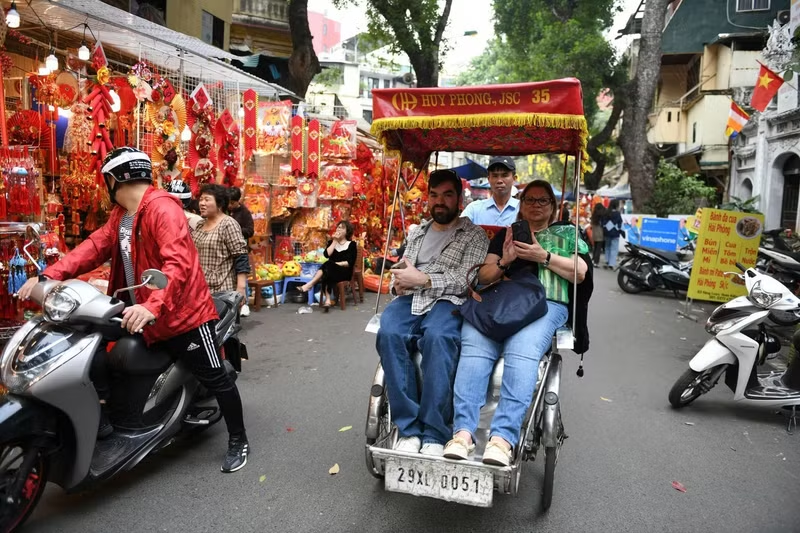
Asia’s leading cultural destination
According to Minister of Culture, Sports and Tourism Nguyen Van Hung, through culture, the image of Viet Nam as a safe and hospitable country, with a rich cultural identity, has become widely known among international visitors, as evidenced by many prestigious international awards.
Overall, tourism activities nationwide have continued to grow strongly. Domestic tourist numbers have maintained their growth momentum, while international arrivals have increased sharply at many destinations.
Room rates and tourism services have remained largely stable, without major fluctuations. Security and public order, environmental sanitation and food safety at destinations have generally been ensured.
These results stem from the efforts of the entire tourism sector, notably the restructuring of source markets and effective promotion programmes both on the ground and on digital platforms, as well as the positive impact of new visa policies.
Visitor numbers and tourism revenue reached impressive levels. Notably, in 2025, international arrivals to Viet Nam were estimated at 21.5 million, up 21% year on year. Domestic tourist numbers were estimated at 135 million, an increase of 22.7% compared with 2024. Total tourism revenue was estimated at around 1 quadrillion VND.
In terms of tourism development policies, the sector has continued to receive attention, helping to remove difficulties and bottlenecks, strengthen linkages and concentrate resources to promptly implement the Government and the Prime Minister.
Management of travel services and tourist accommodation has been further strengthened, with a focus on improving service quality. Inspection has been carried out regularly, enabling the timely detection and handling of violations related to tour guides, illegal tour operations and price listings. The accommodation system has been standardised, digital transformation promoted, and fire safety and environmental hygiene upgraded.
Promotion and marketing activities have been regarded as a highlight in the sector’s recent implementation. The Ministry of Culture, Sports and Tourism has proactively rolled out various innovative solutions for promotion and marketing by applying digital technologies and linking tourism with culture, arts and cinema. These efforts have made an important contribution to bringing the image of Viet Nam, its people and culture closer to international friends.
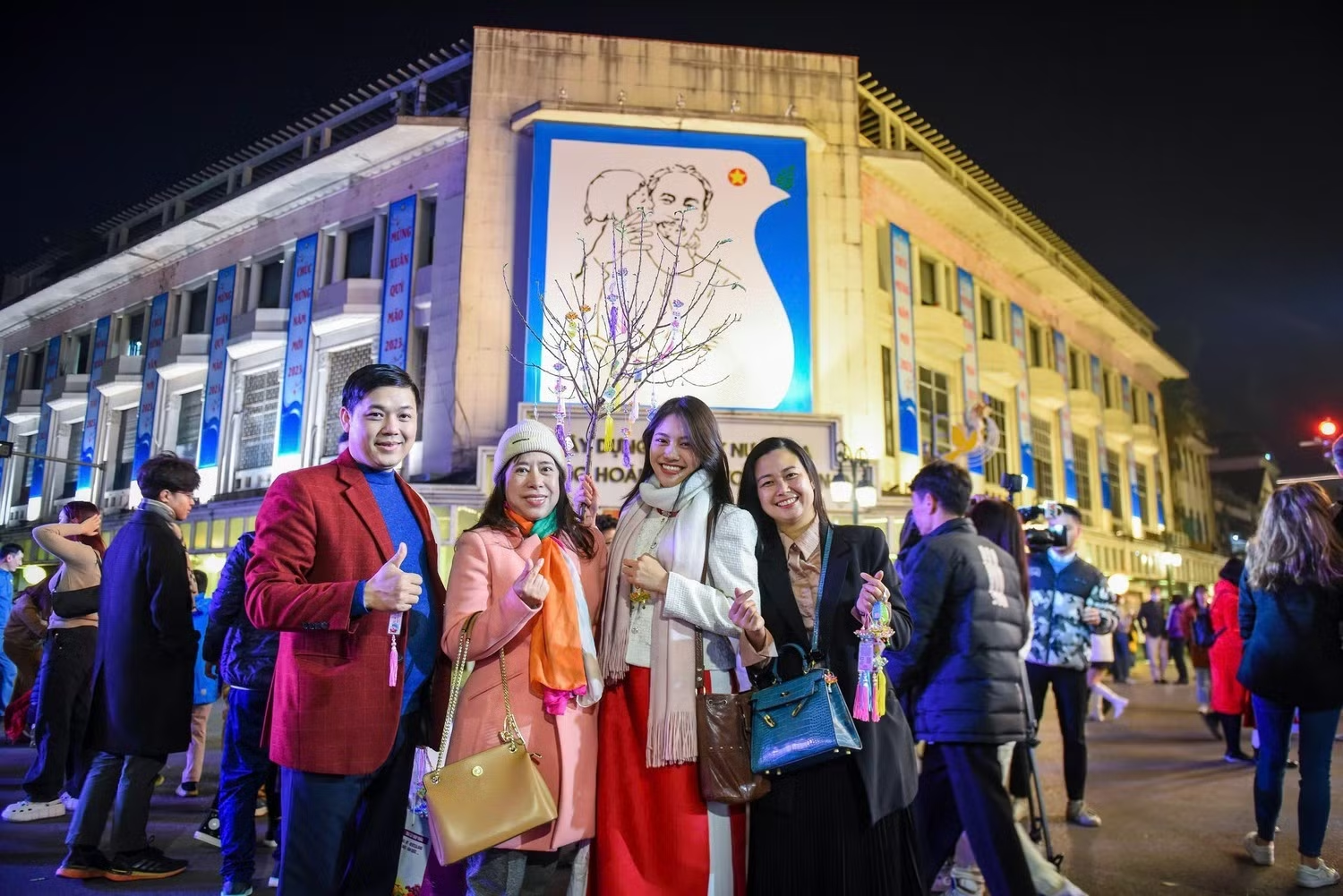
The Viet Nam National Authority of Tourism (VNAT) has also organised promotional activities to showcase the Vietnamese tourism brand through cinema at the Cannes Film Festival, the 4th Summit of Partnering for Green Growth and the Global Goals 2030 (P4G), among others.
At the same time, it has coordinated with the Ministry of Foreign Affairs and the Ministry of Public Security to propose preferential visa policies. In addition, it has advised on the implementation of initiatives linking destinations of Viet Nam, Laos, Cambodia and Thailand.
Communication and digital transformation in tourism have been promoted through the application of information technology in management, promotion and visitor support. Digital platforms, digital maps, online booking systems and artificial intelligence have been more widely deployed, contributing to enhanced visitor experiences and more effective management.
At the same time, the VNAT launched a promotional video showcasing the beauty of Viet Nam on YouTube in response to the 2025 tourism stimulus programme themed “Viet Nam: Travel to Love!”. In particular, a bilingual Vietnamese-English website to stimulate tourism in 2025 saw impressive indicators. Media cooperation has continued to expand with a number of domestic and international partners, helping to enhance the effectiveness of promoting Viet Nam’s tourism image at home and worldwide.
Regarding tourism activities at the local level, tourism has been vibrant in key destinations nationwide. In 2025, many localities successfully implemented the tourism stimulus programme, attracting large numbers of visitors, introducing new tourism programmes and high-quality product packages aimed at enhancing visitor experiences and improving service quality.
During the 2021-2025 period, Viet Nam gradually affirmed its position as one of the most attractive destinations in the region and the world, being repeatedly recognised by prestigious international tourism awards. Notably, in 2025 alone, the World Travel Awards honoured the Viet Nam tourism brand in major categories, including “Asia’s Leading Destination” and “Asia’s Leading Heritage Destination”. At the same time, Viet Nam was voted “World’s Leading Heritage Destination” for the sixth time.
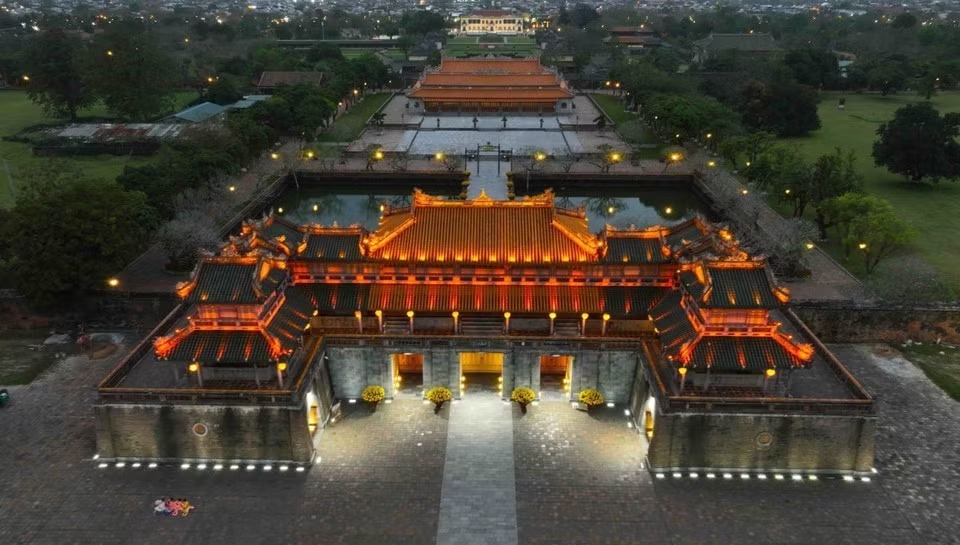
Making tourism a bridge of connection
According to Minister Hung, in 2026 it is necessary to implement synchronous solutions to realise the message that tourism is a bridge of connection, in which tourism connects cultures, connects people, connects heritage regions, and connects Viet Nam with friends around the world.
A look at shortcomings in tourism development during the past term shows that management of certain new forms of tourism has not kept pace with reality.
Tourism products have been diversified and renewed, but the full potential and strengths of nature, people, and historical and cultural traditions have not yet been fully tapped.
Many products within the same region remain overlapping and lacking distinctiveness, making it difficult to attract repeat visitors. Many tourist areas are still developed spontaneously, lacking proper planning, investment and management.
Human resources in the tourism sector have yet to meet practical needs, while the workforce structures has not fully recovered since the COVID-19 pandemic. Small and medium-sized enterprises account for a high proportion of the sector, limiting competitiveness, market penetration and expansion.
Therefore, Viet Nam’s tourism sector needs to implement key tasks to achieve real breakthroughs, ensure sustainable development and contribute to the goal of double-digit GDP growth.
First and foremost is the approval of key projects, including the establishment of a Viet Nam tourism promotion office in Laos, the establishment of overseas Vietnamese tourism promotion offices, the tourism and culinary promotion programme abroad for the 2026-2030 period, the project on developing health and wellness tourism in Viet Nam by 2030, and the project on developing tourism linked with the production and sale of OCOP products, contributing to the preservation and promotion of cultural values and indigenous knowledge in Viet Nam’s rural areas.
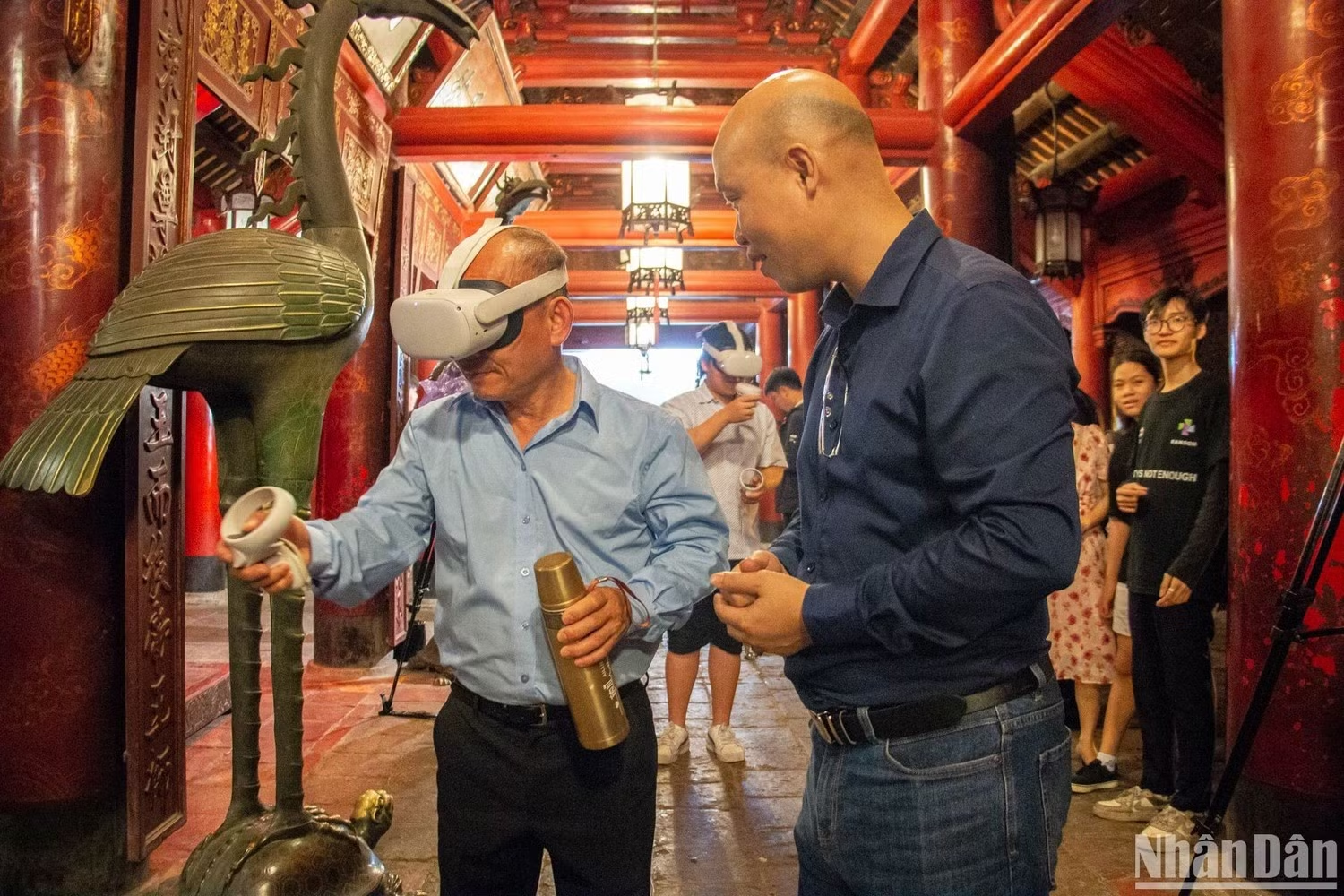
Alongside these activities, the tourism sector needs to implement the 2026 tourism stimulus programme. The VNAT will continue to organise events such as the 2026 National Green Tourism Forum, the National Excellent Receptionist Contest, and the National Culinary Festival.
At the same time, it will coordinate the organisation of Viet Nam tourism promotion programmes at Travex and the ASEAN Tourism Forum 2026, ITB Berlin and WTM London; tourism promotion programmes in key markets; and activities and events within the framework of the 2026 National Tourism Year.
In addition, plans need to be developed and implemented to inspect compliance with the law by travel businesses and the quality of the tourist accommodation system in 2026, while continuing to carry out surveys of tourism resources. Guidance and orientation for local tourism development should focus on improving service quality and ensuring security, safety, environmental protection and civility in tourism activities.
During the 2026-2030 period, the tourism sector aims to become a spearhead economic sector, turning Viet Nam into a particularly attractive destination, ranking among the world’s top 30 countries in tourism competitiveness and fully meeting sustainable development requirements and goals.
Total tourism revenue is targeted at 130-135 billion USD, with average annual growth of 11-12%, and direct contributions to GDP at 15-17%.
At the same time, the sector aims to create around 8.5 million jobs, including approximately 3 million direct jobs, with average annual growth of 8-9%. In terms of visitor numbers, Viet Nam strives to welcome at least 50 million international visitors and serve 160 million domestic tourists, maintaining average annual growth of 8-10% for international arrivals and 5-6% for domestic tourism.









![[In Pictures] Nui Chua Rock Park: A million-year-old outdoor museum of landforms on the Khanh Hoa coast](https://en-cdn.nhandan.vn/images/nyM650OGFWrOVWc-xajqNz57td8idIAL_VG9puyG2UZEKOnmq1DVlT1--ZclbO3z2WBaWZhbt6O3e8kjPZqJMWkfEz7RO9qhcwg8o8LQFK8/ndo-br-cao-nguyen-da-moi.jpg.avif)