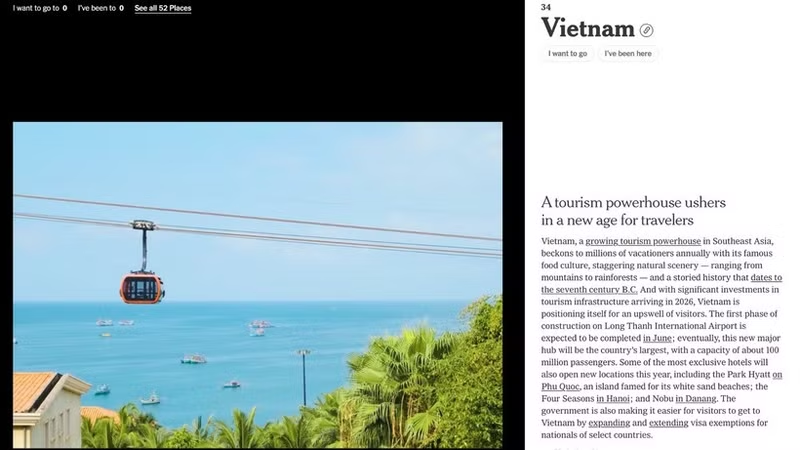
The list of 52 Places to Go, published annually by The New York Times, is inspired by the 52 weeks of the year, with the idea that each week can be a journey. In selecting Viet Nam as a recommended destination for 2026, The New York Times describes the S-shaped country as a tourism powerhouse ushering in a new age for travellers.
According to The New York Times, Viet Nam stands out as a bright spot for tourism in Southeast Asia, attracting millions of visitors each year thanks to its renowned food culture, staggering natural scenery ranging from mountains to rainforests, and a storied history.
Alongside these advantages, the implementation of major investments in tourism infrastructure demonstrates Viet Nam’s strong determination to elevate the quality of visitor experiences.
“With significant investments in tourism infrastructure arriving in 2026, Viet Nam is positioning itself for an upswell of visitors,” The New York Times editor Christine Chung wrote.
Notably, Long Thanh International Airport is expected to complete its first phase and begin operations in June 2026. It is projected to become a major aviation hub of the country, with a capacity to handle tens of millions of passengers annually, playing a key role in connecting Viet Nam with the global tourism market.
In parallel with transport infrastructure development, some of the world’s most prestigious luxury hotel brands are also gradually establishing a presence in Viet Nam. These include the first Park Hyatt resort in Phu Quoc, an island famed for its beaches; the Four Seasons in Ha Noi; and the Nobu Hotel in Da Nang. The presence of these renowned brands is expected to enhance the quality of high-end accommodation, diversify tourism products and better meet the increasingly varied needs of visitors to Viet Nam.
The New York Times also noted that the Vietnamese Government has introduced a range of favourable visa policies, notably expanding visa exemptions and extending visa validity for nationals of many countries, making travel to Viet Nam more flexible and convenient.
According to the Viet Nam National Authority of Tourism, the country’s potential, advantages, resources and new development drivers clearly reflect a comprehensive upgrade of Viet Nam’s tourism sector. This is evident in infrastructure, accommodation systems and facilitative policies for international visitors, reaffirming the appeal of an integrated, dynamic destination that is growing ever more strongly on the global tourism map.

![[Video] Viet Nam among Top three Asian destinations for return visitors](https://en-cdn.nhandan.vn/images/nyM650OGFWrOVWc-xajqN-rTZ68Rlmc1fiGJOhBRYHErj-E25MBpvJqrpphXazfrpe9t-fYCGuQU4CN0yXo3Rg/du-lich-vietnam.jpg.avif)













![[In Pictures] Nui Chua Rock Park: A million-year-old outdoor museum of landforms on the Khanh Hoa coast](https://en-cdn.nhandan.vn/images/nyM650OGFWrOVWc-xajqNz57td8idIAL_VG9puyG2UZEKOnmq1DVlT1--ZclbO3z2WBaWZhbt6O3e8kjPZqJMWkfEz7RO9qhcwg8o8LQFK8/ndo-br-cao-nguyen-da-moi.jpg.avif)