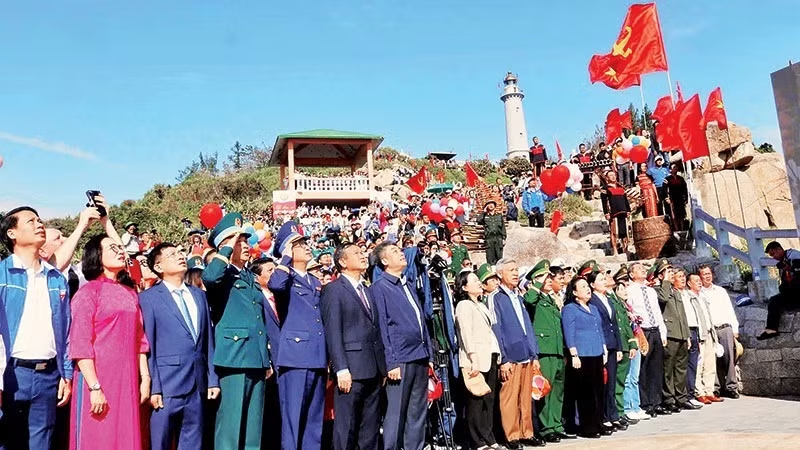
The first “lucky” tourist groups of the year, handshakes exchanging New Year greetings, and the radiant smiles of international visitors and local residents signal a promising tourism season ahead. This also highlights the increasingly evident role of tourism as a driver for improving the quality of socio-economic growth in many localities.
Tourism atmosphere spreading from north to south
On the morning of January 1, 2026, Quang Ninh Province welcomed the cruise ship Celebrity Solstice at Ha Long International Cruise Port, carrying more than 3,000 international tourists from the UK, the US, Australia, Canada, Spain, and other countries. Provincial leaders personally presented flowers and extended New Year greetings to the first visitors, marking the first step in the goal to welcome more than 70 cruise ships with over 100,000 international visitors this year.
“Quang Ninh tourism will promote marketing to key and traditional markets such as China, Northeast Asia, and Southeast Asia, as well as new markets in Europe, the Middle East, and India, while also paying due attention to the important domestic market, focusing on Quang Ninh’s tourism products and areas such as Ha Long Bay, Mong Cai, island and marine tourism, and spiritual tourism,” said Nguyen Lam Nguyen, Deputy Director of the Quang Ninh Department of Culture, Sports and Tourism.
The arrival of mega cruise ships demonstrates that Ha Long has become an attractive destination for international tourists, contributing to affirming Viet Nam’s position on the global tourism map.
In the Central region, the early-year tourism atmosphere is equally vibrant. At Phong Nha - Ke Bang National Park, a ceremony to welcome the first visitors of the New Year was held early on the morning of January 1. These “first-foot” visitors carry hopes for a flourishing tourism year for the heritage region.
“I love the atmosphere and the people here. We will definitely return to Phong Nha - Ke Bang,” shared Imran Turk, a visitor from Dubai (United Arab Emirates).
Meanwhile, Nguyen Minh Chau, a tourist from Ha Noi, said choosing a world natural heritage site as a New Year destination brought a special feeling of a favourable and lucky beginning.
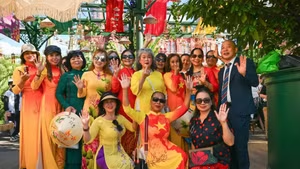
In Ha Noi, the Hoan Kiem Lake area and pedestrian streets became focal points for welcoming the New Year, attracting large numbers of residents and international visitors.
Sonic Sega, a tourist from Japan, said he was impressed by “a dynamic capital rich in identity, with friendly and hospitable people”. The festive atmosphere and openness of public spaces have helped enhance the Capital’s image as a destination in the eyes of international friends.
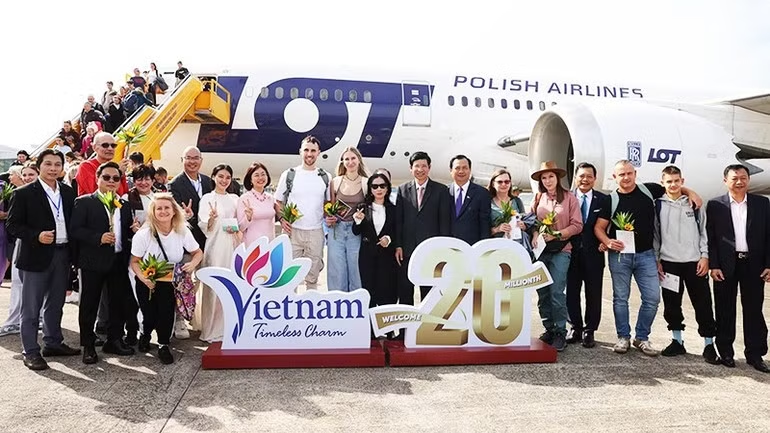
In the South, Ho Chi Minh City organised a ceremony to welcome the first international visitors at Tan Son Nhat Airport. On January 1 alone, the airport operated 759 flights, serving more than 117,200 passengers, demonstrating the strong appeal of “the country’s largest destination”.
Economic growth momentum shifts towards quality
The vibrant tourism atmosphere in the early days of the year is not merely a story of festivals, events, or short-term growth figures. Behind it lies the increasingly clear role of tourism in improving the quality of socio-economic growth, creating jobs, stimulating consumption, spreading cultural values, and enhancing local images.
In reality, in many localities, tourism is becoming a new economic driver. As visitor numbers increase, the chain of accommodation, transport, catering, shopping, and entertainment services operates in tandem. Local residents benefit directly from job opportunities and income, enabling local budgets to gain additional resources for reinvestment in infrastructure and social welfare.
However, the key question is not only “how many visitors are welcomed”, but how long they stay, how much they spend, and whether their experiences are deep enough to encourage return visits. This is precisely the crucial shift from extensive growth to intensive growth.
Quang Minh Cuong, Secretary of the Quang Ninh Provincial Party Committee, emphasised: “Figures are important, but what matters more is the quality of tourism. The challenge is how to ensure that visitors not only come once but return and recommend Quang Ninh to their friends.” This message shows that the locality’s tourism development mindset has moved beyond purely quantitative growth targets towards sustainable value and long-term experiences.
According to Pham Huy Binh, Director of the Ho Chi Minh City Department of Tourism, in 2026, the city aims to welcome 11 million international visitors and 50 million domestic tourists, with total tourism revenue of around 330 trillion VND.
“What is important and central to development is the need to strongly shift the quality of growth, placing visitor experience at the centre, urban cultural identity as the foundation, and innovation and digital transformation as the driving forces,” Binh stressed.
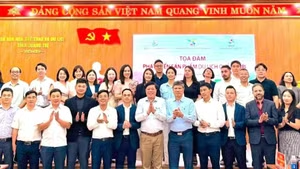
The tourism industry business dialogue conference held at the end of 2025 showed clear efforts by the Ho Chi Minh City authorities to unlock mechanisms and remove legal obstacles, from accommodation and travel services to promotion and marketing, as well as specific policies for MICE tourism (an acronym for Meetings, Incentives, Conferences, and Exhibitions, representing a business tourism model combining work and leisure). The National Assembly’s adoption of Resolution 260 replacing Resolution 98, together with policies such as Resolution 62 on MICE, has opened up “new space and a new position” for the city’s tourism sector.
From the business perspective, Nguyen Thi Khanh, Chairwoman of the Ho Chi Minh City Tourism Association, said the city’s development potential lay in extending visitors’ length of stay and increasing spending value.
“To achieve this, in addition to the efforts of management agencies, each enterprise must make systematic investments in products and professional human resources,” Khanh emphasised.
Tran The Dung, General Director of Vietluxtour, shared his optimism as policies to attract MICE tourists have been implemented since late 2025 and have quickly received positive feedback from international partners. According to him, if implemented in a coordinated manner, MICE tourism will not only bring large visitor volumes but also generate high added value, spreading benefits to many other service sectors.
In the accommodation sector, Vu Thi Thanh Hien, Director of the Kim Do Hotel, expressed expectations for expanded visa policies, improved infrastructure, and more effective mechanisms for exploiting accommodation facilities, especially for MICE groups.
“Open policies will determine Ho Chi Minh City’s competitiveness with regional tourism and conference centres,” Hien said.
Not only businesses, but also local residents clearly feel the benefits of the tourism upswing. Many small household businesses and service workers at destinations say increased visitor numbers help stabilise incomes and create a more optimistic outlook for the New Year.
From the early-year picture, it can be seen that tourism is playing a bridging role between economic growth and improved quality of life. When properly oriented, tourism not only generates substantial revenue but also contributes to cultural preservation, promotes digital transformation, enhances urban governance capacity, and strengthens the national image.
Many opinions suggest that the biggest challenge for localities today does not lie in market size, but in how to organise tourism space to enhance connectivity and diversify service types. Meanwhile, regional linkages and integration into global supply chains will determine the ability to increase experiential value for visitors.
![[Video] Viet Nam among Top three Asian destinations for return visitors](https://en-cdn.nhandan.vn/images/nyM650OGFWrOVWc-xajqN-rTZ68Rlmc1fiGJOhBRYHErj-E25MBpvJqrpphXazfrpe9t-fYCGuQU4CN0yXo3Rg/du-lich-vietnam.jpg.avif)