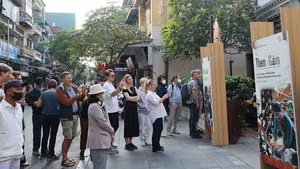
On January 4, the Quang Tri Department of Culture, Sports and Tourism reported that the four-day New Year holiday of 2026 was drawing to a close amid relatively favourable weather and a wide range of vibrant cultural and tourism activities. The province welcomed 120,000 tourist arrivals, a marked increase compared with the same period last year.
According to Dong Hoi Airport, from January 1 to the morning of January 4, the airport handled a total of 30 flights, effectively meeting the travel demand of around 4,500 passengers.
In 2026, Quang Tri aims to receive 10.5 million visitors, moving towards a new phase of growth that focuses not only on visitor numbers but also on the depth and quality of tourist experiences.
On the same day, a representative of the Thanh Hoa Department of Culture, Sports and Tourism said that during the 2026 New Year holiday, the province welcomed approximately 125,000 visitors, generating total tourism revenue of about 184 billion VND.
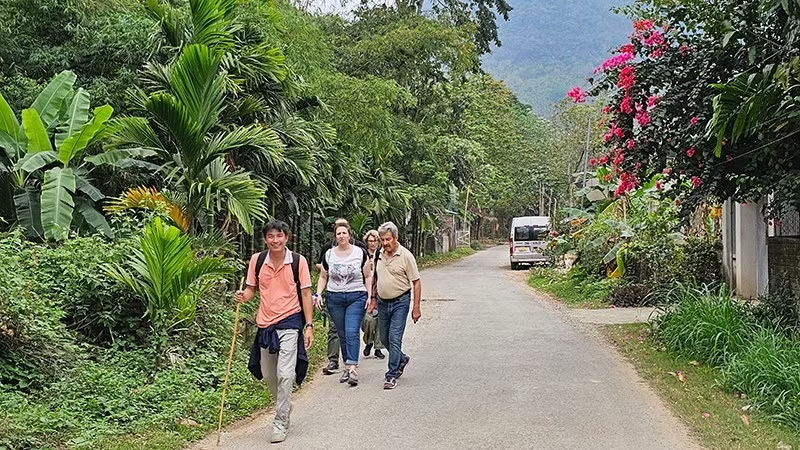
According to consolidated figures from the Thanh Hoa Department of Culture, Sports and Tourism, during the four-day holiday, the average occupancy rate of accommodation establishments reached around 22.5%, while Pu Luong Tourism Area recorded a 100% occupancy rate.
During the 2026 New Year holiday, tourism in Lao Cai continued to show positive signs as visitor numbers rose sharply.

According to representatives of the Lao Cai Department of Culture, Sports and Tourism, in order to attract and serve visitors during the early-year holiday period, the province proactively implemented a wide range of coordinated measures. These included working closely with localities, units and tourism enterprises to develop reception plans, improve service quality, and ensure public order, environmental sanitation, traffic safety, and fire prevention and control.
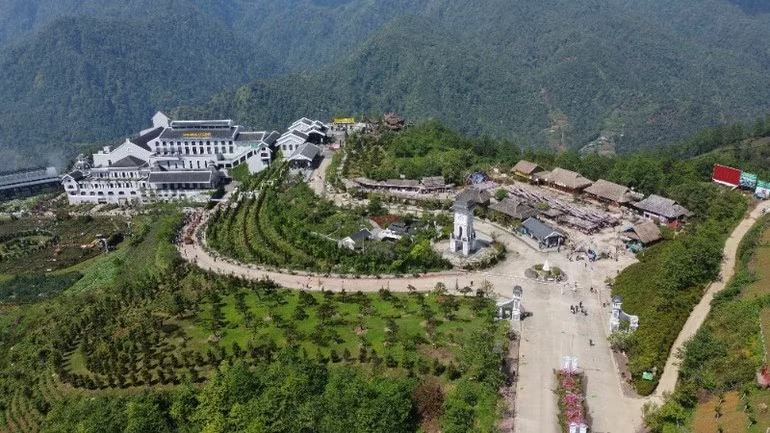
The total number of visitors to Lao Cai during the 2026 New Year holiday reached 363,112, including more than 32,000 international visitors. Total tourism revenue was estimated at 1.5 trillion VND.
Key tourist destinations such as Sa Pa, Lao Cai Ward, Bac Ha Commune, Bao Ha and Mu Cang Chai consistently recorded high visitor numbers. Average room occupancy across the province was estimated at 75–80% ; notably, in Sa Pa, Mu Cang Chai and Tu Le, occupancy rates reached between 95 and 100% on peak days.

The positive results recorded in the early days of 2026 are seen as a promising start, providing important momentum for Lao Cai’s tourism sector as it strives to achieve its target of welcoming 11.3 million visitors this year.






![[In Pictures] Nui Chua Rock Park: A million-year-old outdoor museum of landforms on the Khanh Hoa coast](https://en-cdn.nhandan.vn/images/nyM650OGFWrOVWc-xajqNz57td8idIAL_VG9puyG2UZEKOnmq1DVlT1--ZclbO3z2WBaWZhbt6O3e8kjPZqJMWkfEz7RO9qhcwg8o8LQFK8/ndo-br-cao-nguyen-da-moi.jpg.avif)