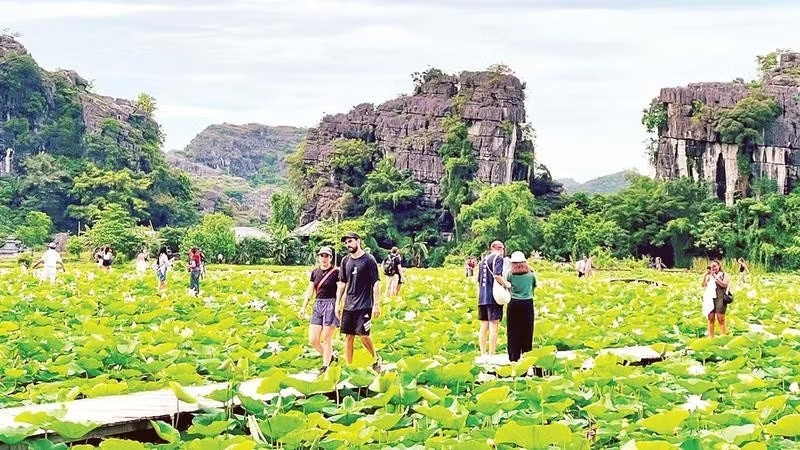
Building on its natural landscapes, the province is gradually tapping into the beauty of its seasonal flowers to develop distinctive eco-tourism, cultural and experiential tourism products, helping diversify the destination’s appeal and promote green, sustainable tourism.
Flowers all year round
In late August, the Ngo Dong River in the Tam Coc-Bich Dong tourist area attracts large numbers of visitors and photographers, drawn by tens of thousands of water lilies blooming simultaneously. Amid the mountains and rivers of the heritage area, pink and purple blooms stretching along both sides of the scenic route create a romantic natural landscape.
Over the past few years, management of the tourist area has sought to create continuity in its scenery by developing the water lily season into a new tourism product, with the aim of creating Viet Nam’s largest water lily garden.
According to Nguyen Do Thuy Duong of the tourist area’s communications division, developing the water lily product is intended to gradually reshape the destination’s image. In addition to the rice harvest season, Tam Coc will offer distinctive experiences at other times of the year.
The unit is promoting the tourism product on various digital platforms and exploring activities, events and festivals associated with the flower season.
This year, the water lily season arrived earlier, with the first flowers appearing in early July, and it may last until the end of the year.
Nguyen Minh Duc, a photographer in Ninh Binh, said the number of visitors coming to take photographs during this period had quadrupled compared with last year’s season.
He added that most visitors are deeply impressed by the scenery, particularly the water lilies blooming along both sides of the river and growing most densely in the area beyond Hai Cave.
To fully appreciate the beauty of the flowers, visitors are advised to come between 6am and 9am, when the blooms are fullest.
Many other destinations in Ninh Binh are also making the most of flower seasons to create their own experiential tourism products.
At the Mua Cave area, the lotus pond at the foot of Ngoa Long Mountain, covering about 7.2 hectares, has long been an attractive destination for visitors every summer.
Notably, the lotus season here lasts until the end of autumn, rather than blooming for only a short period as in many other places. The pink and white lotus flowers, combined with the green of the limestone mountains, create a tranquil setting. The tourist area receives between 1,500 and 2,000 visitors a day during the peak lotus season.
Thung Nham Ecotourism Site has created its own distinctive appeal by combining floral landscapes with artistic experiences at the “Four Seasons Flower Island”.
With nearly 30 flower varieties that change with the seasons, the area is constantly refreshed and complemented by a year-round live performance programme called “Song of Nature”.
Dancers dressed to resemble different flowers immerse themselves in music and the surrounding mountain scenery, creating a performance that combines art and nature.
Nguyen Thi Phuong, a visitor from Ha Noi, said she had visited Thung Nham many times, but each visit had given her a different impression.
This time, besides enjoying the natural scenery and taking photographs, she also had the opportunity to watch the artistic performances.
At different times of the year, Ninh Binh takes on a distinct character, with a variety of seasonal flowers, including the red blossoms of the bombax tree in March, the fragrance of lotus in summer, water lilies in early autumn, and white daisies, chrysanthemums and white reeds at the end of the year. The succession of natural colours is becoming part of the province’s tourism identity.

A sustainable tourism development strategy
The development of tourism around flower seasons reflects a shift in Ninh Binh’s approach to making effective use of its natural resources.
Rather than exploiting each flower season in isolation, the province places them within a broader strategy for developing eco-tourism, cultural tourism and the creative industries.
Each flower season marks a change in nature while also creating a tourism event and an experiential space. This offers the province an opportunity to tell stories about the culture, history, people and identity of the former imperial capital, while developing tourism products with greater depth.
A case in point is late autumn and early winter, when white reed-covered stretches once again blanket alluvial banks along rivers, the foothills of limestone mountain ranges and wetlands such as Trang An and Van Long.
Less vibrant than many other flowers, reeds have a rustic beauty that evokes memories of the childhood of Dinh Bo Linh – the national hero who used a reed flag while staging mock battles in Hoa Lu and later became the first Vietnamese emperor.
According to Nguyen Cao Tan, Deputy Director of the Ninh Binh Department of Tourism, organising flower festivals and developing tourism around flower seasons will create attractive and diverse experiential tourism products, enhance the value of the province’s landscapes and culture, and promote local economic development.
The department will continue to work with businesses and relevant organisations to gradually turn Ninh Binh’s distinctive flower seasons into a major eco-cultural tourism brand with strong appeal to both domestic and international visitors.
Products built around flower seasons serve as a bridge between natural resources and culture, art, cuisine and community experiences, helping to extend visitors’ stays, increase their spending and create sustainable livelihoods for local people.
Ninh Binh has identified tourism development based on promoting the outstanding values of its cultural and natural heritage, drawing on culture as an intrinsic strength and creativity as a driving force, while closely linking these efforts with the green and digital transitions. The aim is to make the cultural and tourism industries key economic sectors and new drivers of growth.
In the first eight months of 2026, the province is estimated to have welcomed more than 19.7 million visitors, up 24% year on year and nearing its full-year target, including more than 2.2 million international visitors. Total tourism revenue is estimated at more than 20.6 trillion VND (789 million USD), up 21.8%.
The figures demonstrate Ninh Binh’s growing appeal as it diversifies its tourism products and makes effective use of its natural and cultural values.
Each flower season is becoming an “ambassador” promoting the image of Ninh Binh – a green tourism destination rich in identity and attractive to visitors all year round.

![[In Pictures] Nui Chua Rock Park: A million-year-old outdoor museum of landforms on the Khanh Hoa coast](https://en-cdn.nhandan.vn/images/nyM650OGFWrOVWc-xajqNz57td8idIAL_VG9puyG2UZEKOnmq1DVlT1--ZclbO3z2WBaWZhbt6O3e8kjPZqJMWkfEz7RO9qhcwg8o8LQFK8/ndo-br-cao-nguyen-da-moi.jpg.avif)