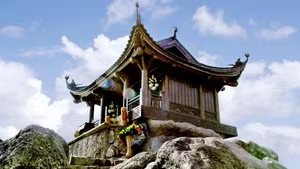
In the depths of winter in the northern mountainous region, Elena Schmidt, a visitor from Germany, sought out a resort specialising in healing tourism in the hope of alleviating long-standing joint pain. Immersed in the tranquillity of the forested mountains, she experienced herbal baths, traditional massage therapies and a slow-paced daily routine aligned with nature. After a week, not only did her pain ease and her sleep deepen, but her mental state also became noticeably more relaxed.
Building a diverse ecosystem
Pham Hai Quynh, Chairman of the Viet Nam Community Tourism Association, observed that in the post-pandemic period, the global demand for physical and mental recovery, alongside a growing desire to reconnect with nature, has increased sharply.
With advantages such as diverse natural ecosystems, regionally varied climates, abundant medicinal resources and a long-standing tradition of traditional medicine, Viet Nam is well positioned to develop high value-added healing tourism products.
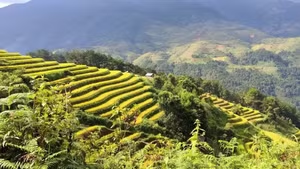
From the northern mountains offering herbal leaf baths, meditation and wellness practices in forest settings; to central regions with hot mineral springs and seaside resorts combined with physical rehabilitation; to the Central Highlands and the Mekong Delta, where eco-tourism is linked to healthcare, each region can develop distinctive products that extend visitor stays and enhance the economic efficiency of the tourism sector.
In addition, the friendliness, hospitality and harmonious life philosophy of the Vietnamese people constitute an important form of “soft resource”.
In practice, a number of healing tourism models have already begun to take shape and make an impression on the international market. In the northern and north-central regions, hot mineral spring resorts such as Yoko Onsen Quang Hanh (Quang Ninh), Alba Wellness Valley (Hue) and Minawa Kenh Ga (Ninh Binh) leverage natural mineral resources in combination with meditation, yoga and restorative therapies.
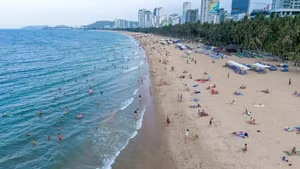
In coastal and island areas, high-end resorts including Six Senses Con Dao, An Lam Retreats Ninh Van Bay, Banyan Tree Lang Co and The Anam Cam Ranh have developed comprehensive wellness programmes combining spa treatments, meditation and slow living in natural surroundings. In addition, several models rooted in indigenous culture and ecology, such as MEDI Thien Son (Ba Vi, Ha Noi) and retreats in Da Lat, Lam Dong, have also emerged.
“These models demonstrate that healing tourism in Viet Nam is no longer merely a potential trend, but has begun to form a diverse ecosystem, laying the foundation for development into a distinctive tourism product with high added value,” Quynh emphasised.
The need to establish a brand identity
At present, healing tourism in Viet Nam remains fragmented, largely driven by spontaneous, small-scale initiatives and lacking coordinated linkages between tourism, healthcare, agriculture and culture. Service quality is uneven, while the absence of common standards means visitor experiences depend heavily on individual operators, reducing the potential to form a systematic and sustainable product.
Human resources capable of meeting the combined requirements of tourism expertise, therapeutic and healthcare knowledge, and international communication skills remain limited. This situation prevents many high-potential healing tourism products from effectively reaching high-spending market segments. Branding and promotion efforts also fall short, as Viet Nam’s image in international markets is still primarily associated with being an affordable destination rich in scenery, rather than a sustainable healing and wellness destination.
Against this backdrop, post-pandemic demand for physical and mental recovery, together with the global trend of returning to nature, has grown significantly. Many Southeast Asian countries have already identified wellness tourism as a new driver for restructuring their tourism sectors and enhancing added value.
Thailand currently leads the region thanks to its diverse wellness service ecosystem, which has significantly increased international visitor spending. Indonesia, centred on Bali, has successfully positioned itself as an internationally recognised healing destination, while Malaysia has also identified wellness tourism as a key pillar of its service economy.
According to Associate Professor Giannina Warren, Senior Programme Manager of Professional Communication at RMIT University Viet Nam, for healing tourism to truly become a distinctive hallmark, Viet Nam needs to adopt a strategic approach aligned with building a unified and long-term national image. She noted that establishing a wellness tourism brand identity based on evocative Eastern symbols such as the lotus, water, and green and earth-yellow colour palettes would help Viet Nam more clearly position itself as a healing destination with a unique regional identity.
In terms of product development, priority should be given to regions possessing distinctive natural and spiritual therapeutic values, linked to detoxification, retreat and meditation activities. Con Dao, for example, is well suited to a secluded spiritual retreat model; Quang Binh benefits from its cave systems and hot mineral springs; while the Central Highlands stand out for their forest landscapes, traditional music and indigenous medicinal resources.
Wellness tourism itineraries should be designed around authentic experiences and a slow pace of life, harmoniously combining mineral bathing, therapeutic movement, macrobiotic nutrition, meditation and community engagement. This approach enables visitors to deeply appreciate the harmonious relationship between humans, nature and culture, which forms the core foundation of sustainable healing values.
In addition, communication efforts need to shift from simple promotion to storytelling centred on identity. Communication should not merely introduce destinations, but also help shape the image of Viet Nam as a cultural–ecological–healing space with depth and a distinct character. In particular, communication strategies should be deployed in a coordinated manner across multiple platforms.
In the digital environment, dedicated information portals can be developed, along with experiential content channels that amplify the stories of visitors, experts and local communities. At the same time, cooperation with reputable international media outlets should be strengthened to expand reach and enhance the credibility of messaging.
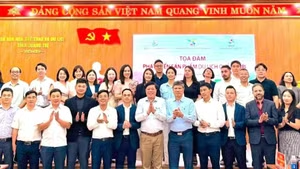
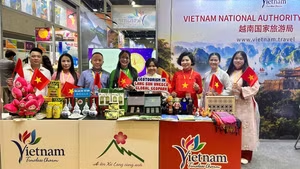
Alongside this, direct activities such as experiential programmes for international journalists, specialised seminars and dialogue forums on wellness tourism should be organised regularly, thereby conveying the image of Viet Nam as a destination in an authentic, in-depth and persuasive manner.
In the longer term, Associate Professor Giannina Warren believes that intensifying the organisation of wellness tourism promotion activities in major global centres; connecting with diplomatic missions and cultural institutes; and promoting exchange, training and international cooperation will help expand influence, enhance competitiveness and strengthen Viet Nam’s image amid increasingly fierce destination competition.
Furthermore, a comprehensive measurement system should be established, covering the number of visitors using wellness tourism products, revenue, levels of digital recognition, and feedback from visitors and local communities. Regular monitoring and evaluation will enable timely adjustments to policies, communication content and management quality.
Wellness tourism also cannot be separated from organic agriculture, indigenous medicinal resources, traditional handicrafts, therapeutic music and folk arts. This multi-sectoral linkage not only expands the economic value chain, but also disseminates a philosophy of harmonious living, contributing to the enhancement of Viet Nam’s cultural standing and international appeal.
ASSOCIATE PROFESSOR GIANNINA WARREN, Senior Programme Manager of Professional Communication, RMIT University Viet Nam
![[Video] Viet Nam among Top three Asian destinations for return visitors](https://en-cdn.nhandan.vn/images/nyM650OGFWrOVWc-xajqN-rTZ68Rlmc1fiGJOhBRYHErj-E25MBpvJqrpphXazfrpe9t-fYCGuQU4CN0yXo3Rg/du-lich-vietnam.jpg.avif)