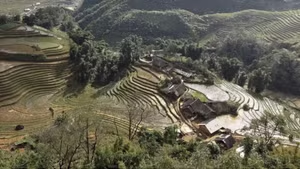
The report portrays Sa Pa as a landscape shaped by generations, highlighting the terraced fields that have been carefully carved and maintained by residents over centuries. A local guide told the programme that some of the oldest terraces in the area are around 250 years old.
The feature follows a two-day trekking experience of four visitors from Normandy in northern France, who covered a 20km route at elevations of about 1,500m, traversing verdant slopes and valleys. Accompanied by a local guide named Chin, the group ventured beyond well-trodden tourist paths to explore quieter trails that retain much of their original, unspoilt character.
Dubbed the “Alps of the North”, Sa Pa is presented not only as a land of iconic terraced fields but also of extensive bamboo and reed forests stretching towards the Viet Nam–China border, creating a striking and culturally distinctive mountain panorama.
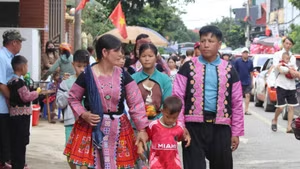
Along the journey, the travellers stopped at long-established villages where farming families have lived for dozens of generations. According to the guide, the area is home to one of Viet Nam’s 54 ethnic groups, whose traditional lifestyles remain largely preserved.
Amid the mountain village scenery, the group enjoyed a modest lunch featuring Vietnamese banh mi, a familiar dish that took on a distinctive local character. The meal offered a welcome respite after the demanding trek and an intimate moment of cultural connection.
The journey concluded with tastings of Sa Pa’s signature cuisine, including bamboo worms and other dishes imbued with the flavours of the Northwest highlands. One traveller remarked that while eating fish with chopsticks proved challenging, the experience only deepened the group’s eagerness to return and further explore this land often described as “where heaven and earth meet”.






![[In Pictures] Nui Chua Rock Park: A million-year-old outdoor museum of landforms on the Khanh Hoa coast](https://en-cdn.nhandan.vn/images/nyM650OGFWrOVWc-xajqNz57td8idIAL_VG9puyG2UZEKOnmq1DVlT1--ZclbO3z2WBaWZhbt6O3e8kjPZqJMWkfEz7RO9qhcwg8o8LQFK8/ndo-br-cao-nguyen-da-moi.jpg.avif)