An Giang strives to welcome over 25 million visitors
According to Bui Quoc Thai, Director of the provincial Department of Tourism, during just four days of the New Year 2026 holiday, the province welcomed more than 348,000 visitors, up 52.5% year on year. Total tourism revenue reached 859 billion VND, an increase of 71.2% compared with the same period.
Of this figure, international arrivals exceeded 30,000, up 48.6%; domestic visitors numbered more than 318,000, up 52.8%; and overnight stays surpassed 86,000, nearly doubling (up 99.0%) year on year.
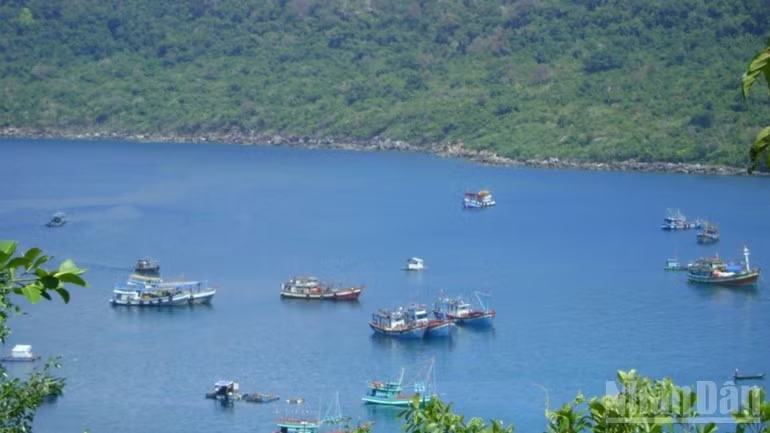
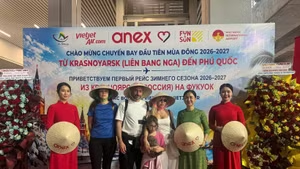
Statistics show that Phu Quoc special zone welcomed more than 175,000 visitors, a surge of 156.1% compared with the same period. Other destinations also recorded growth, including Tuc Dup Hill (O Lam Commune), Tra Su cajuput forest (An Cu Commune), and Con En ecotourism site (Cu Lao Gieng Commune).
These are positive early-year signals creating momentum for tourism growth in 2026. Looking back at 2025, An Giang’s tourism sector enjoyed a “golden season,” welcoming more than 24 million visitors. In 2026, the province aims to attract over 25 million visitors, with total tourism revenue reaching 70 trillion VND, an increase of 3%.
Vice Chairman of An Giang People’s Committee Le Van Phuoc said that to achieve this target, the province has been implementing programmes to promote and introduce its scenic attractions and potential. These efforts include developing transport infrastructure, upgrading high-quality tourism products and regional OCOP products, and enhancing visitor experiences based on advantages in mountainous terrain, forests, islands, rivers, waterways, and lakes.
Expectations from tourism
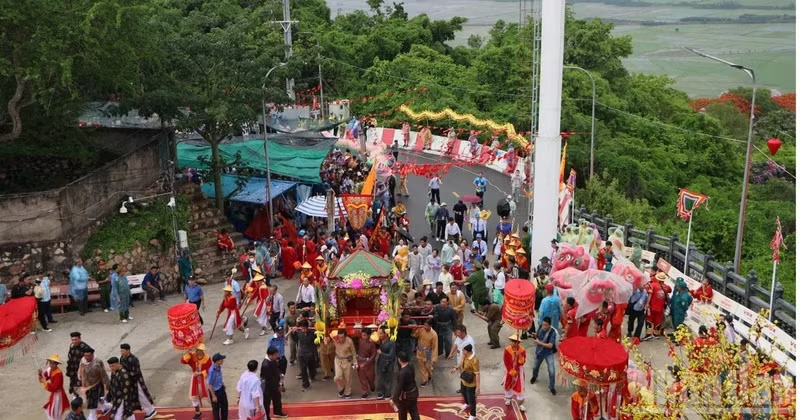
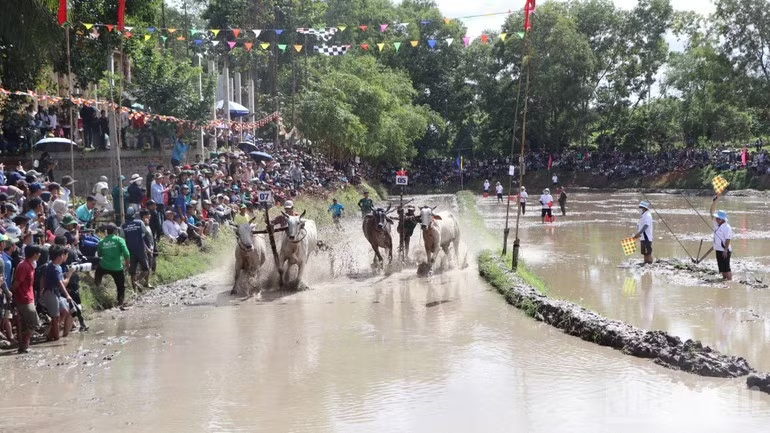
An Giang places high expectations on tourism-driven growth. In addition to favourable natural conditions, the province boasts distinctive festivals and events such as the Nguyen Trung Truc Temple Festival, the Ba Chua Xu Festival at Sam Mountain, the Bay Nui bull-racing festival, and celebrations of the flood season.
Local cuisine is another attraction, featuring a rich blend of Vietnamese, Chinese, Cham, and Khmer influences, with specialties such as Tri Ton beef porridge, palm sugar cakes, ka tum cakes, Cham-style sponge cakes, Chau Doc fish noodle soup, and Long Xuyen broken rice.
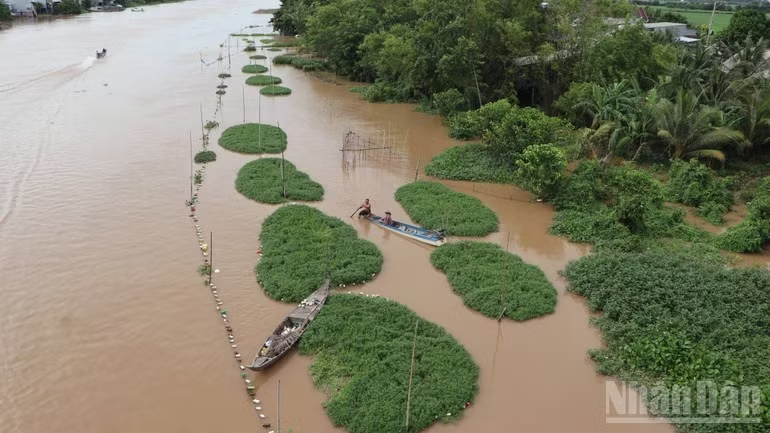
After the merger, the new An Giang Province is blessed by nature, encompassing seas and rivers, mountains and forests, islands, lakes, and wetlands, forming a diverse and colourful tourism landscape. This provides advantages over other provinces in the Mekong Delta.
Former An Giang Province was home to famous attractions such as the Lady of the Realm Shrine at Sam Mountain, Hang Pagoda, Tay An Pagoda, and the Seven Mountains (That Son) range, including Cam Mountain, Co To Mountain, Ket Mountain, and Dai Mountain, drawing pilgrims and visitors. At its peak, the Ba Chua Xu Festival (from the first to the fourth lunar months) attracts more than four million domestic and international visitors annually, making it the largest spiritual festival in the delta region.
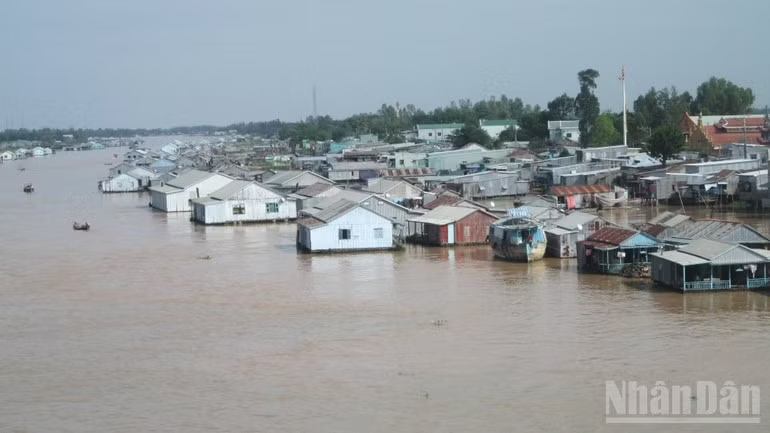
Former Kien Giang Province featured more than 140 islands, with Phu Quoc, known as the “Pearl Island”, welcoming millions of visitors each year, along with Ha Tien’s scenic border landscapes and U Minh Thuong National Park with its rich ecosystems.
Phan Thi Ngoc Quyen from Tra On Commune, Vinh Long Province, shared that during the Lunar New Year holidays, her family often visits Sam Mountain in Vinh Te Ward to pray for good fortune, then tours Hang Pagoda, Tay An Pagoda, and the Thoai Ngoc Hau mausoleum complex. They may also explore the Seven Mountains region or travel to Ha Tien to enjoy the sea and sky.
She added that, like many visitors to An Giang, she hopes the province will further upgrade and expand transport infrastructure, as some roads, especially in the
Seven Mountains and Sam Mountain areas—remain narrow. She also wishes for more distinctive local products that visitors can buy as souvenirs or gifts.
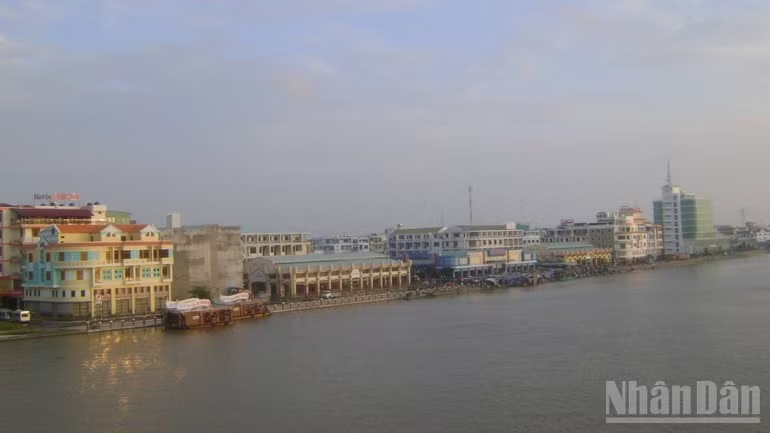
Before the merger, the tourism sectors of the two provinces each possessed distinct strengths. Following the merger, the province has gradually connected these advantages to create effective linkages and diversify tourism product chains, while pursuing a long-term orientation toward building a sustainable brand. At the same time, efforts have been made to attract strategic investors, including inviting enterprises to invest in key tourism hubs such as Chau Doc, Nui Cam, and Ha Tien.
In parallel, investment has been stepped up to upgrade transport infrastructure, develop coastal and hillside resort complexes, and build night markets in Chau Doc and Ha Tien. Leveraging the province’s strengths, particularly by linking spiritual tourism with mountain ecology and island–sea tourism, will generate strong momentum for the development of the “smokeless industry,” thereby gradually promoting comprehensive socio-economic development.


![[In Pictures] Nui Chua Rock Park: A million-year-old outdoor museum of landforms on the Khanh Hoa coast](https://en-cdn.nhandan.vn/images/nyM650OGFWrOVWc-xajqNz57td8idIAL_VG9puyG2UZEKOnmq1DVlT1--ZclbO3z2WBaWZhbt6O3e8kjPZqJMWkfEz7RO9qhcwg8o8LQFK8/ndo-br-cao-nguyen-da-moi.jpg.avif)