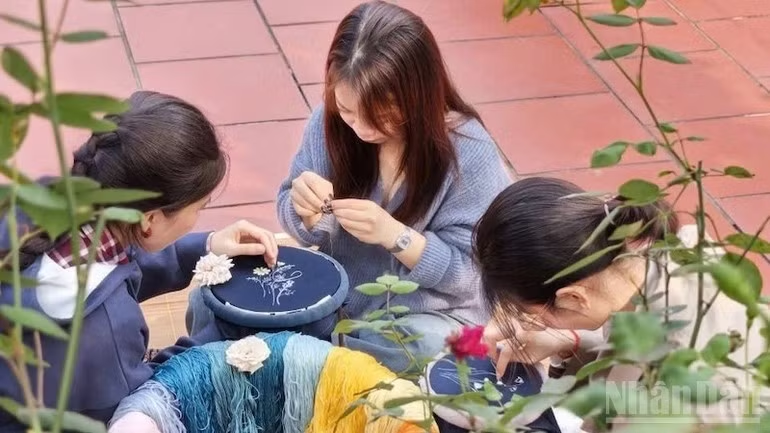
Every Saturday morning, the narrow lane leading to Tu Thi Hand Embroidery Shop welcomes eager participants. The workshop takes place in the courtyard of a classic northern delta tiled-roof house, surrounded by a lush flower garden. The open-air setting allows attendees to immerse themselves in the slow, nostalgic rhythm of village life.
Nguyen Ha Phuong, a representative of Tu Thi, explains that the idea of hosting embroidery workshops arose from a simple desire to keep the craft “alive” in everyday life, rather than confined to books or museums. Similar workshops had previously been held in Ha Noi’s Old Quarter, receiving enthusiastic feedback and suggestions to host classes in the village itself. “We want participants not only to learn the technique but also to truly return to the village—engaging with its space, its people, and the rhythm of Quat Dong embroidery,” Phuong shares.
The workshop is led by Pham Thi Huong, a 55-year-old manager at Tu Thi and a native of the village, who has devoted over 40 years to the craft. “I grew up with embroidery.
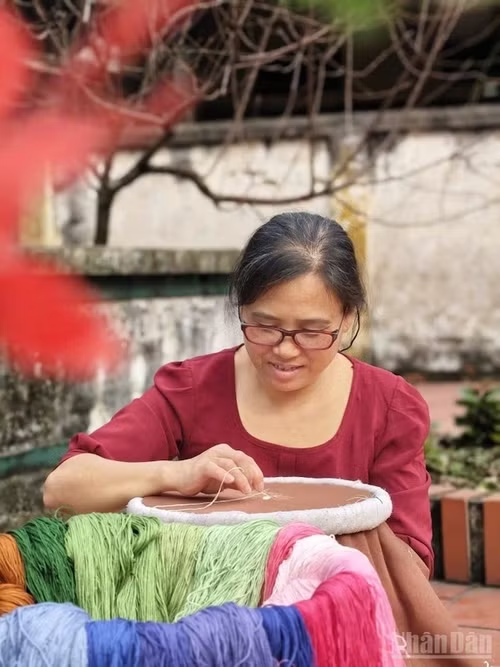
As a child, I spent half the day at school and the other half stitching alongside my parents. I had no formal training—just practice until my hands became accustomed to it,” Huong recalls. All six of her siblings naturally followed the family profession.
Under Huong’s meticulous guidance, participants learn how to thread needles, stitch, blend colours, and appreciate the generational flow embodied in each piece. Alongside practical skills, they hear stories of the village’s craft—its history of exporting embroidered goods, its resilience through hardship, and its innovations in modern fashion, furnishings, and tourism.
For Duc Hien, a participant from Ha Noi, the workshop offered far more than mastering stitches. “It was a deep immersion in traditional beauty, helping me truly appreciate the artistry of embroidery. I used to be just an admirer, but after trying it myself, I now feel the patience and love poured into every flower or lotus pond,” she reflects.
Before and after class, attendees stroll through the village, explore embroidery workshops, take photographs, and savour rustic cuisine. After a period when Quat Dong embroidery nearly disappeared, the craft is experiencing a revival thanks to young people returning to continue the tradition, innovate, and adopt technology to reach wider audiences.
Each participant leaves with a small piece they have created themselves. This experiential tourism model not only provides sustainable livelihoods for artisans but also ensures cultural preservation. Tourists, witnessing the time, effort, and skill involved, gain a deeper appreciation of handicrafts, while artisans gain valuable insights into market needs.
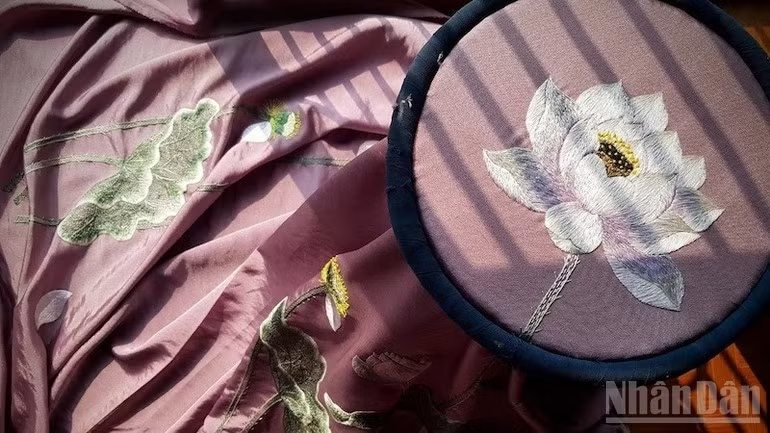
Information about the workshops spreads through social media and word-of-mouth. Images of embroidery frames beneath trees and participants stitching in ancient courtyards capture a gentle yet profound Vietnamese cultural experience.
Following the Lunar New Year in 2026, Tu Thi plans to collaborate with travel companies to offer international tours that combine craft learning with village visits.
Amidst growing trends favouring immersive cultural experiences, Quat Dong’s embroidery classes are poised to become a new highlight, enriching the tourism map of Ha Noi and the northern delta.
Located just 25 kilometres from the bustling heart of the capital, Quat Dong Village is celebrated as the cradle of traditional embroidery, preserved across generations. Quat Dong embroidery products are renowned for their sophistication and vibrant detailing, with each design requiring immense patience and perseverance.
Today, Quat Dong embroidery is exported to countries across the European Union, Japan, the Republic of Korea, and the United States, carrying with it the enduring beauty of Vietnamese craftsmanship.