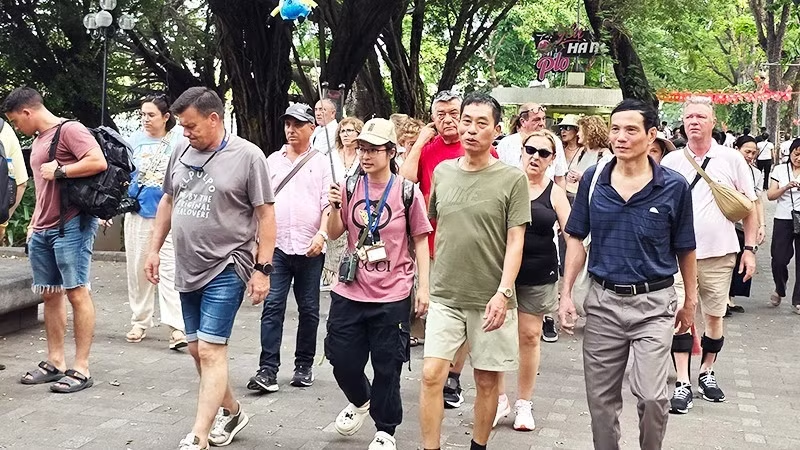
Of this total, international arrivals exceeded 7.82 million (up 22.76%), while domestic tourists reached 25.88 million. Total tourism revenue was estimated at over 134.46 trillion VND (5.1 billion USD), up 21.5%. These figures not only reflect a strong recovery but also underscore Ha Noi’s growing appeal on the regional and global tourism map.
The capital’s attractiveness has continued to receive recognition from prestigious international organisations through a series of major awards, including Asia’s Leading City Destination and Asia’s Leading City Break Destination at the World Travel Awards. On TripAdvisor, Ha Noi ranked second among the world’s top 25 cultural destinations, seventh among the top 25 destinations worldwide, and 14th among the top 25 most beloved destinations of all time.
Nevertheless, Ha Noi’s tourism sector still has considerable room to grow more sustainably. Average spending per international visitor for a two- to three-day trip in Ha Noi is currently around 650 USD, significantly lower than in Thailand or Singapore. One of the main reasons is the limited diversity of high-end products and services, incomplete infrastructure, and the short average length of stay, which remains only two to three nights.
Ha Noi is still largely a starting or ending point of travel itineraries rather than a destination where visitors choose to stay longer and explore in depth. According to Tran Trung Hieu, Deputy Director of the Ha Noi Municipal Department of Tourism, the city lacks internationally standardised shopping centers, resulting in less-than-complete shopping experiences for visitors. Connectivity between aviation services and tourism products also needs to be strengthened to encourage longer stays.
Looking ahead, Ha Noi’s tourism must shift decisively toward quality and depth. Priority should be given to developing distinctive and unique products such as night tourism, gastronomy, heritage-based experiences, traditional craft villages, and suburban eco-tourism. Familiar destinations like Bat Trang, Duong Lam, Ba Vi, and the Hoan Kiem Lake area need to be systematically connected into complete and creative experiential itineraries. At the same time, a curated “repository” of high-value, locally distinctive souvenirs should be developed.
Experts also recommend that Ha Noi’s tourism sector further specialise services for specific market segments—such as Halal tourism, Indian, Northeast Asian, European, and North American markets—with tailour-made products and services. Comprehensive digital transformation, the application of technology in destination management, and stronger regional linkages are likewise essential. Tourism triangles such as Ha Noi–Quang Ninh–Ninh Binh, Ha Noi–Lao Cai–Tuyen Quang, and Ha Noi–Bac Ninh will serve as key foundations for elevating the capital’s tourism profile.
The year 2025 has demonstrated that Ha Noi has not only rebounded but also moved further onto the global tourism stage. With strategies focused on genuine value and memorable experiences, the city must implement well-structured approaches to solidify its position as a leading cultural destination in Asia, where visitors truly love and wish to return to.

![[Video] Viet Nam among Top three Asian destinations for return visitors](https://en-cdn.nhandan.vn/images/nyM650OGFWrOVWc-xajqN-rTZ68Rlmc1fiGJOhBRYHErj-E25MBpvJqrpphXazfrpe9t-fYCGuQU4CN0yXo3Rg/du-lich-vietnam.jpg.avif)