During the Lunar New Year Festival (Tet), OV family members gather and wish each other the best. The older recall their memories, explain to their children the meaning and importance of traditional Tet customs and consult them about the importance of preserving Vietnamese cultural identities.
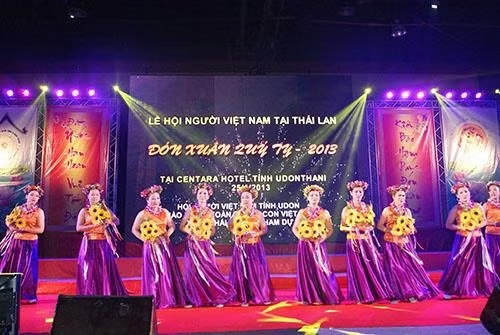
OV Associations in Thai provinces and cities host the annual Tet ceremony for the OV community. This year’s get-together gathering of over one thousand people is being prepared by the association in the north-eastern province of Thailand, Udon Thani. They not only busily make such traditional dishes as ‘chung’ cake, ‘tet’ cake (made of sticky rice, green bean and pork and wrapped in banana-like leaves), ‘xoi vo’ (steamed sticky rice and green bean), ‘dua hanh’, ‘dua gop’ (pickles) and ‘mut’ (sweetened dried fruits), but also carefully prepare for sports, singing and dance activities.
Ingredients for the dishes are readily available in Thailand, excerpt ‘la dong,’ the leaf covering for ‘chung’ and ‘tet’ cakes. Taught by previous generations, many people can make ‘chung’ and ‘tet’ cakes skillfully. Close families often boil ‘chung’ cakes together when they can feel the Tet atmosphere in their homeland.
The hustle and bustle of the upcoming Tet has been seen at Vietnamese food suppliers owned by OV. Although some changes or substitutes have been made for common items on the traditional Tet menu such as ‘chung’ cake and ‘gio cha’ (Vietnamese sausage) in order to match Thai flavour, they still keep the original taste thanks to the traditional know-how handed-down by generations.
Family members and employees of Mr. Vu Manh Hung, the owner of a big ‘gio cha’ producer in Udon Thani, have had to work with their utmost efforts to meet the doubled or tripled demand in comparison to the daily orders of approximately 200kg.
As a second generation overseas Vietnamese, Hung was born and grew up in Thailand and he always preserves the traditional customs of his ancestral land. He tidies up his house, decorates the altars of his fatherland and ancestors with five fruits thought to bring luck and happiness, a couple of ‘chung’ cakes and a ‘mut’ box to thank and commemorate the past antecedents. He also visits and cleans up his parents’ graves in Khon Kaen. People, whose grandparents and parents’ graves are in the same place, often visit the graves together thanks to information provided by the local OV associations.
This Tet is in the middle of Thailand’s dry season when the‘mai’ flower (a tree species of the family Ochnaceae popular in southern part of Vietnam, often displayed during Tet) blossoms in the north-eastern region of Thailand and where the prunus cherry blossom, which is brought from the country, is rarely found.
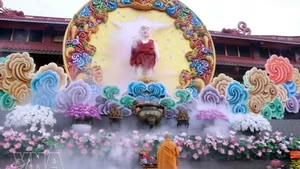
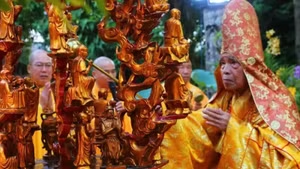
As Tet approaches, people often make appointments to go to the pagoda and visit the elder to wish them longevity. Many return to Vietnam to visit their relatives and enjoy Tet in the homeland. They can travel by air or car as the transportation from their place to this country is convenient.
Over one thousand OV are in Thailand. The first OV generation has just been allowed to settle down in five north-eastern provinces under refugee regulations. Younger generations have been able to access better education and made achievements in different fields.