Six years after joining UNESCO’s Creative Cities Network, cultural and creative activities are gradually becoming a driver of Ha Noi’s development. The city currently has more than one hundred creative spaces with various forms of activity. Although official statistics are not yet available, the number of artists, artisans, and creators participating in creative activities has increased.
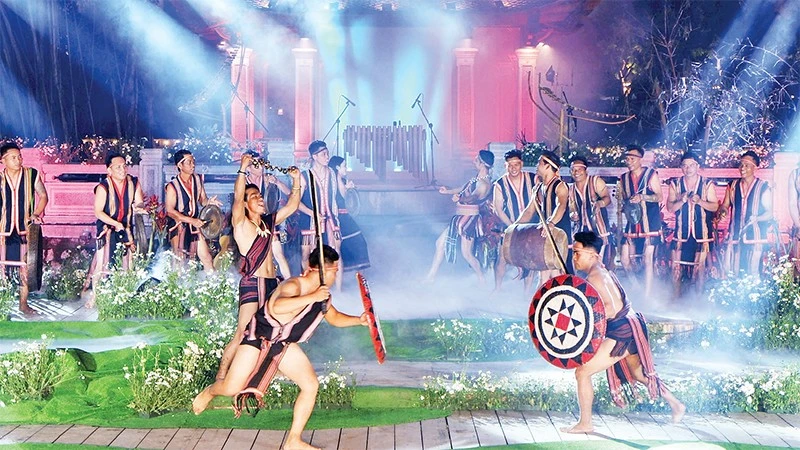
In 2024, the city established a council of advisory experts, developed creative activity spaces, and built criteria for such spaces; established a Coordination Centre for Creative Activities; and developed the Ha Noi Creative Cultural Spaces Network to connect organisations, individuals, experts, artists, and community groups working in the field of creative design. These efforts aim to attract creative resources locally and internationally as well as introduce, share, and support creative communities in developing and expanding their activities. A highlight of this network is the Ha Noi Creative Design Festival, which attracted 300,000 visitors in 2024.
Jonathan Baker, UNESCO Chief Representative in Viet Nam, said: “Ha Noi’s recognition as a UNESCO Creative City in the field of design has opened a new chapter — in which creativity is no longer an auxiliary element of development but becomes a key driving force. Creative festivals may only take place over a week or a season, but their impact is long-lasting, helping to connect people and revitalise public spaces.”
However, compared with many cities in the UNESCO Network, creative activities in Ha Noi have not yet contributed proportionately to socio-economic development. The city is working to improve its environment to foster the growth of creative activities, build an ecosystem for creative spaces, and promote cultural industries. Ha Noi is also intensifying international experience exchanges in building a creative city.
Recently, the Ha Noi Department of Culture and Sports organised an international conference on the Creative Festival in Creative Cities, with the participation of many renowned creative cities across Asia. At this forum, participants shared valuable experience in the field in general and in festival organisation in particular. Chiang Mai (Thailand), a UNESCO Creative City of Crafts and Folk Arts, is known for its nine traditional craft sectors such as silver making, lacquerware, textiles, wood carving, and various types of handicrafts.
Today, Chiang Mai has more than 200 creative spaces, with the creative industry contributing 12–14% of the province’s GDP. Meanwhile, Daegu (the Republic of Korea) has been highly successful in the field of music, creating strong momentum for socio-economic development. Wuhan (China) is the cradle of many legends and ancient historical relics.
Creative culture permeates every tourism space, from souvenir stalls to performance stages recreating legends. According to Bach Lien Huong, Director of the Ha Noi Department of Culture and Sports, the valuable experiences shared at the conference provide a basis for Ha Noi to learn and develop policies and solutions for creative city development in practice.