Smart urban governance
Amid rapid urbanisation, major cities in Viet Nam are facing numerous challenges such as traffic congestion, localised flooding, environmental pollution and pressure on technical infrastructure and public services. These issues cause significant economic losses, directly affecting citizens’ quality of life and the effectiveness of urban administration.
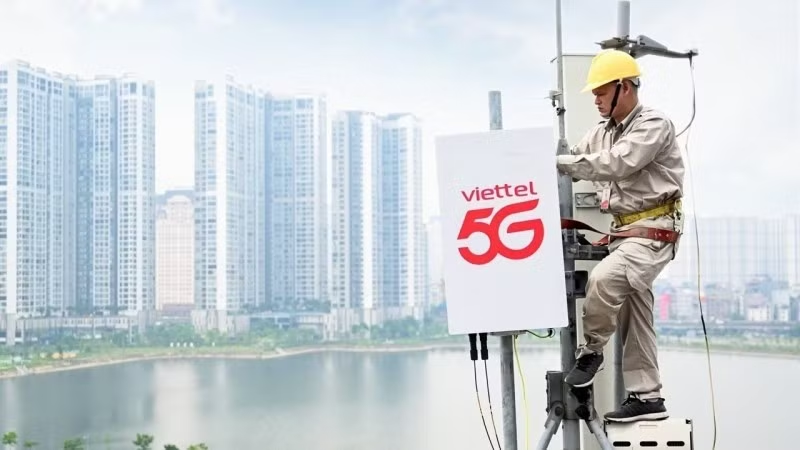
The application of digital technologies, especially 5G, is considered one of the key solutions for shifting from traditional management models to smart urban governance based on real-time data and automation. According to Nguyen Tuan Huy, Deputy Head of the Department of Technology at MobiFone, modern urban management challenges require connectivity infrastructure with low latency and the ability to connect large numbers of devices. Only with 5G can sensor systems, AI cameras, and real-time operational platforms operate effectively.
Practical implementation in Ha Noi shows that models for smart traffic regulation, environmental monitoring, and flood prevention are gradually taking shape. AI camera systems combined with 5G networks can collect, process, and analyse data directly at the scene, thereby helping authorities make decisions faster and more accurately. In the long term, these models help reduce traffic congestion, save time, reduce social costs, and improve transparency and efficiency in urban governance — an increasingly urgent requirement for sustainable development.
Opening a “highway” for agricultural products on digital environment
Notably, the deployment of 5G in Viet Nam has impacted not only on urban areas but also spreads strongly to rural, mountainous and remote regions, where connectivity infrastructure and market access were limited in previous time. Expanding 5G coverage has helped narrow the digital divide between regions and opened new development opportunities for rural areas.
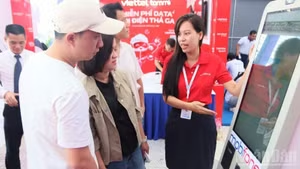
Nguyen Lam Thanh, General Director of TikTok Viet Nam, noted that 5G helps farmers directly enter the digital economy. When 5G is widely deployed, Vietnamese agricultural products will gain greater opportunities to reach broader markets through new sales and marketing channels in digital environment. “Farmers can share their stories with more than 70 million users on the TikTok Shop platform. As a result, they will be able to improve their livelihoods and narrow the gap between rural and urban areas,” Thanh said.
In many localities, farmers have taken advantage of digital platforms and 5G infrastructure to livestream the sale of agricultural products directly from fields and orchards. This approach shortens intermediary stages while enhancing transparency regarding product origin and quality, thereby building consumer trust. More importantly, bringing agricultural products onto digital platforms creates opportunities to increase added value for agricultural products, contributing to improving livelihoods for farmers in remote areas through the combination of 5G infrastructure, digital sales models, and logistics systems. Not only supporting consumption, 5G has also created fundamental changes to agricultural value chains, from production and distribution to consumption.
According to Dinh Thanh Son, Deputy General Director of Viettel Post, “Combining 5G infrastructure with logistics systems opens a new approach to addressing farmers’ livelihoods. For farmers, 5G is like a digital highway that brings agricultural products from villages to dining tables in urban areas.”
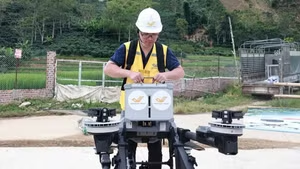
Through support programmes, farmers not only sell their products but also gradually access digital business skills and build personal and local product brands. This is an important factor in creating sustainable livelihoods instead of relying only on short harvest seasons or intermediary traders. In addition, 5G also enables a shift from traditional agricultural production methods to smart farming ones through the application of IoT (Internet of Things) devices that monitor cultivation areas, weather conditions, humidity, and soil nutrients. Agricultural production can therefore gradually become data-driven, improving productivity, quality, and sustainability.
Strong digital infrastructure
Viet Nam’s telecommunications development process over the past few decades has created significant progress, approaching global standards in both technology and service costs, thereby establishing a favourable connectivity foundation for both citizens and the economy. With internet access and broadband technologies becoming more widespread, the greatest opportunity now lies not in simply “having connectivity” but in transforming connectivity into value for production, business, and social life. The contribution of telecommunications operators is therefore increasingly recognised for its role in driving the economy in the digital era.
Viet Nam also possesses many advantages, including strong online services and a large, highly active user community. This foundation creates a dynamic supply-demand cycle that promotes business model innovation and value creation in the digital environment. The scale of users and market openness help 5G open deeper development opportunities, with IoT as a central pillar for building smart environments in factories, enterprises, and cities.
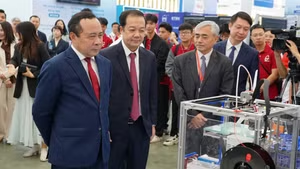
In the next period, 5G commercialisation should be approached more comprehensively, expanding its focus to industrial pillars such as devices, solutions, platforms, and application ecosystems. The aim is to strengthen technological mastery and gradually bring Vietnamese products to international markets. At the same time, standardisation — from connectivity standards to protocols and interoperability — must keep pace with global developments, creating opportunities for breakthroughs while contributing to the formation and acceleration of Viet Nam’s national digital technology industry.