The development of gene sequencing technology has opened up the possibility of identifying the causes of diseases at the molecular level and created an important tool for biodiversity conservation. However, the application of this technology in Viet Nam still faces many limitations due to the lack of genomic databases specific to Vietnamese people and native species. For many rare diseases, chronic diseases and some cancers and cardiovascular diseases, identifying genetic causes remains difficult because most current databases are built from foreign populations and do not fully reflect the genetic characteristics of Vietnamese people.
Similarly, although Viet Nam is a country rich in biodiversity, it still lacks genomic data for many species, hindering species identification, gene resource conservation and the sustainable exploitation of biological resources. From these practical requirements, mastering gene sequencing technology and building genomic databases with Vietnamese characteristics has become a task of strategic significance.
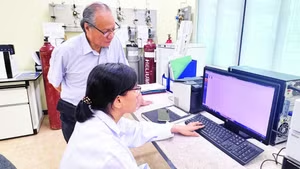
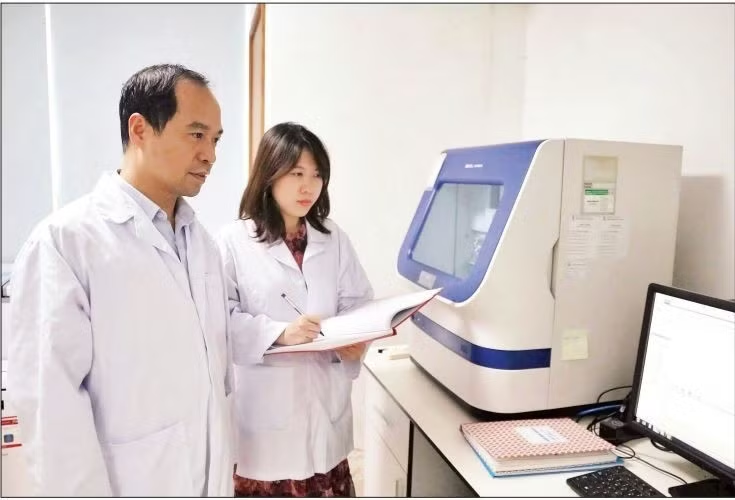
Starting from this orientation, the research team led by Prof. Dr Nguyen Huy Hoang from the Institute of Biology under the Viet Nam Academy of Science and Technology implemented the project “Developing a grade-I excellent research group on studying gene mutations in several human diseases and decoding the genomes of valuable organisms to serve the development of the gene database of the Viet Nam Academy of Science and Technology”.
With an interdisciplinary approach, the project studies gene mutations in patients and decodes the genomes of many valuable species, gradually forming a source of genomic data on Vietnamese patients. The results not only create a foundation for basic research, but also open up applications in precision medicine, biotechnology and biodiversity conservation.
Sharing the project’s results, Prof. Dr Nguyen Huy Hoang said that in 2023-2025, the research team built genomic data resources on patients and organisms, laying the groundwork for the formation of a gene database to serve long-term research and application in Viet Nam.
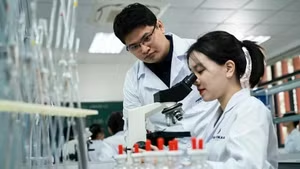
In the biomedical field, scientists applied whole-exome sequencing (WES) technology to build a reference dataset for patients with many rare and chronic diseases. This is one of the first datasets built on Vietnamese patients, creating a foundation for studying genetic causes, supporting diagnosis and prognosis, and guiding treatment towards precision medicine.
From this data source, the team discovered many gene mutations related to rare diseases, including a new variant in the ABCA12 gene that had not previously been published, helping clarify the causes of Harlequin ichthyosis in newborns. At the same time, variants in the CYP27B1 gene linked to vitamin D-dependent rickets were also identified, along with many other genes of different disease groups, creating further grounds for diagnosing and treating genetic diseases.
The research also expanded into the field of cancer, where genetic data is playing an increasingly important role in personalised medicine. In 58 patients with hepatocellular carcinoma, the team found that the SUMO2 gene was abnormally highly expressed and linked to a mechanism that promotes tumour development, opening up prospects for using this gene as a biomarker for early detection and treatment orientation.
For prostate cancer, colorectal cancer and acute lymphoblastic leukaemia, many gene variants associated with disease risk were also identified, thereby forming a reference data source for research and the development of precision medicine. The project did not focus only on biomedicine, but also expanded into biodiversity research. Scientists sequenced and analysed the genetic data of many species of seaweed, seagrass and animal species that are valuable or at risk of extinction, thereby building a gene resource database and clarifying the genetic relationships and evolutionary history of many groups of species.
A prominent feature of the project is that it has formed a synchronised genetic data system that can be updated and expanded, replacing previously fragmented datasets. This is an important foundation for developing the gene database of the Viet Nam Academy of Science and Technology, serving research, biodiversity conservation and the development of biotechnology applications.
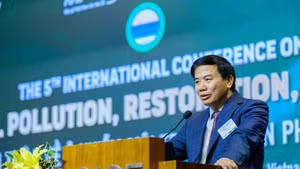
Assessing the project’s results, Chairman of the Acceptance Council at the Viet Nam Academy of Science and Technology level, Prof. Dr Nguyen Van Tuyen, said this was a project of high scientific and practical value. The research team not only completed a large workload and exceeded set targets, but also developed a gene database of patients and the genomes of many valuable species, creating an important foundation for research in biomedicine and biodiversity.
Building on the results achieved, the research team will expand genome sequencing to more disease groups and endemic species of Viet Nam, and continue to complete the genomic database serving scientific research, health care and biodiversity conservation.
This is also an important step towards building a genomic data ecosystem with Vietnamese characteristics, creating a foundation for the development of precision medicine and life sciences in the new stage.