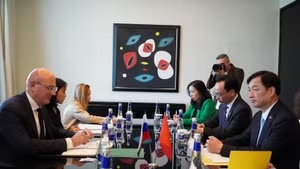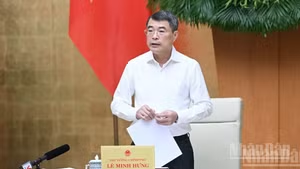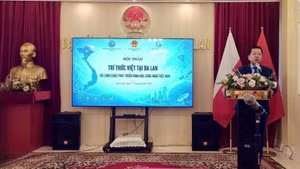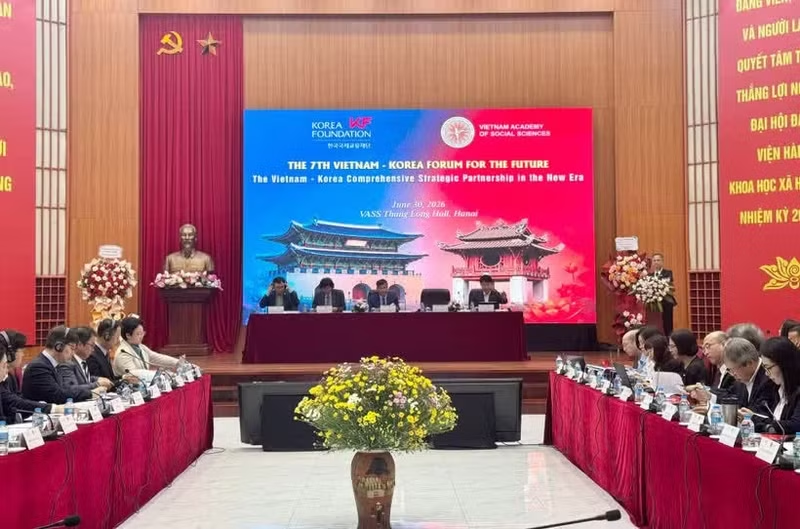
The forum provided a platform for academic exchange, policy dialogue and networking among research institutions, policymakers, experts, scholars and relevant organisations from both countries. It also aimed to put forward policy recommendations to further advance the Viet Nam–RoK Comprehensive Strategic Partnership in the new development phase.
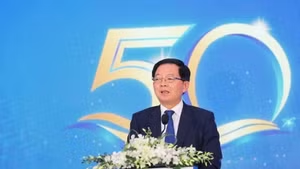
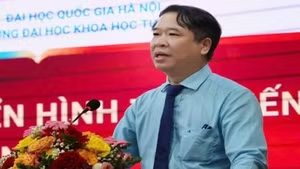
Speaking at the opening ceremony, Dr. Dang Xuan Thanh, VASS Vice President, highlighted the remarkable progress in bilateral ties since the establishment of diplomatic relations in 1992, particularly after the two countries upgraded their relationship to a Comprehensive Strategic Partnership in 2022.
He noted that Viet Nam–RoK relations have developed rapidly, comprehensively and effectively, becoming one of Viet Nam’s most successful bilateral cooperation models. Amid increasingly complex regional and global developments, the partnership is entering a new stage marked by both opportunities and challenges, requiring fresh strategic thinking, a long-term vision and more substantive actions to fully realise the potential of both nations.
According to Thanh, political trust has continued to strengthen through regular high-level exchanges. Cooperation in trade, investment, science and technology, innovation, digital transformation and people-to-people exchanges has also expanded, creating a solid foundation for deepening the Comprehensive Strategic Partnership.
Reviewing the forum’s development, Thanh said that after six successful editions, it has become a reputable academic dialogue mechanism, bringing together policymakers, scholars and experts from both countries to discuss strategic issues, enhance mutual understanding and support policy formulation.
Professor Song Guido, President of the Korea Foundation, said that bilateral cooperation has entered a more substantive and in-depth phase following the elevation of ties to a Comprehensive Strategic Partnership. Beyond trade and investment, cooperation is expanding into high technology, energy, supply chains, human resource development and future industries.
He expressed his belief that the outcomes of the forum’s discussions will help identify new avenues for collaboration and lay a solid foundation for the continued comprehensive development of Viet Nam–Republic of Korea relations in the years ahead.
Viet Nam’s Deputy Foreign Minister Nguyen Minh Vu reaffirmed that Viet Nam consistently attaches importance to its relationship with the RoK and highly values the continued cooperation between VASS and the Korea Foundation in organising the forum as an important academic dialogue mechanism.
He noted that both countries have achieved development not through abundant land or natural resources, but through aspirations for growth, innovation, creativity and resilience. These shared values, he said, will continue to serve as a key foundation for expanding cooperation in areas such as trade, infrastructure, supply chains, energy, economic security, science and technology, innovation, digital transformation and the development of artificial intelligence (AI) ecosystems.
Participants from both countries agreed that amid shifts in the global strategic and economic landscape, Viet Nam and the RoK should continue strengthening traditional areas of cooperation and expanding collaboration in strategic technologies, including AI, semiconductors, digital transformation, logistics, energy, infrastructure, science, technology and innovation.
They also stressed that, as global supply chains undergo rapid restructuring, cooperation in science, technology, innovation and AI should become priority areas in bilateral relations, serving as new growth drivers for innovation ecosystems, future industries and stronger people-to-people ties between the two countries.