The Tam Chuc–Van Long Complex constitutes a distinctive heritage space where nature, landscape, culture, and spirituality are harmoniously intertwined, representative of a tropical karst region. With its system of limestone mountains, karst valleys, wetlands, and interconnected water bodies, the area retains a high degree of integrity in geological and geomorphological formation processes, ecosystems and hydrology, creating a unique landscape of significant scientific value.
The Tam Chuc and Van Long area is also home to populations of the Delacour’s langur — a primate species endemic to Viet Nam and listed among the world’s 25 most endangered primate species.
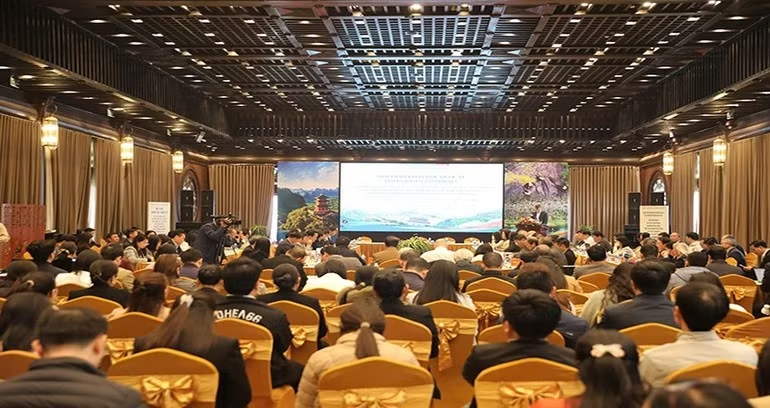
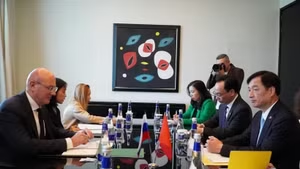
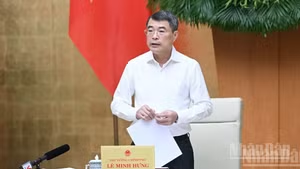
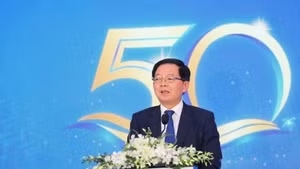
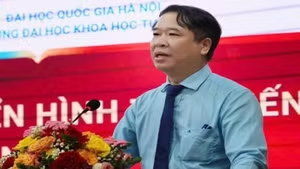
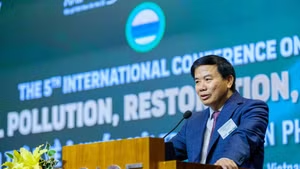
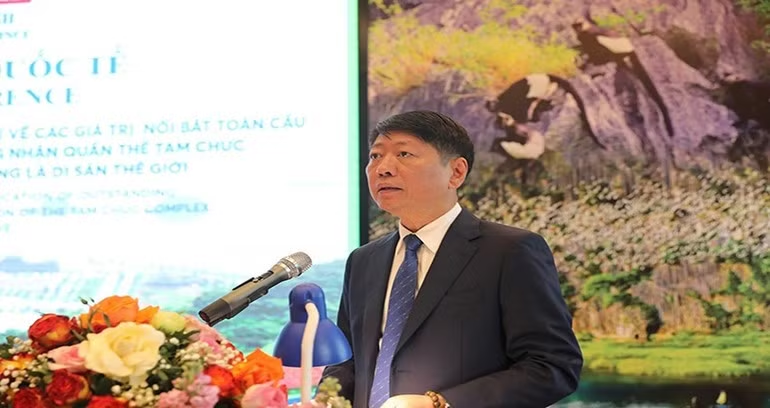
Speaking at the conference, Tran Song Tung, Standing Vice Chairman of the Ninh Binh Provincial People’s Committee, stated that the province has consistently upheld the principle of ensuring harmony between heritage conservation and value enhancement, environmental protection, biodiversity preservation, and sustainable socio-economic development, viewing heritage as an important and long-term resource for local development.
The research and nomination of the Tam Chuc–Van Long Complex for World Heritage status, he noted, is not merely a technical task but also a strategic undertaking, reflecting Ninh Binh’s long-term development vision in building a heritage city, a heritage-based economy, and cultural industries, with the aim of becoming a centrally governed city by 2030.
Through the conference, the steering committee for the preparation of the provincial heritage dossier absorbed in full and with due seriousness the contributions and scientific recommendations of scholars and experts. These inputs will serve as a crucial basis for Ninh Binh to continue refining the report on including the Tam Chuc–Van Long Complex in the Tentative List, moving towards the preparation of the World Heritage nomination dossier in strict accordance with international procedures, standards, and practices, as well as UNESCO’s stringent requirements.
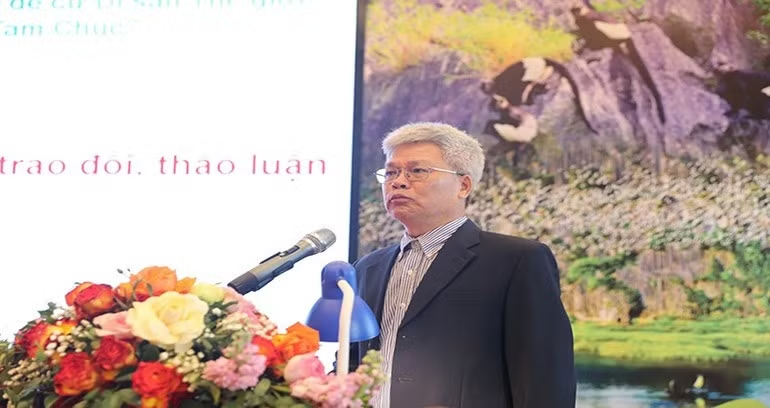
In his keynote remarks, Associate Professor Dr Tran Tan Van, former Director of the Institute of Geosciences and Mineral Resources, emphasised that the core objective of the conference was to address a set of key issues, foremost among them being proposing and working towards consensus on the boundaries of the proposed nomination area.
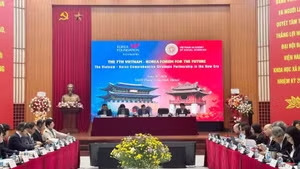
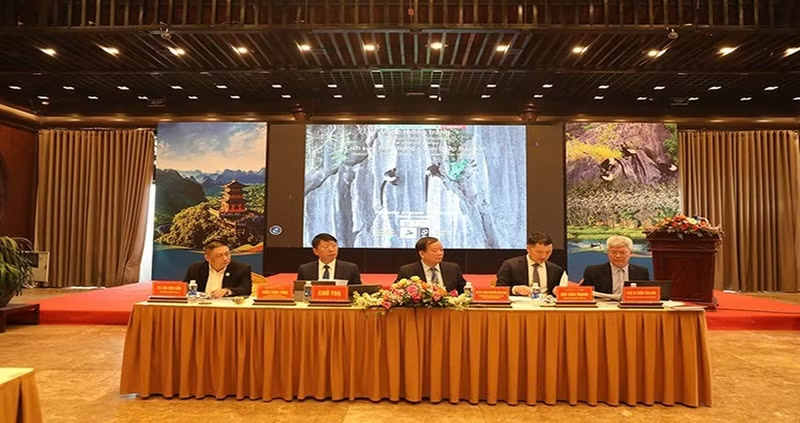
The conference was organised with the aim of establishing a scientific and interdisciplinary forum to review and comprehensively assess existing research outcomes, documentation and scientific data related to the Tam Chuc–Van Long Complex.
On that basis, discussions sought to clarify the scientific and practical foundations for establishing outstanding universal value, and to gradually reach agreement on the proposed criteria (under the Operational Guidelines for the Implementation of the 1972 World Heritage Convention of UNESCO). The conference also examined the scope, scale, and boundaries of the nomination area and buffer zone, and identified orientations for forming a “green corridor” linking Tam Chuc and Van Long as a continuous ecological and cultural space, ensuring the integrity, authenticity, and effective long-term management of the heritage.
The conference further focused on exchanges regarding management, conservation, and sustainable development issues, particularly the harmonious relationship between the strict protection of natural values and socio-economic development, tourism, and the livelihoods of local communities.