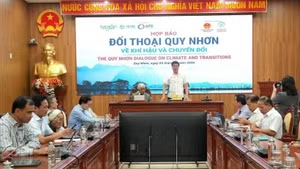
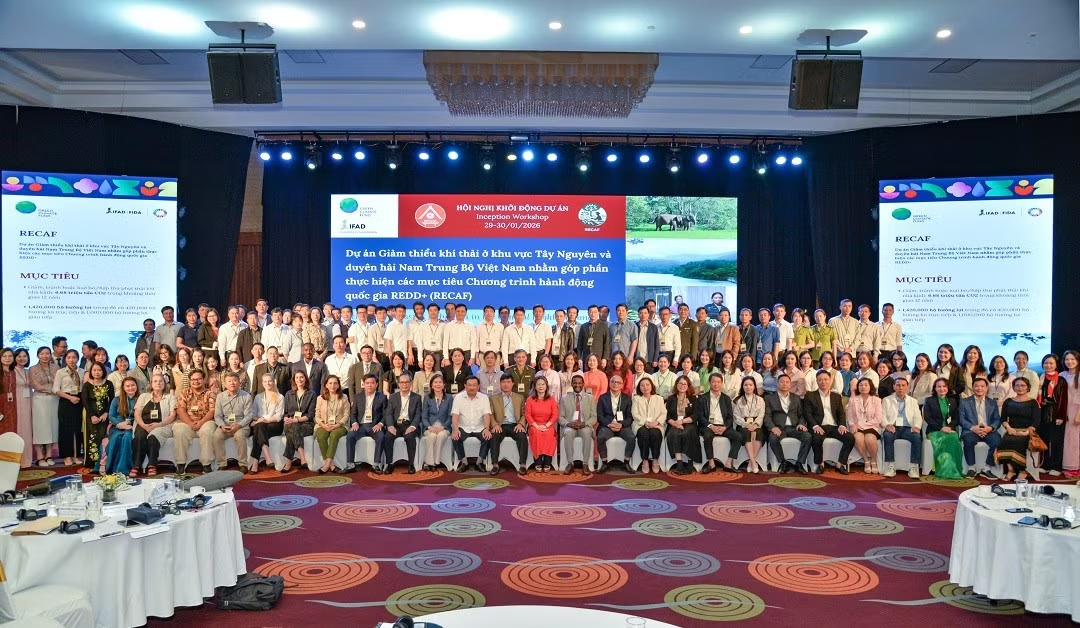
The project is implemented by the Ministry of Agriculture and Environment in collaboration with the Provincial People’s Committees of Dak Lak, Gia Lai, Lam Dong and Khanh Hoa, with financing from International Fund for Agricultural Development (IFAD) and the Green Climate Fund (GCF).
The initiative, titled “Achieving Emission Reduction in the Central Highlands and South-Central Coast of Viet Nam to Support National REDD+ Action Programme Goals” (RECAF), is an ambitious climate initiative designed to protect forests, promote sustainable agriculture, and enhance rural livelihoods.
Viet Nam has seen rapid economic growth in recent decades, but it has also contributed to a significant rise in greenhouse gas emissions - from 0.79 tonnes of CO2 per capita in 2000 to 3.81 tonnes in 2018.
In the Central Highlands, extensive forest loss has heightened climate risks for farming communities, reduced soil fertility, and undermined long-term agricultural productivity. Dak Lak Province, a major coffee-producing region, is particularly vulnerable to these environmental pressures.
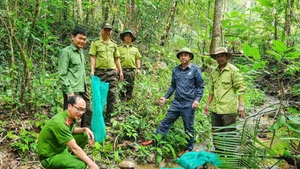
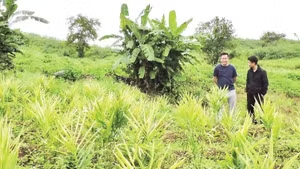
RECAF directly addresses these challenges by supporting farmers to adopt climate-smart agroforestry practices, strengthening natural forest protection, and promoting deforestation-free value chains that contribute to sustainable economic growth.
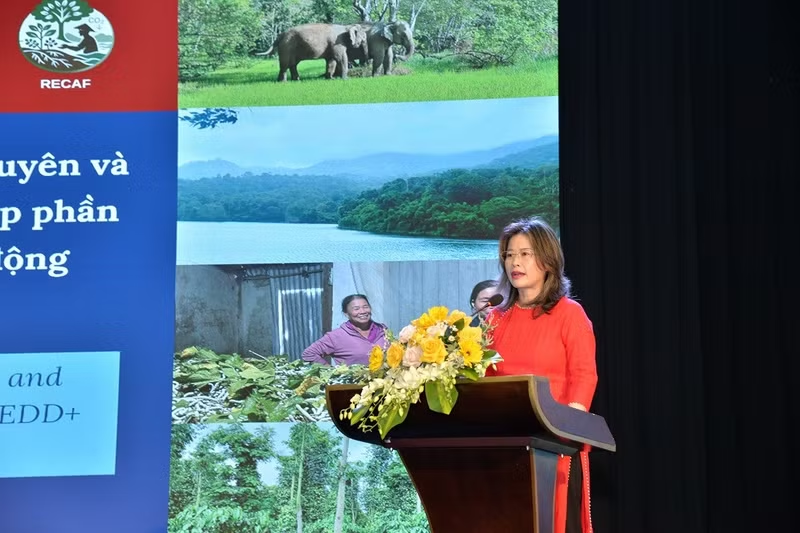
“This project is critically important for Dak Lak and the Central Highlands,” said Nguyen Minh Huan, Director of the Department of Natural Resources and Environment of Dak Lak Province. “By integrating forest protection with sustainable farming, RECAF will help farmers increase their incomes while safeguarding forests for future generations.”
Over six years, RECAF is expected to reduce 6.68 million tonnes of greenhouse gas emissions, restore and improve 145,000 hectares of agroforestry land, and protect 500,000 hectares of high-value natural forest.
It will reach around 420,000 people and indirectly improve the livelihoods of more than 1 million rural residents, contributing significantly to Viet Nam’s national climate commitments while supporting rural incomes and food security.
“The blended financing mechanism adopted for this project showcases an effective funding approach to ensure that the funding for this crucial investment remains affordable and sustainable, reducing pressure on the state budget and maximizing development impacts in hard-to-reach regions,” said Nguyen Thi Dieu Trinh, Deputy Head of Department of Debt Management and Foreign Economic Relations under the Ministry of Finance.
“RECAF reflects Viet Nam’s leadership in linking climate action with rural development,” said Frew Behabtu, IFAD Country Director in Viet Nam. “IFAD is proud to support this project, which places farmers and forest communities at the centre of solutions that build resilience, protect natural resources, and create sustainable economic opportunities.”
Over the past three decades, IFAD has financed 16 projects in Viet Nam with a total investment of more than 670 million USD, reaching over 500,000 rural households.