Specifically, around 80% of industrial clusters nationwide still lack adequate and synchronised environmental treatment infrastructure. Many essential facilities, including centralised wastewater collection and treatment systems, exhaust gas filtration systems, and solid waste sorting and treatment facilities, have either not been invested in or are not being operated in accordance with technical standards.
As a result, air, water and noise pollution are becoming increasingly complex, directly affecting the quality of life of surrounding communities and placing greater pressure on local authorities to manage, inspect and address environmental violations.
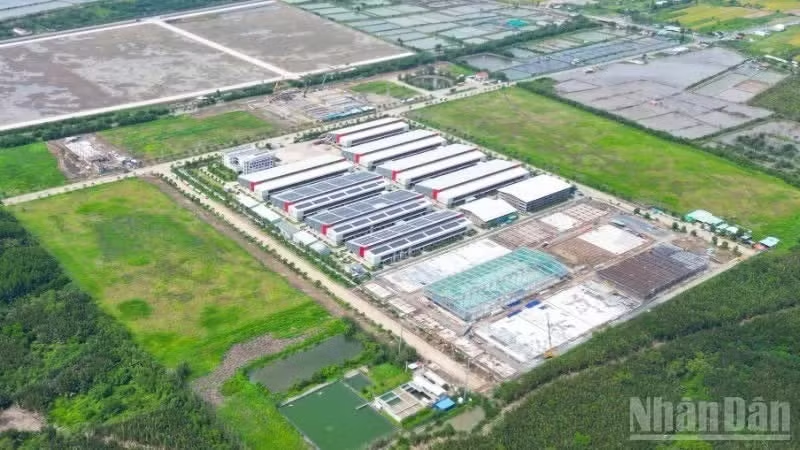
Experts say developing eco-industrial clusters is a strategic direction for Viet Nam's transition towards a green economy, as the model offers combined economic, social and environmental benefits. Eco-industrial clusters can serve as magnets for high-quality foreign investment, particularly from multinational corporations that prioritise environmental standards and ESG (Environmental, Social and Governance) practices.
At the same time, businesses can increase the added value of their production by adopting clean technologies, conserving resources and reducing operating costs. The model is also an effective tool for significantly cutting greenhouse gas emissions from industrial production, fully aligning with Viet Nam's international commitment to achieve net-zero emissions by 2050.
Around 80% of industrial clusters nationwide still lack adequate and synchronised environmental treatment infrastructure. Many essential facilities, including centralised wastewater collection and treatment systems, exhaust gas filtration systems, and solid waste sorting and treatment facilities, have either not been invested in or are not being operated in accordance with technical standards.
The quality of life for surrounding communities will be improved, creating safe, clean, and transparent production areas. The transition to eco-industrial clusters will also create opportunities for “green jobs”, thereby raising the skill levels of the local workforce. Such clusters can provide an ideal environment for nurturing and promoting innovation among businesses. Moreover, modern eco-industrial clusters that meet international standards will help provinces and cities strengthen their competitive advantages.
However, there remains a considerable gap between vision and reality, requiring strong determination from authorities at all levels. Developing eco-industrial clusters requires a system of incentive mechanisms and policies that is sufficiently attractive, transparent and stable to draw capable strategic investors into developing technical infrastructure.
At the same time, local authorities need to work proactively with investors and provide maximum support in removing obstacles related to site clearance and simplifying relevant administrative procedures to accelerate project implementation.
Building a network of eco-industrial clusters is a solution to help localities address the challenge of achieving economic growth while protecting the environment. The model not only meets stringent international standards but also contributes to the development of a green and circular economy, directly supporting Viet Nam's goal of achieving net-zero emissions by 2050.