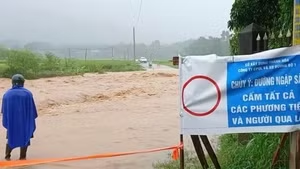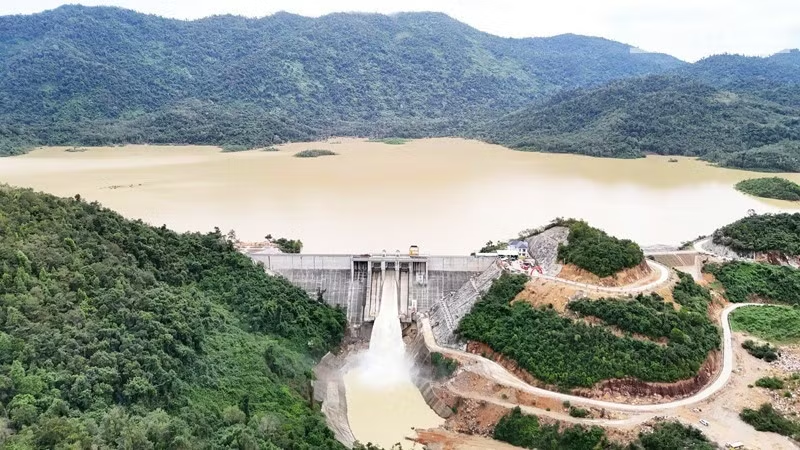
Leaving no room for passivity in the face of floods
In the days before the rainy season, inspections and reviews are being conducted urgently at irrigation reservoirs across the province. From dam slopes, spillways and intake structures to operating equipment systems, every sign of abnormality is being checked and assessed for timely action.
According to the Department of Agriculture and Environment, Khanh Hoa currently has 56 irrigation dams and water reservoirs, including 37 large reservoirs, 13 medium-sized reservoirs and six small reservoirs. Of these, three reservoirs - Song Than, Song Cho 1 and Ka To Village Headwater Reservoir - are currently in the process of being handed over for management, exploitation and operation.
With the dam and reservoir system spread across many areas, safety requirements do not only concern the dam body or individual structural components. More importantly, the entire chain of risks from reservoirs to downstream areas must be controlled. A structural incident or a major flood release can quickly affect residential areas, agricultural land and infrastructure downstream.
Nguyen Duy Quang, Director of the Khanh Hoa Department of Agriculture and Environment, said that from the beginning of the year, the sector had implemented tasks to respond to floods and heavy rains and inspected the management and operation of dams and reservoirs and the safety of downstream areas.
Following the review, agencies and localities assigned to manage reservoirs adjusted their operating procedures in accordance with regulations and strengthened coordination mechanisms among downstream localities; while also developing regulation and flood-release plans in a proactive manner, identifying in advance areas at risk of flooding so that people could be evacuated when necessary.
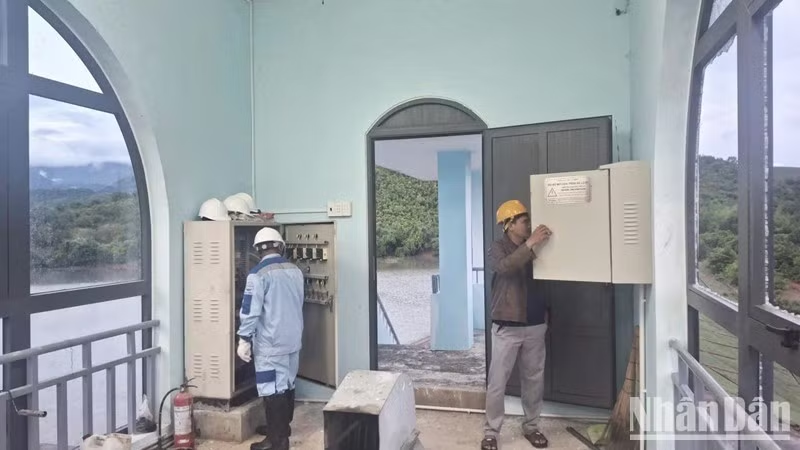
In response plans, priority is given to older people, children, people with disabilities and other vulnerable groups. Alongside people, property, materials and equipment are also taken into account so that they can be proactively relocated when adverse situations arise.
Behind these plans lies an important change in the approach to natural disaster prevention and control: rather than waiting for incidents to occur before responding, risks are identified and controlled while they are still ahead.
Early detection and action on minor damage
Inspection results show that the province’s irrigation reservoir system is basically safe. Light seepage has appeared at several reservoirs, including Suoi Dau, Dong Bo, Cam Ranh, Loi Hai and Tra Co; no reservoir has experienced severe seepage. Some locations on dam slopes have shown signs of minor erosion, deterioration and landslides; some spillways have developed erosion along the structure and at the spillway toe.
At structures that have been in operation for many years, signs of localised deterioration have also been recorded, such as damaged, rusty rubber seals and valve-gate bolts; concrete at stilling basins downstream of spillways has also peeled away.
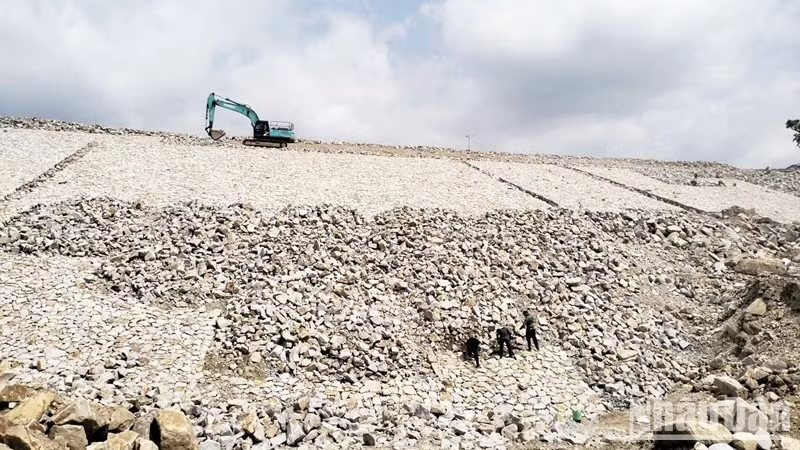
These defects may not yet affect the overall safety of the structures, but under the impact of prolonged heavy rain and rapidly rising floodwaters, they could become unpredictable “weak points”. Therefore, for dams and reservoirs, addressing a small seepage problem today is also a way of preventing a larger risk tomorrow.
According to Le Xuan Thai, Head of the Irrigation Sub-Department, irrigation reservoirs in the province are basically safe and meet operating requirements during the rainy and flood season. Agencies managing the structures have been asked to continue closely monitoring all abnormal signs and promptly address any damage that arises.
In the southern part of the province, Nguyen Cong Xung, Chairman of Ninh Thuan Irrigation Works Exploitation One-Member Company Limited, affirmed that the minor damage detected had been reported to the competent authorities, while the company had organised repairs and reinforcement using regular funding; cases beyond its capacity would be reported to the province for consideration of investment.
In 2026, the Nuoc Ngot Reservoir in Vinh Hai Commune was upgraded and repaired. To date, the spillway component basically meets the schedule for flood preparedness, contributing to improving the safety of the structure during this year’s rainy season; the remaining components are continuing to be constructed according to plan.
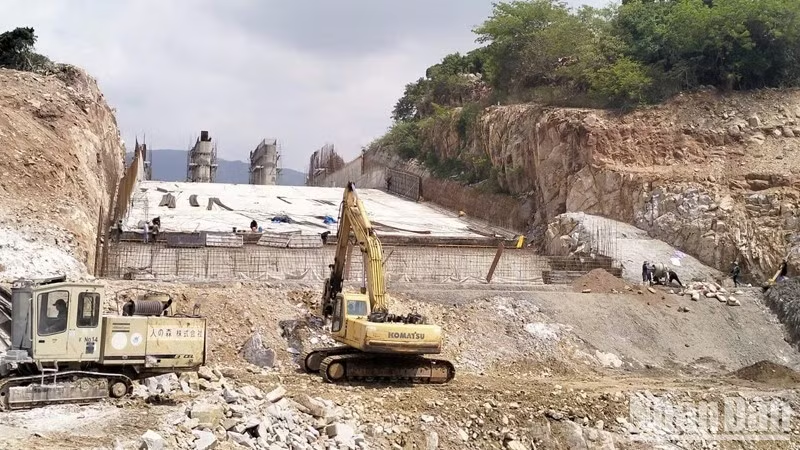
Keeping dams and reservoirs safe also means keeping downstream areas safe
In reservoir management, a safe dam does not necessarily mean a safe downstream area. Safety is only truly ensured when the structure, operating procedures, warning information and local response plans are connected into a unified system.
According to Nguyen Duy Quang, reservoir management agencies continue to closely monitor weather developments and update hydrometeorological forecasts, rainfall and reservoir water levels so as to proactively adjust operating plans. Coordination among reservoirs within the same river basin is also being strengthened to reduce the risk of being caught off guard when widespread heavy rain occurs.
In downstream areas, warning and information arrangements when reservoirs regulate and release water must be maintained regularly. Forces, equipment and materials must also be ready to protect structures, respond to adverse situations and organise evacuations when there is a risk to safety.
“Floods and heavy rains are inherently difficult to predict, but risks can be significantly reduced if structures are inspected regularly, operating plans are carefully prepared and information reaches residents early enough,” Quang said.
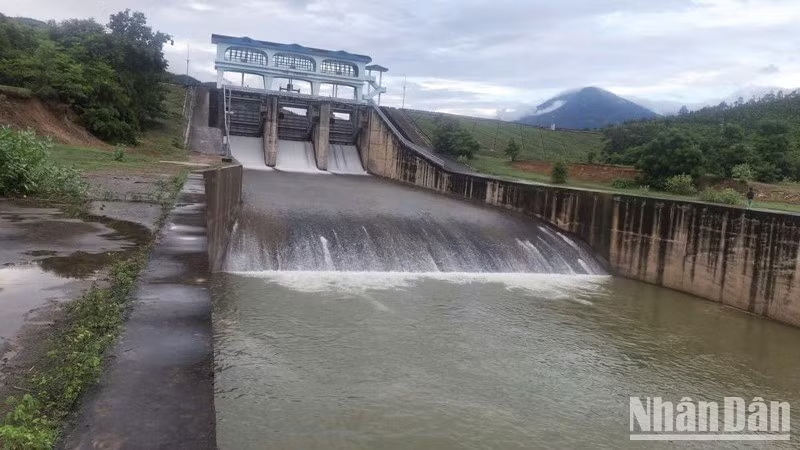
The Department of Agriculture and Environment has advised the Provincial People’s Committee to direct reservoir management agencies to proactively arrange personnel and equipment; develop flexible reservoir management, operation and regulation plans in accordance with regulations; and regularly update hydrometeorological forecasts, developments in rainfall and floods and reservoir water levels in order to promptly adjust operating plans.
The rainy and flood season is approaching. With 56 dams and reservoirs spread across the province, the challenge for Khanh Hoa is not only to keep its dams standing firm against floods and heavy rains, but also to ensure that every flow of water is controlled, every plan is activated at the right time and people in downstream areas receive warnings early enough.
Proactively addressing small seepage points, reinforcing localised damage, and preparing everything from each operating plan to each evacuation scenario is precisely how Khanh Hoa is building a safety “shield” ahead of the rainy and flood season, enabling reservoirs to continue storing water for production, daily life and socio-economic development, rather than becoming a source of risk for downstream areas.