Birdsong deep in the forest
In early October, accompanying the forest protection force at Nui Chua National Park in Khanh Hoa Province, we gained a clearer understanding of the hardships behind what might appear to be a quiet, unassuming job.
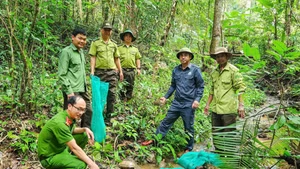
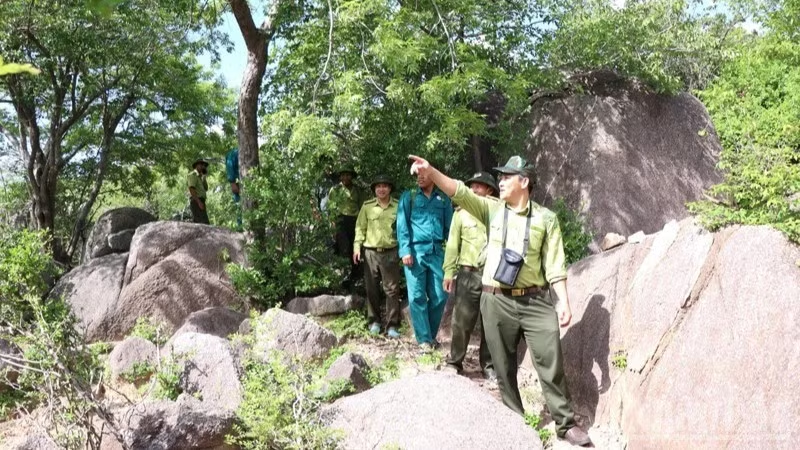
After nearly an hour of navigating rough and rocky paths and pushing through thorny bushes, the patrol team stopped beside large boulders amid the lush green forest. The area was almost devoid of human presence. There was only the wind sweeping through the canopy and the chirping of birds echoing across the mountain slopes.
Suddenly, a clear and high-pitched bird call rang out from the forest ahead.
Dat Dong Doan Tre, Head of the Thai An Forest Ranger Station, smiled and explained that it was the call of the white-crested laughingthrush (Garrulax leucolophus), a species listed in Group IIB of Viet Nam’s list of endangered, precious and rare forest animals. When it detects an unusual sound or the presence of humans, this bird often gives warning calls to alert other individuals.
For someone venturing into the forest for the first time, it was simply a sound amid the vast wilderness. But for people like Tre, who have spent decades working in the forest, the bird’s call was an encouraging sign: the forest was still alive.
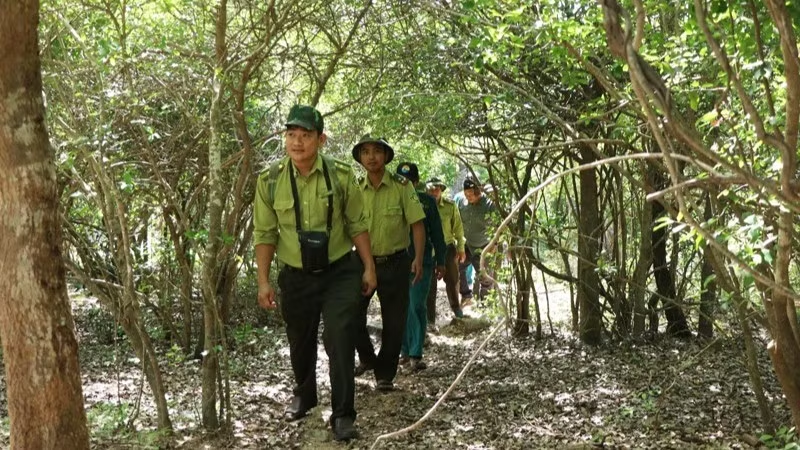
Having spent more than 17 years working at Nui Chua, Tre has become familiar with every trail, patch of woodland and distinctive sound of the mountains and forests. For him, the forest has long been a “second home”.
“When we enter the forest and hear birds chirping, or sometimes come across animals moving about freely, we feel very encouraged. It means we know we have contributed to protecting every stretch of forest,” Tre shared.
Behind these peaceful sounds lie many dangers. During patrols, forest rangers discovered and removed 27 wire snares set to catch wild animals. Every snare removed means another chance of survival restored to an animal that might otherwise have become trapped by it.
Protecting habitats means protecting life
Protecting wildlife cannot begin and end with removing a single snare. If wild animals are to have places to live, the forest must first be preserved, as it is where they find food and shelter, reproduce and sustain their populations. This is why patrols by forest rangers, forest protection staff and community groups contracted to protect the forest have never ceased.
Cao Van Giac, a member of the Forest Protection Team under the Management Board of Nui Chua-Phuoc Binh National Park and formerly head of Da Hang Hamlet, said he understood the changes in local people’s lives and the challenges facing forest protection efforts.
In the past, some people still entered the forest to hunt animals or clear trees for cultivation. However, after years of public awareness campaigns and community engagement, people’s attitudes have gradually changed. The setting of snares and hunting of wild animals have been reduced.
“After more than five years participating in forest protection, I have come to understand how important the forest is to our lives. I am happy that I have also made a contribution to protecting the forest, wildlife and biodiversity,” Giac said.

According to Ngo Tien Phat, Head of the Nui Chua Special-use Forest Ranger Unit, the unit currently manages and protects approximately 23,843 hectares of forest across the communes of Vinh Hai, Ninh Hai, Thuan Bac and Cong Hai. Alongside patrols, monitoring and forest fire prevention and firefighting, public awareness-raising and engagement with people living in surrounding areas have been identified as important measures for preventing violations at an early stage.
When habitats shrink, become fragmented or are damaged, wildlife is directly affected. Protecting a rare species, therefore, means not only preventing hunting but also preserving its living environment intact.
“Effective awareness-raising to prevent violations at an early stage, combined with regular patrols and inspections to promptly detect and prevent violations, are important measures for protecting forests, preserving habitats and creating a safe living environment for wildlife,” Phat said.
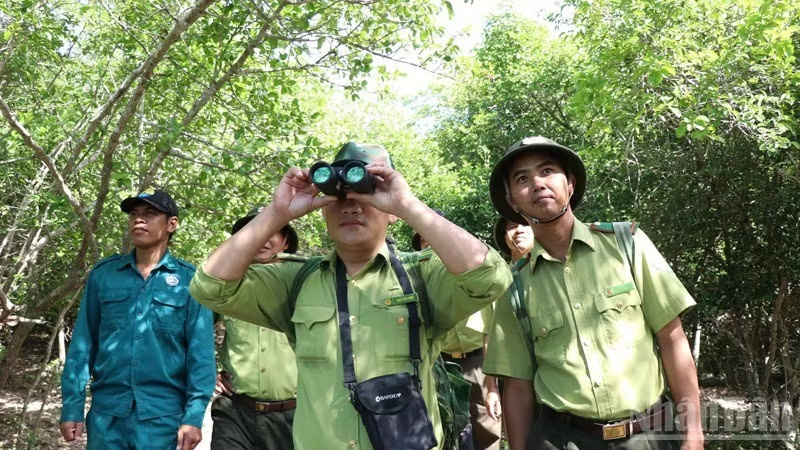
Ensuring birdsong continues to echo across the vast wilderness
Nui Chua National Park is home to a diverse ecosystem, with 1,971 plant species, 83 mammal species, 233 bird species and 84 amphibian and reptile species, along with many other groups of organisms. Among them, 43 animal species have been recorded as threatened according to the Viet Nam Red Data Book and the IUCN Red List.
According to Truong Thanh Truyen, Deputy Head of the Forest and Marine Resources Conservation Division, in recent years the national park has worked with the Nui Chua Special-use Forest Ranger Unit and contracted forest protection groups to conduct regular patrols, maintain a presence in their assigned areas and remove homemade snares. At the same time, they have conducted awareness campaigns and encouraged local people to raise their awareness, refrain from hunting wild animals, avoid illegal mineral extraction and refrain from encroaching on or damaging the forest.
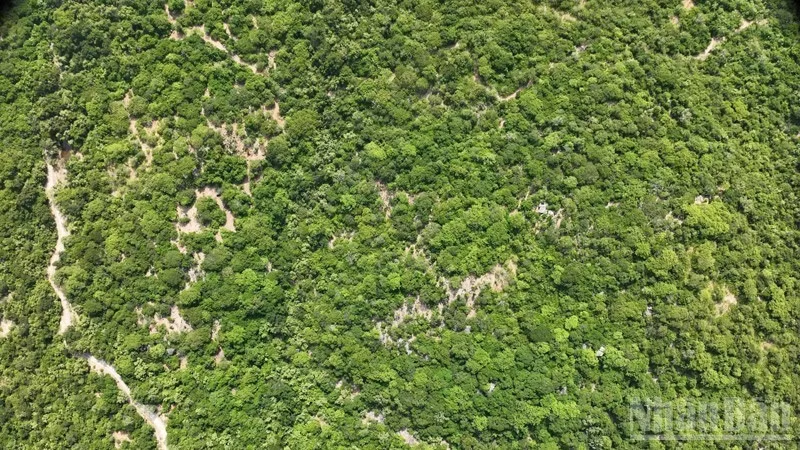
As evening fell, the patrol team left the forest. The route back still wound across rocky slopes, through thorny bushes and along winding trails. Behind them, the forest returned to its familiar silence.
Tomorrow, those same footsteps will continue along another route. There may be a snare that needs removing, an unusual trace that needs investigating, or simply another journey deep into the forest to make sure its green expanse remains intact.
For these people, protecting the forest is not a task for a single day or a single season. It is a persistent, quiet journey. It is about ensuring that birdsong continues to ring out beneath the forest canopy and that wild animals still have places to forage, find shelter and reproduce.