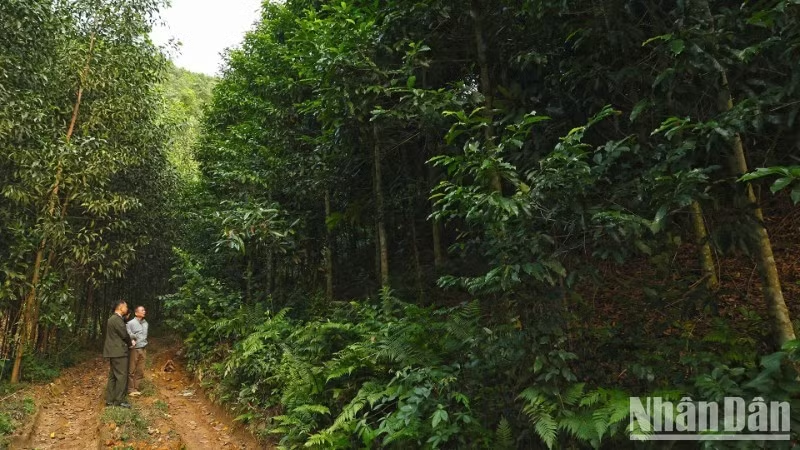
More than three years after the implementation of the large timber production plantation development plan for the 2024–2030 period under Decision No. 31/QD-BNN-LN (dated January 3, 2024), the country now has approximately 625,000 hectares of large timber plantations, achieving about 62.5% of the 2030 target.
According to the Ministry of Agriculture and Environment, the wood processing and forest product export sector has maintained strong growth. In 2025, forest product exports reached 18.33 billion USD, up 5.6% from 2024, while the trade surplus stood at 15.1 billion USD. During the first seven months of 2026, forest product exports totalled 10.81 billion USD, an increase of 4.6% year on year.
To ensure a stable domestic supply of raw materials for processing and exports, the ministry has urged local authorities to further translate the large timber plantation development targets into specific local plans suited to actual conditions following the administrative restructuring and the implementation of the two-tier local government model.
Localities were also asked to set annual targets through to 2030 and to clearly assign responsibilities to relevant agencies and units for implementation.
The ministry also requested local authorities to review forestry land resources and existing plantation areas to identify suitable land for establishing new large timber plantations, replanting production forests, and converting small timber plantations into large timber production forests.
Priority should be given to developing concentrated raw material areas linked with processing facilities and consumer markets.
In addition, localities were urged to accelerate the application of science and technology in forestry production; use officially recognised forest tree varieties with high productivity, superior quality, and climate resilience; and apply comprehensive technical measures for planting, tending, and forest conversion to improve productivity, timber quality, and the proportion of large-diameter timber.
The Ministry of Agriculture and Environment also called for greater mobilisation of resources to support the development of large timber plantations, the study and introduction of appropriate support mechanisms and policies, the organisation of production along value chains associated with sustainable forest management and forest certification, and the development of forestry cooperative groups and cooperatives to strengthen links between forest growers and enterprises from seedling production to processing and product marketing.
At the same time, local authorities were instructed to strengthen oversight of timber purchasing and primary processing activities, inspect wood processing facilities, and curb the purchase of immature timber, thereby helping to stabilise raw material supplies for the wood processing and export industry.