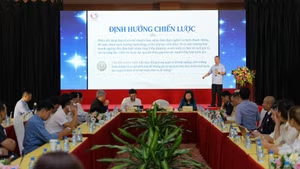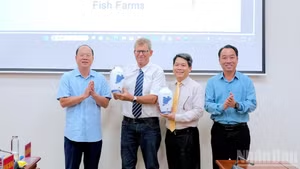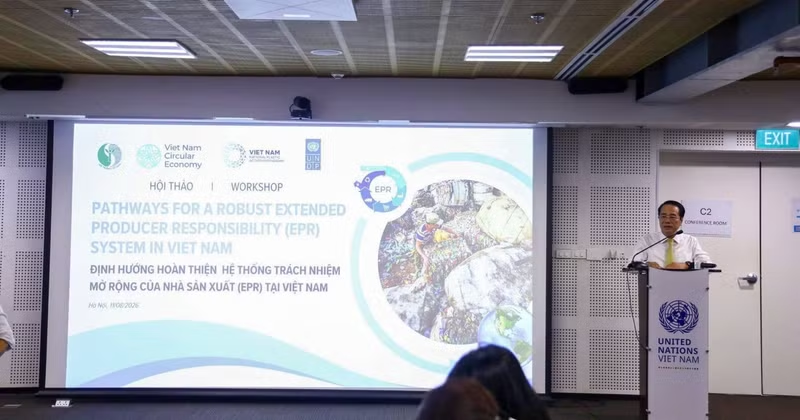
The workshop took place as Viet Nam revises the 2020 Law on Environmental Protection and its implementing regulations, with the ongoing enhancement of the EPR policy framework serving as a key focal point.
EPR is a tool for driving the transition from traditional waste management to a circular economy, under which producers and importers assume responsibility for products and packaging throughout their life cycle, from design and material selection to post-consumer collection and recycling.
Speaking at the workshop, Director General of the Department of Environment Tang The Cuong emphasised that EPR should not be seen merely as a financial obligation for producers, but should become a mechanism that incentivises businesses to change product design, select materials, organise collection and recycling, and invest in circular economy solutions.
According to the Department of Environment, Viet Nam has made significant progress in establishing and implementing EPR. However, practical experience indicates that the mechanism needs to be further refined to enhance its effectiveness and transparency, while providing stronger incentives for the collection and recycling market.
One notable proposal featured in the draft Law on Environmental Protection is to establish a roadmap for eliminating the financial contribution mechanism for fulfilling recycling obligations. Under the proposal, producers and importers would be required to organise the collection and recycling of post-consumer products and packaging directly, or through recycling enterprises or Producer Responsibility Organisations (PROs).
Francesca Nardini, UNDP Deputy Resident Representative in Viet Nam, said that Viet Nam's establishment of an EPR framework marked a crucial step towards a circular economy. Moving forward, it is imperative to develop an EPR system that operates effectively and sustainably and is responsive to market developments, thereby promoting investment, innovation, and more efficient use of resources.
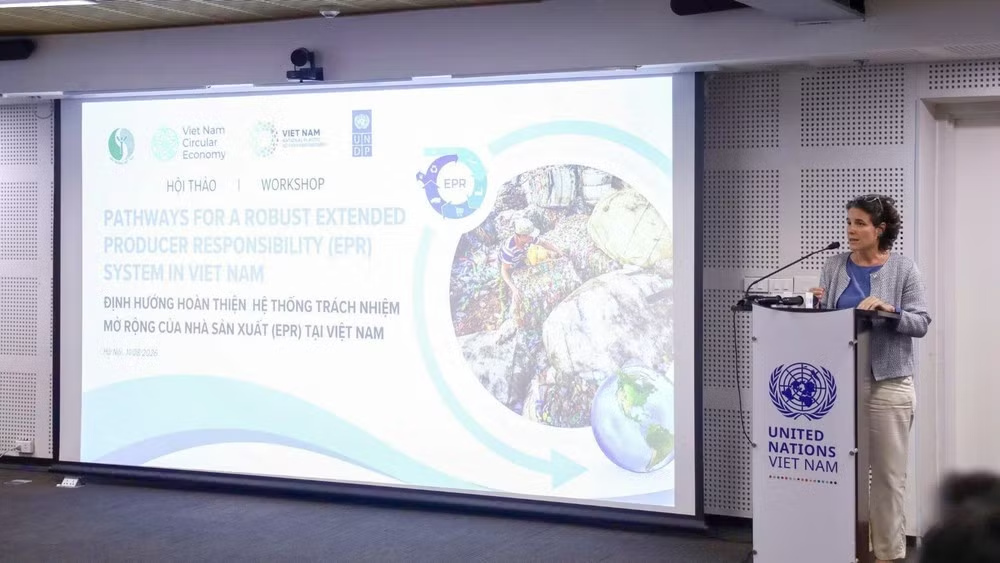
The workshop also explored a roadmap for adjusting mandatory recycling rates in stages, in line with collection capacity, recycling technologies, and practical conditions. This approach is intended to provide greater predictability, enabling businesses to proactively develop long-term investment plans and fulfil their recycling responsibilities.
UNDP advocated continued focus on four areas: strengthening the proactive role of businesses; promoting the establishment of PROs as the central component of the EPR system; gradually raising recycling targets in line with the readiness of each type of material; and ensuring an inclusive transition that enables informal waste collectors and recyclers to participate in and benefit from the process.
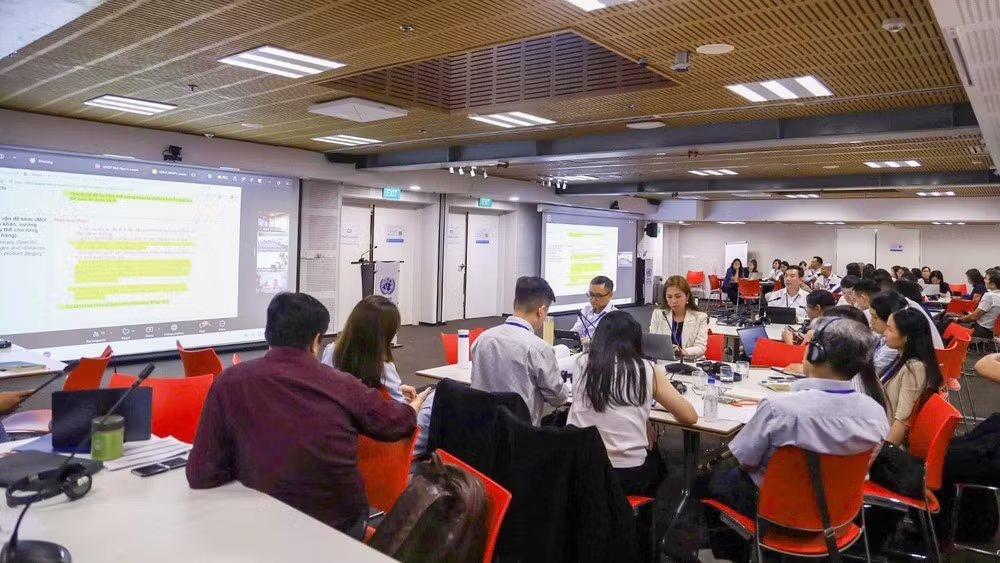
The workshop also facilitated group discussions on product and packaging categories subject to EPR obligations, including packaging; electrical and electronic equipment and batteries; and vehicles, tyres, and lubricants. The discussions were synthesised to identify practical challenges and propose solutions to improve and implement EPR policy in Viet Nam.