Green materials constitute a mandatory requirement
According to experts, the construction and building materials sectors are currently among those with the highest levels of energy consumption and greenhouse gas emissions. Globally, buildings are responsible for approximately one-third of total energy consumption and carbon emissions, while cement and steel alone contribute nearly 20% of the world's greenhouse gas emissions.
In Viet Nam, cement production has reached approximately 125 million tonnes per year, generating more than 50 million tonnes of CO₂ emissions. These figures underscore that the building materials sector still has significant potential to reduce emissions, while also highlighting the urgent need to pivot decisively towards greener and more sustainable development.
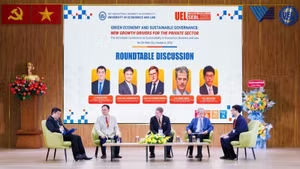
According to Giandomenico Zappia, Chairman of EuroCham Viet Nam, Viet Nam will continue to invest heavily in infrastructure, urban areas, industrial parks, and housing in coming years. The issue is no longer about building faster, but about building with lower emissions, using resources more efficiently, and creating greater long-term value for the economy. This means that green materials will become a decisive factor driving the transformation of the entire construction industry. This pressure is becoming increasingly evident as Carbon Border Adjustment Mechanisms (CBAM), ESG (environmental, social, and corporate governance) standards, and supply-chain transparency requirements are gradually expanding worldwide.
According to Assoc. Prof. and Dr Nguyen Ngoc Ha, Director of the Institute for Creative Research and a lecturer at the Faculty of Law, Foreign Trade University, many economies, including the European Union, the United Kingdom, Australia, the US, and Canada, are advancing stringent policies related to carbon pricing or emissions control. As a result, carbon is gradually becoming a component of the value of exported goods. In the building materials sector, products such as cement, steel, and aluminium will be directly affected, while glass, bricks, ceramics, and many other materials will also face increasingly stringent requirements for environmental transparency and product life cycles.
Green materials do not merely serve to satisfy environmental regulations but are also actively creating opportunities for businesses to strengthen their competitiveness. According to Vo Thi Lien Huong, General Director of Secoin Joint Stock Company, consumers and international investors are increasingly prioritising high-quality, environmentally friendly products manufactured in accordance with sustainable development standards and with traceability. This requires businesses to closely integrate their brand development strategies with their green transformation strategies.
Vo Thi Lien Huong asserted that ESG is no longer simply a matter of social responsibility, but first and foremost a matter of competitiveness. For building materials manufacturers, the three primary catalysts of the transition process are maintaining export markets, optimising long-term production costs, and creating a sustainable working environment to attract highly skilled human resources. For this reason, many businesses have developed ESG materiality maps, prioritising reductions in energy and water consumption, lowering the embodied carbon of products, and strengthening risk management capabilities from the outset of their corporate development strategies.
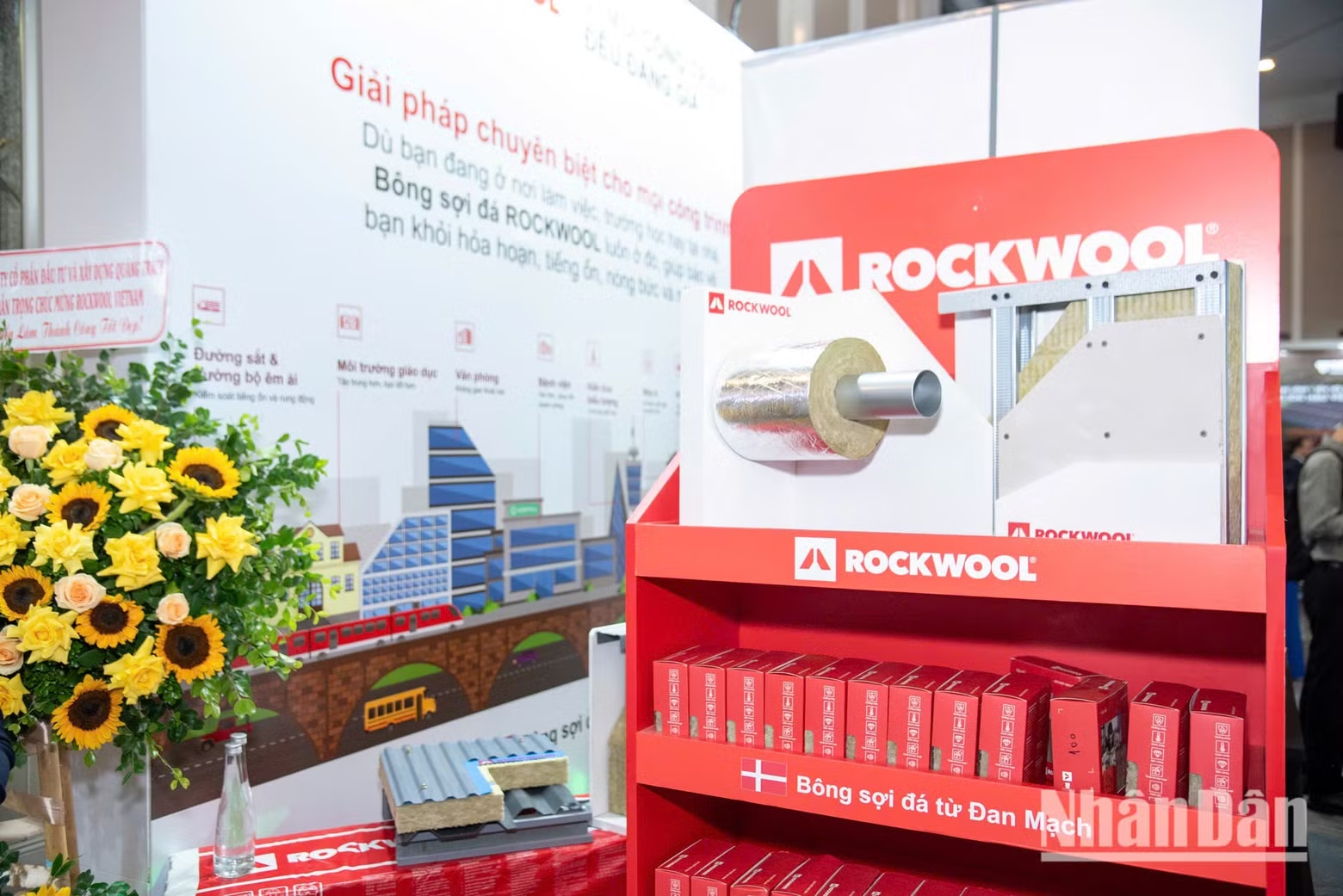
From an international perspective, Vu Hong Phong, an EDGE technical expert from the International Finance Corporation (IFC), emphasised that green materials can only flourish when environmental performance is quantified through consistent standards. The EDGE certification system was built to assess energy savings, water savings, and reductions in the embodied energy of building materials, thereby providing a basis for banks and investors to assess project quality. Quantifying environmental indicators not only helps businesses enhance their prestige but also improves their access to green financing at more competitive costs.
According to experts, the value of green materials lies not only in reducing emissions but also in lowering building operating costs, increasing asset values, and making projects more attractive to investors. This is also why many developed markets are transitioning from merely incentivising to legally mandating the application of green building standards to new projects.
Building an ecosystem for green materials
Although the transition trend has become increasingly clear, the development of green materials in Viet Nam still encounters formidable challenges. A survey by the Viet Nam Business Council for Sustainable Development (VBCSD-VCCI) found that most businesses continue to face difficulties related to capital, technology, and human resources when implementing ESG practices. Many businesses are well aware of the need for transformation but lack the requisite resources to invest in technological innovation or build emissions governance systems.
According to experts, for green materials to become a new driver of growth, a comprehensive ecosystem to support businesses must be systematically established, covering everything from improving technical standards and developing green finance mechanisms to promoting technological innovation and building systems for measuring, inventorying, and verifying emissions. At the same time, the use of low-emission materials in public investment projects, infrastructure works, and new urban developments should be encouraged to create a sufficiently large market for businesses to invest in the transition.
In the net-zero era, competitive advantages will no longer belong to businesses that simply produce more, but to those that create greater value with lower emissions. As green standards increasingly become the "passport" for goods in international markets, developing green materials is not only an inevitable trend but also an absolute prerequisite for Viet Nam's construction industry to strengthen its position in global value chains, contributing to the realisation of the country's goals of green growth and sustainable development.