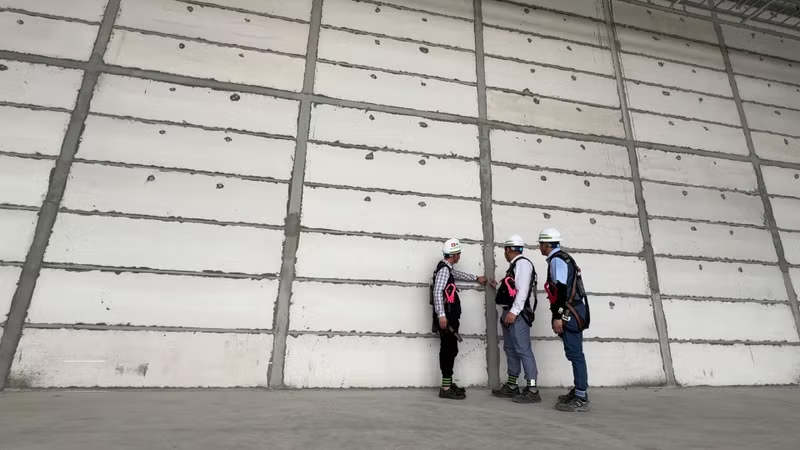
A cornerstone of sustainable construction is the adoption of green materials. These are produced from renewable inputs or waste, helping to cut CO₂ emissions, conserve energy and water, and safeguard human health. Such practices have long been applied in developed countries, yielding clear benefits.
Research by the Viet Nam Institute for Building Materials under the Ministry of Construction identifies seven core solutions for delivering green buildings through the use of green materials.
These include: reducing energy consumption in buildings by insulating the envelope, selecting suitable structural forms and using shading materials; employing green materials manufactured under mandatory regulations for recycled content; using renewable resources such as bamboo, timber and straw; selecting materials safe for human health, with low or no levels of harmful substances such as naturally occurring radioactive materials and toxic heavy metals; applying sound‑insulating materials; adopting bio‑based and biodegradable materials to significantly reduce construction waste and emissions across a building’s life cycle; and integrating smart technologies and materials, such as self‑adjusting glass, thermally adaptive materials and solar cells embedded in building components.
In the 2025–2030 phase, energy labelling will be applied to 50% of building material products requiring thermal insulation, and 150 buildings will be certified as green, meeting standards of energy efficiency.
To meet its Net Zero commitments, the Prime Minister approved the National Programme on Economical and Efficient Use of Energy for 2019–2030 in March 2019, setting specific targets for each stage.
During the 2019–2025 phase, buildings must comply with national technical regulations on energy‑efficient construction. So far, 80 buildings have been certified as green, using energy economically and efficiently.
In the 2025–2030 phase, energy labelling will be applied to 50% of building material products requiring thermal insulation, and 150 buildings will be certified as green, meeting standards of energy efficiency.
The Strategy for the Development of Building Materials for 2021–2030, with a vision to 2050, was approved in August 2020. It aims to steer the sector towards efficiency and sustainability, ensuring sparing use of resources, raw materials and energy; limiting environmental impacts; phasing out outdated technologies; and developing high‑value product lines competitive in both domestic and international markets.
This strategy provides a long‑term foundation to guide the building materials sector towards a model based on technology, quality and resource efficiency.
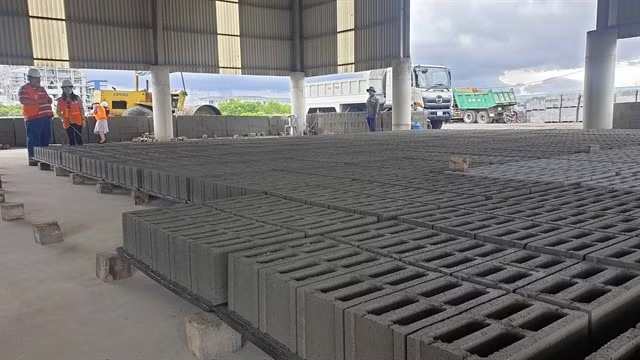
To achieve green building status, construction projects must: optimise energy efficiency through materials and designs such as insulation, windows and envelope systems; use recycled materials including fly ash, waste and demolition debris as raw materials, fuels or construction inputs; employ renewable resources; select materials safe for human health; adopt low‑emission materials and emission quota allocation approaches; apply sound‑insulating materials; and establish systems for testing and certifying health‑friendly materials.
However, Viet Nam currently lacks standards for defining green materials and for regulating harmful substances in material sources.
Further challenges include high initial investment costs for technology upgrades, competitive pressures, and insufficient incentives or support mechanisms for green material production. Addressing these requires a robust institutional framework to guide investment, shape consumer demand and screen technologies.
A key priority is building a regulatory framework for managing and developing building materials in line with green transition, digital transformation, the circular economy, resource and energy conservation, emission reduction and strengthened state management.
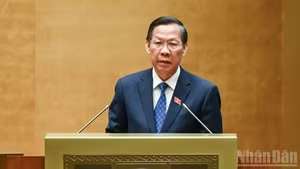
Deputy Minister of Construction Nguyen Van Sinh
Deputy Minister of Construction Nguyen Van Sinh has stated that the ministry is finalising legal documents to concretise the Party’s and Government’s orientations. A key priority is building a regulatory framework for managing and developing building materials in line with green transition, digital transformation, the circular economy, resource and energy conservation, emission reduction and strengthened state management.
In the long term, this will create a clearer and more stable legal environment for enterprises to invest in technological modernisation, develop new, recycled and green materials, and expand markets for higher‑quality building products with stronger environmental responsibility.