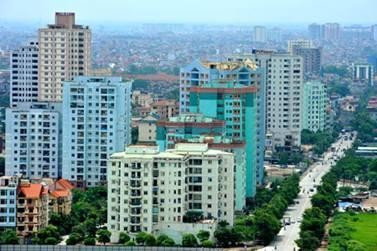
Speaking at the launch of a World Bank (WB) report entitled ‘Vietnam Urbanisation Review’ in Hanoi this morning, Kwakwa said that 30% of Vietnamese population currently lives in urban areas, and the urbanisation process will be an important element of Vietnam’s socio-economic development strategy in the near future.
No country has achieved high income status and strong economic growth without first urbanising and nearly all countries become at least 50% urbanised before fully reaching middle income status, said Dean A.Cira, the WB’s lead urban specialist who led the team that produced the report.
Vietnam expects to reach that point of urbanisation by 2025 and well managed urbanisation can support its economic growth and socio-economic development strategy objectives, he added.
The report aims to provide a better understanding of the key dimensions and aspects of Vietnam’s urbanisation process; identify the trends, opportunities, challenges and core policy priorities for Vietnam; and offer the country with urbanisation experiences from other nations.
According to the report, the country is urbanising at a rate of 3.4% per year, with the fastest growth in and around Hanoi and Ho Chi Minh City.
It highlighted that Vietnam is at early stage of urbanisation, transitioning to an intermediate stage with visible administrative, physical, economic, demographic and welfare shifts.
The report suggested that Vietnam could more successfully harness the economic and social opportunities of urbanisation and mitigate its challenges, if the urbanisation process is managed appropriately, such as improving urban transport and infrastructure systems and strengthening the economies of urban areas. It also called on policy-makers to strengthen urban management and address issues of urban mobility to develop more livable cities.
It also streessed the need to balance infrastructure development with land supply and ensure access to basics urban services such as water and sanitation.
Praising the WB’s contribution to the report, Phan Thi My Linh, Director of Urban Development Agency under the Ministry of Construction, said that Vietnam needs more support from the organisation to better tackle future problems of urbanisation, such as the impacts of climate change, environmental issues, large migration flows between rural and urban areas and land pricing.
Local governments should focus on developing suitable urban housing policies and promoting transparency in land markets to better manage rapid urbanisation, suggested Dinh Trong Thang, Vice Director of Investment Policy Research Department under the Ministry of Planning and Investment’s Central Institute for Economic Management.